.83¢/min Intro Offer

We Charge 60% LESS than our competitors!

All Psychics tested before hire.

Monthly Archives: April 2026

Kabbalah and Tarot part 1

Tarot cards originated in 15th-century Europe, near what is now northern Italy. At that time, the decks were commissioned by wealthy nobles for entertainment as a new card game. Originally, the game bore a strong similarity to bridge—or more familiarly today, spades. Known as Tarocchi, the cards were highly illustrated, lavishly painted with gold leaf, and intricately detailed. Over the centuries, their role shifted from entertainment to spiritual instruments, as mystics began to see archetypal symbolism layered into the imagery.

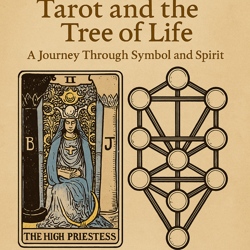
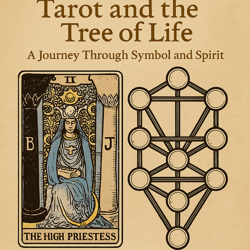
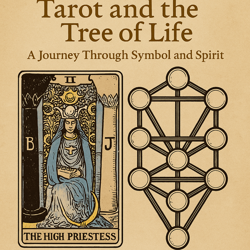
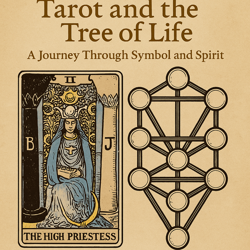
By the 19th century, tarot had become central to esoteric study within the Hermetic Order of the Golden Dawn. Influenced by the teachings of Eliphas Levi, members of this order reinterpreted the Major Arcana as a map of spiritual evolution. One of their most influential contributions was aligning the 22 Major Arcana cards with the twenty-two paths of the Kabbalistic Tree of Life.

The Tree of Life, central to Jewish mysticism, outlines ten Sephirot (emanations of divine energy) and the connecting paths that represent the soul’s journey toward unity. Within this system, each tarot card serves as a symbolic key to spiritual development, transformation, and awakening.

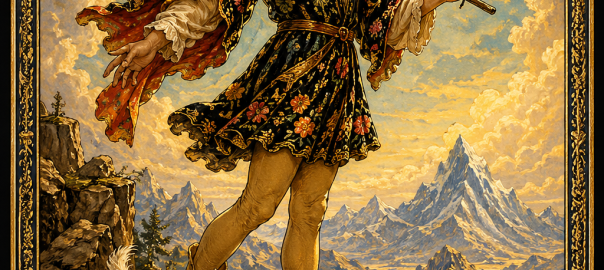
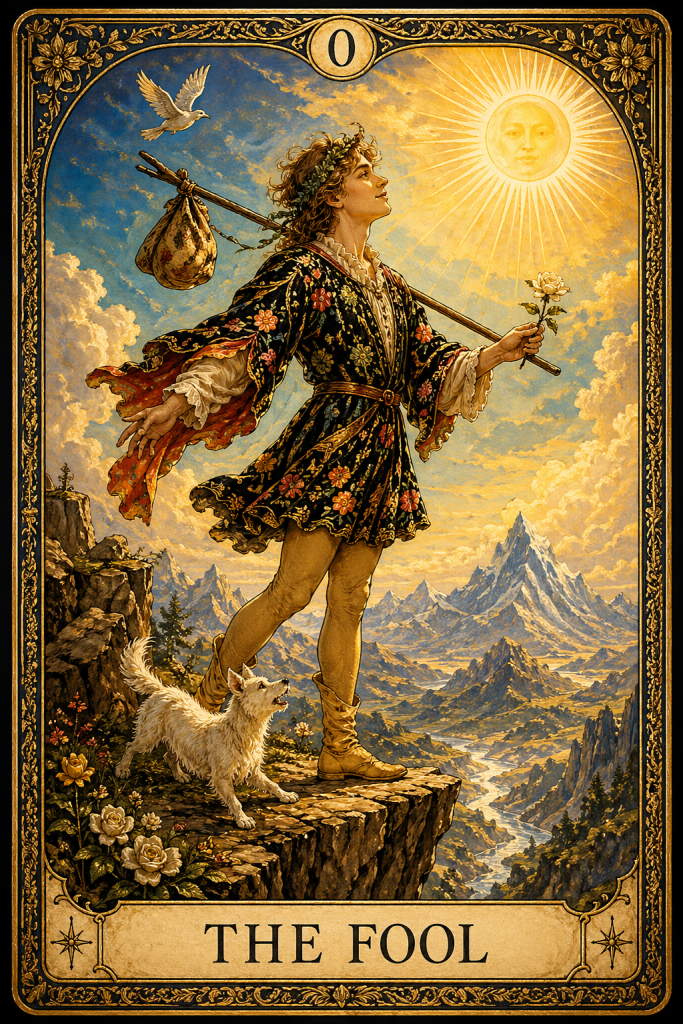
For example, The Fool marks the path from Keter to Chokhmah, embodying limitless potential stepping into wisdom. The High Priestess bridges Keter and Binah, reflecting the threshold between the visible and the unseen. The Empress joins Chokhmah and Binah, where creative impulse meets divine understanding. The Lovers fall between Binah and Tiphereth, standing for choice, union, and integration.

Other cards bring added layers of initiation: Strength invites us to harmonize power with compassion; Death calls for deep surrender and transformation; and The Tower awakens through disruption—or even destruction. As the journey continues, The Star inspires hope, The Moon asks us to navigate illusion, and The Sun offers clarity. The World, completing the descent from Yesod to Malkuth, celebrates fulfillment, embodiment, and the unity of self with Source.

In this sacred fusion of tarot and Kabbalah, the cards become more than archetypes or fortune-telling tools. They are way-showers—each one illuminating a step on the path of personal and spiritual evolution. Through their images and meanings, seekers are invited into an ever-deepening conversation with the divine, the self, and the mystery that links them. A beautiful expression of illumination along an often-shrouded path.
Kabbalah and Tarot part 2

While the Major Arcana commands attention with its mythic journeys and spiritual truths, the Minor Arcana weaves those cosmic themes into our everyday lives. Often overlooked, these fifty-six cards are the living pulse of the Tarot—revealing emotional nuance, personal growth, and the sacred dance of being human.

Just like playing cards, the Minor Arcana is divided into suits. But in Tarot, these suits reflect elemental forces rooted in the Earth. We begin with Earth (Pentacles), then Air (Swords), Fire (Wands), and Water (Cups). These aren’t mere poetic symbols—they’re lenses through which we engage with the world: Earth grounds us in structure and substance; Water flows with emotion, spirituality, and memory; Fire sparks inspiration and courage; and Air sharpens clarity, tension, and truth.

These elements don’t stand alone—they animate the Tree of Life. Each numbered card from Ace to Ten corresponds to a Sephirah, a divine emanation. The Two of Swords speaks to Chokhmah, holding wisdom in tension; the Five of Cups mirrors Geburah, where disciplined emotion catalyzes healing; the Nine of Pentacles echoes Yesod, celebrating self-sufficiency rooted in spirit.

From this perspective, “minor” is a misnomer. These cards become sacred maps, tracing divine energies as they ripple through personal experience. Every reading holds a layered meaning: celestial insight paired with earthly reflection.

The court cards deepen this bridge. Each embodies elemental personality and archetype. The Queen of Wands radiates courage and magnetic Fire; the Knight of Cups moves with Water’s gentle devotion. These aren’t distant figures, but spiritual companions traversing the paths between Sephiroth, guiding us through identity, initiation, and integration.

In essence, the Minor Arcana is the soul’s diary—a real-time record of journeys sparked in the Major Arcana. The Fool steps into the infinite unknown, but it’s the Ace of Pentacles that plants intention into fertile ground. The Star promises hope, yet the Eight of Swords challenges us to release limiting thought patterns.

To honor the Minor cards is to honor life itself: the clarity found through tension, the joy held in fleeting moments, and the sacred friction that moves us forward. These are the Tree’s leaves, dancing with the winds of experience. They ask, gently but powerfully: What are you doing with what you’ve been given?

Kabbalah and Tarot part 3

With the elemental foundations of the Minor Arcana in mind, let us step forward to explore how tarot blends the playful structure of card games with the deep currents of Kabbalah, esotericism, mysticism, and spiritual insight. Over centuries, this fusion has crystallized into one of the most consistently used divinatory tools—and, intriguingly, one of the most accurate.
 
The structure of the cards is deceptively simple. Like the game it echoes, tarot begins with the Ace and climbs to the King. The Ace, as in many card games, is all or nothing—pure potential and new beginnings. Twos evoke duality, choices, and balance. Threes, sacred in many spiritual traditions, symbolize growth, collaboration, and an early burst of success. Fours offer foundation, stability, and rest. Fives bring disruption, conflict, and necessary change. Sixes signal harmony, healing, and forward movement. Sevens encourage reflection, challenge, and strategy. Eights speak to mastery, progress, and power—resonating with the concept of infinity found in the Major Arcana. Nines initiate completion with intensity and fulfillment. Tens culminate the journey with transformation and transmutation. 

Then come the Court Cards, which bring in the human nuance. The Page carries curiosity, fresh ideas, and youthful wonder. The Knight charges forward—an agent of movement, challenge, and pursuit. The Queen embodies nurturing wisdom and emotional intelligence, yet protects fiercely. The King rules with maturity, leadership, and grounded authority.
 
This framework is straightforward, but tarot’s magic emerges through combination and contrast. For instance, the King of Pentacles differs profoundly from the King of Wands. 

Pentacles stand for earth, work, health, finances, and material life. The King of Pentacles builds through steady growth and careful investments. Structure and loyalty are paramount; proven results, physical well-being, and reliability anchor his world.

Wands, however, are fire—passion, creativity, and bold action. The King of Wands charges ahead, often without preplanning. He ignites ideas, commands attention, and thrives on high-energy momentum. Bold, charismatic, and instinctive, he dances with possibility and pivots with ease. 

Two kings. Two paths. Both leaders—but one rooted in stability, the other aflame with vision.
 
Now imagine we’re reading for a person deciding on a business venture. They’ve been moving forward with King of Pentacles energy—methodical, strategic—but nothing’s working. When asking how best to proceed, the King of Wands flies out. Our client loosens their hold and embraces a spontaneous, quick-fire approach. Suddenly, things begin falling into place. They remain in King energy—but in this instance, slow and steady would not lead to movement.

Tea Leaf Readings- Tasseography

Tea leaf Readings likely began in ancient China, where tea was first discovered. As the drink spread across Asia, the Middle East, and Europe, so did the custom of gazing into the dregs of the cup. In Victorian England, tasseography became a social pastime—friends gathered for afternoon tea, and someone inevitably asked, “Who wants their fortune read?”

It wasn’t about predicting doom and gloom. It was storytelling—an intuitive conversation sparked by shapes and symbols in the cup.

The process is delightfully simple. You start with loose-leaf tea (not bagged), poured without a strainer. Once you’ve enjoyed your tea, you leave just a small sip of liquid at the bottom, then swirl the cup three times clockwise. When you gently turn the cup upside down on its saucer, the leaves settle into patterns.

A reader interprets these patterns—seeing images, letters, animals, or shapes. A heart might symbolize love, an arrow could mean news is on the way, and a ladder might hint at career progress. No two cups ever look alike, which makes each reading personal and one-of-a-kind.

While there are traditional symbol meanings, tea leaf reading is ultimately intuitive. Two readers might see completely different things—and both can be right. What matters is the story that unfolds and how it connects to the person receiving the reading.

This intuitive element is what makes tasseography feel so human. It’s not about memorizing a dictionary of symbols. It’s about connecting to your imagination and trusting your gut.

Tea leaf readings are best done in a relaxed, peaceful setting. Dim the lights, light a candle, and enjoy the ritual of making tea slowly. The experience itself—warmth, aroma, conversation—opens up intuition.

Some readers even choose teas with intention: chamomile for calm readings, black tea for energy, or jasmine for spiritual clarity.

In today’s digital world, the idea of pausing for a cup of tea and a moment of reflection feels almost rebellious. Maybe that’s why tea leaf readings are making a comeback. They’re personal, creative, and unplugged.

Whether you’re reading for yourself or a friend, it’s less about “predicting” and more about reflecting. Each cup offers a mirror—one that just happens to be filled with leaves, not logic.

In short: tea leaf reading is part art, part intuition, and part mindfulness. It’s a ritual that turns something as simple as finishing a cup of tea into a doorway for insight, laughter, and sometimes, a little magic.

Astral Projection: Out of Body Experiences

Astral projection is this fascinating idea that your consciousness can leave your physical body and explore the world—or even other dimensions—while you’re safe and sound at home. People who’ve experienced it say it’s not like a dream, which can feel foggy or random. Instead, astral travel feels sharp, intentional, and deeply real, as if your spirit simply stepped out for a walk while your body rests.

Imagine lying in bed at night, completely relaxed. The room is dark and quiet. Your breathing slows, and your body starts to feel heavy, almost like you’re melting into the mattress. Then, you start to notice a buzzing or vibrating sensation, almost like your whole body is humming with energy. Many people describe it as a moment where your mind is fully awake, but your body is deeply asleep. You focus, and suddenly, there’s a sense of movement—maybe you’re floating, maybe you’re standing next to your bed, looking at yourself. That’s the moment you’ve “separated” and your astral journey begins.

In spiritual traditions, this is seen as a sign that you’re more than just a body. Your astral self—your energetic double—is tethered to you by a silvery thread, ensuring that no matter how far you travel, you’re always safe and able to return. Ancient mystics, shamans, and monks have used this practice for centuries for guidance, healing, and exploring hidden realms of knowledge. Modern science, on the other hand, sees it differently, often linking the sensation to changes in the brain during deep relaxation, meditation, or sleep paralysis. Still, even skeptical scientists admit that the experience can be incredibly vivid and life-changing for those who try it.

How to Tap Into Astral Projection

Here’s a step-by-step guide for beginners who want to try it themselves. Think of it as a mix of meditation, focus, and trust in your own intuition:

1) Set the Scene for Success- Choose a quiet, dimly lit space where you won’t be disturbed. Make yourself comfortable—loose clothing, cozy blankets, and maybe some soft background music or white noise. This helps your body relax while your mind stays alert.

2) Relax Your Mind and Body- Lie flat on your back with your arms at your sides. Close your eyes and focus on your breath. Inhale slowly, exhale gently. With each breath, imagine tension melting away from your head down to your toes. Your goal is to feel completely calm and heavy, like your body is “asleep” but your mind is wide awake.

3) Enter the Hypnagogic State-This is that dreamy “in-between” space just before you fall asleep. Let your thoughts drift while staying gently aware. If random images or colors appear behind your closed eyes, let them flow without trying to control them. This state is your launchpad for astral travel.

4) Visualize Separation- Imagine yourself floating above your body. Some people picture themselves5 climbing a rope, rolling gently out of bed, or drifting upward like a balloon. Choose whatever feels natural. The more vividly you can picture this, the easier it becomes.

5) Recognize the Vibrational Stage – Many practitioners feel a strong buzzing or humming sensation, like their energy body is “revving up.” It can feel intense at first, but it’s perfectly normal—this is your cue that separation is near. Stay calm and focus on the feeling instead of resisting it.

6) Let Go and Explore – When you feel light enough, imagine gently “pushing” yourself away from your body. You might feel a sudden shift, as if gravity no longer applies. Start by looking around your room or floating near your ceiling. Over time, with practice, you can travel farther—some say across the world or even into entirely different realms.

7) Returning Safely – Coming back is simple. All you have to do is think of your physical body, and you’ll feel yourself gently sinking back into it. Many people wake up with a jolt or a warm sensation as they “reconnect.”