

.83¢/min Intro Offer

We Charge 60% LESS than our competitors!

All Psychics tested before hire.

category: Love/Relationships

Love,  relationship compatibility, career, finances, and more. 800-498-8777. First 5 Minutes free.  All Psychics tested before hire.  Call for a trusted and accurate reading now!

Tea Leaf Readings- Tasseography

Tea leaf Readings likely began in ancient China, where tea was first discovered. As the drink spread across Asia, the Middle East, and Europe, so did the custom of gazing into the dregs of the cup. In Victorian England, tasseography became a social pastime—friends gathered for afternoon tea, and someone inevitably asked, “Who wants their fortune read?”

It wasn’t about predicting doom and gloom. It was storytelling—an intuitive conversation sparked by shapes and symbols in the cup.

The process is delightfully simple. You start with loose-leaf tea (not bagged), poured without a strainer. Once you’ve enjoyed your tea, you leave just a small sip of liquid at the bottom, then swirl the cup three times clockwise. When you gently turn the cup upside down on its saucer, the leaves settle into patterns.

A reader interprets these patterns—seeing images, letters, animals, or shapes. A heart might symbolize love, an arrow could mean news is on the way, and a ladder might hint at career progress. No two cups ever look alike, which makes each reading personal and one-of-a-kind.

While there are traditional symbol meanings, tea leaf reading is ultimately intuitive. Two readers might see completely different things—and both can be right. What matters is the story that unfolds and how it connects to the person receiving the reading.

This intuitive element is what makes tasseography feel so human. It’s not about memorizing a dictionary of symbols. It’s about connecting to your imagination and trusting your gut.

Tea leaf readings are best done in a relaxed, peaceful setting. Dim the lights, light a candle, and enjoy the ritual of making tea slowly. The experience itself—warmth, aroma, conversation—opens up intuition.

Some readers even choose teas with intention: chamomile for calm readings, black tea for energy, or jasmine for spiritual clarity.

In today’s digital world, the idea of pausing for a cup of tea and a moment of reflection feels almost rebellious. Maybe that’s why tea leaf readings are making a comeback. They’re personal, creative, and unplugged.

Whether you’re reading for yourself or a friend, it’s less about “predicting” and more about reflecting. Each cup offers a mirror—one that just happens to be filled with leaves, not logic.

In short: tea leaf reading is part art, part intuition, and part mindfulness. It’s a ritual that turns something as simple as finishing a cup of tea into a doorway for insight, laughter, and sometimes, a little magic.


Astral Projection: Out of Body Experiences

Astral projection is this fascinating idea that your consciousness can leave your physical body and explore the world—or even other dimensions—while you’re safe and sound at home. People who’ve experienced it say it’s not like a dream, which can feel foggy or random. Instead, astral travel feels sharp, intentional, and deeply real, as if your spirit simply stepped out for a walk while your body rests.

Imagine lying in bed at night, completely relaxed. The room is dark and quiet. Your breathing slows, and your body starts to feel heavy, almost like you’re melting into the mattress. Then, you start to notice a buzzing or vibrating sensation, almost like your whole body is humming with energy. Many people describe it as a moment where your mind is fully awake, but your body is deeply asleep. You focus, and suddenly, there’s a sense of movement—maybe you’re floating, maybe you’re standing next to your bed, looking at yourself. That’s the moment you’ve “separated” and your astral journey begins.

In spiritual traditions, this is seen as a sign that you’re more than just a body. Your astral self—your energetic double—is tethered to you by a silvery thread, ensuring that no matter how far you travel, you’re always safe and able to return. Ancient mystics, shamans, and monks have used this practice for centuries for guidance, healing, and exploring hidden realms of knowledge. Modern science, on the other hand, sees it differently, often linking the sensation to changes in the brain during deep relaxation, meditation, or sleep paralysis. Still, even skeptical scientists admit that the experience can be incredibly vivid and life-changing for those who try it.

How to Tap Into Astral Projection

Here’s a step-by-step guide for beginners who want to try it themselves. Think of it as a mix of meditation, focus, and trust in your own intuition:

1) Set the Scene for Success- Choose a quiet, dimly lit space where you won’t be disturbed. Make yourself comfortable—loose clothing, cozy blankets, and maybe some soft background music or white noise. This helps your body relax while your mind stays alert.

2) Relax Your Mind and Body- Lie flat on your back with your arms at your sides. Close your eyes and focus on your breath. Inhale slowly, exhale gently. With each breath, imagine tension melting away from your head down to your toes. Your goal is to feel completely calm and heavy, like your body is “asleep” but your mind is wide awake.

3) Enter the Hypnagogic State-This is that dreamy “in-between” space just before you fall asleep. Let your thoughts drift while staying gently aware. If random images or colors appear behind your closed eyes, let them flow without trying to control them. This state is your launchpad for astral travel.

4) Visualize Separation- Imagine yourself floating above your body. Some people picture themselves5 climbing a rope, rolling gently out of bed, or drifting upward like a balloon. Choose whatever feels natural. The more vividly you can picture this, the easier it becomes.

5) Recognize the Vibrational Stage – Many practitioners feel a strong buzzing or humming sensation, like their energy body is “revving up.” It can feel intense at first, but it’s perfectly normal—this is your cue that separation is near. Stay calm and focus on the feeling instead of resisting it.

6) Let Go and Explore – When you feel light enough, imagine gently “pushing” yourself away from your body. You might feel a sudden shift, as if gravity no longer applies. Start by looking around your room or floating near your ceiling. Over time, with practice, you can travel farther—some say across the world or even into entirely different realms.

7) Returning Safely – Coming back is simple. All you have to do is think of your physical body, and you’ll feel yourself gently sinking back into it. Many people wake up with a jolt or a warm sensation as they “reconnect.”

Soulmate Versus Twin Flame

There is a difference between a twin flame and a soulmate, even though people often use the terms like they mean the same thing.

A twin flame is usually described as the other half of your soul. The idea is that one soul split into two, and now each half is living a separate life. Because of that, there’s only one twin flame for you. When people meet their twin flame, the connection can feel extremely intense—almost overwhelming. There’s often a strong pull, like something bigger brought the two of you together. You might notice strange similarities too, like going through major life events at the same time, thinking alike, or just sensing what the other person is feeling without them saying a word.

But here’s the part that doesn’t get talked about enough—twin flame relationships aren’t always easy. In fact, they can be pretty chaotic. Because you’re so similar, you tend to trigger each other’s issues. If one or both of you isn’t emotionally or spiritually ready, it can turn into a push-and-pull situation with breakups, reconnecting, and then falling apart again. Just because the connection is intense doesn’t mean it’s meant to work out, at least not right now. Sometimes, a twin flame isn’t meant to stay in your life long-term, or even in this lifetime.

Soulmates are different. You can have more than one soulmate, and they don’t always show up as romantic partners. A soulmate could be a close friend, a family member, or even someone who’s only in your life for a short period of time. The connection usually feels natural and comfortable. There’s often that sense of familiarity, like you’ve known the person before, even if you just met. These relationships tend to come into your life for a reason—maybe to help you grow, teach you something, or help you work through something from the past.

Even when a soulmate relationship ends, it usually makes sense afterward. You can look back and understand why that person was part of your life. That’s one of the biggest differences. Twin flame connections tend to be intense and sometimes unstable, while soulmate connections are usually more balanced and easier to handle.

One thing to keep in mind is that just because something feels powerful doesn’t mean you’re supposed to stay in it. If a relationship—twin flame or not—is draining you or becoming unhealthy, you still have a choice. Growth doesn’t have to come from constant struggle.

In the end, both types of connections have a purpose. The important part is understanding what you’re dealing with, because that helps you decide what to do with it.

Over 6000 Psychic Video Library

These are now available in seven additional languages: Portuguese, German, Italian, Tagalog, Spanish, French, and Hindi. This brings our total psychic video library to over 6,000!

With this ever-expanding collection, users can immerse themselves in a rich library of specialized content—designed to build deeper knowledge, broaden perspective, and deliver a more informed understanding of intuitive and metaphysical practices. From tarot and astrology to dream interpretation, numerology, psychic phenomena, and other divination tools, this growing library offers viewers the opportunity to explore a wide range of subjects at their own pace.

Whether someone is new to these topics or already familiar with them, the collection is designed to be both accessible and informative. By expanding this content into multiple languages, we are making these educational resources available to a much broader audience around the world. This not only increases accessibility, but also helps users engage more comfortably and deeply with material presented in their preferred language.

As the library continues to grow, it becomes an even more valuable destination for those seeking to learn more about intuitive, spiritual, and metaphysical subjects. With thousands of videos now available, users can return again and again to discover new ideas, deepen their understanding, and explore content across many different areas of interest.

Ready for something personal? Connect instantly with a live psychic and receive insight tailored specifically to you. While our video library offers a powerful source of knowledge and exploration, a live reading provides a more personal experience—giving you direct access to real-time insight focused on your unique questions and situation.

Ready for something personal? Connect instantly with a live psychic and receive insight tailored specifically to you.

2026 Astrological Forecast

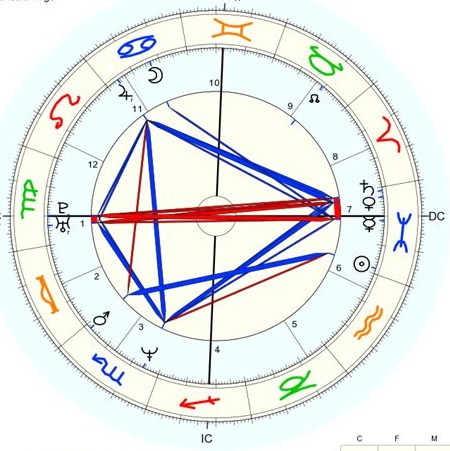
Two cycles dominate the astrological landscape of 2026: the Saturn–Neptune conjunction, activated in February and July, and a rare multi-planet concentration around 4°, forming a tightly interwoven aspect pattern. Other important cycles will come into focus as the year unfolds.

Saturn Conjunct Neptune: Meaning & Experience February 7- March 6:

A Saturn–Neptune conjunction marks a period when reality and idealism are forced into direct contact. Saturn represents structure, boundaries, accountability, and material reality. Neptune represents faith, imagination, ideals, illusion, and dissolution. When they meet, neither can dominate — instead, they test one another.

This transit often coincides with the dissolving of dreams that lack structure and the restructuring of those that remain meaningful. What once felt inspiring but vague must now become practical, defined, and lived — or quietly fade away. Confusion gives way to clarity, but often through disappointment first.

Psychologically, Saturn–Neptune can feel sobering. Many people experience uncertainty, fatigue, or a sense that something they believed in no longer works the same way. At the same time, it can deepen compassion, spiritual maturity, and realism. Faith becomes less idealized and more embodied.

On a collective level, this conjunction correlates with the exposure of false narratives, institutional weaknesses, and unrealistic promises. Systems built on denial or fantasy tend to weaken, while those capable of reform can stabilize.

Handled consciously, Saturn–Neptune is not a loss of hope — it’s a refinement of it. It replaces escapism with purpose, illusion with discernment, and blind faith with lived integrity. The question it asks is simple but demanding: What is worth committing to once fantasy is removed?

Since Neptune rules oil, Saturn may bring structure to Venezeula’s oil around this period.  Expect more information in the media around this time.  The Jupiter–Neptune conjunction of 2022 corresponded with inflationary expansion and diffuse economic pressures.  The upcoming

Saturn–Neptune phase works to consolidate, regulate, and redefine the excesses seeded during that period.

June 1 – August 30: Jupiter Opposite Pluto, Trine Neptune, Sextile Uranus

July 2026 carries a sense of scale. Jupiter opposing Pluto tends to magnify power dynamics — who holds influence, who is pushing growth, and where excess has accumulated. This is not subtle energy. It exposes imbalances, especially around control, wealth, belief systems, and ideological authority. What has grown too large or too concentrated meets resistance.

At the same time, Jupiter’s harmonious aspects soften the confrontation. The trine to Neptune introduces meaning, vision, and moral framing. Conflicts are rarely just practical — they are about belief, faith, or the story being told. People search for purpose behind the pressure. This can inspire reform, forgiveness, or renewed commitment to ideals, but it can also blur boundaries if discernment is lost.

The sextile to Uranus adds an element of opportunity through change. Breakthroughs are possible, not by overthrowing everything, but by adjusting systems intelligently. Innovation, policy shifts, technological solutions, and unexpected alliances become viable under this configuration.

Taken together, July 2026 is not simply a crisis moment; it’s a pivot. Jupiter opposing Pluto demands recognition of power realities, while Neptune and Uranus offer pathways forward — imaginative, adaptive, and future-oriented. The challenge is avoiding extremes: moral absolutism, blind optimism, or power struggles disguised as progress.

Handled well, this period can mark a turning point where growth becomes more ethical, more conscious, and less compulsive. It asks not just what can expand, but what should.

I would expect continued change and accelerated innovation in driverless transportation (such as Waymo), robotics, technology, communications, travel, and related sectors.