.83¢/min Intro Offer

We Charge 60% LESS than our competitors!

All Psychics tested before hire.

Monthly Archives: June 2026

Vedic Astrology vs Western Astrology: Understanding the Key Differences

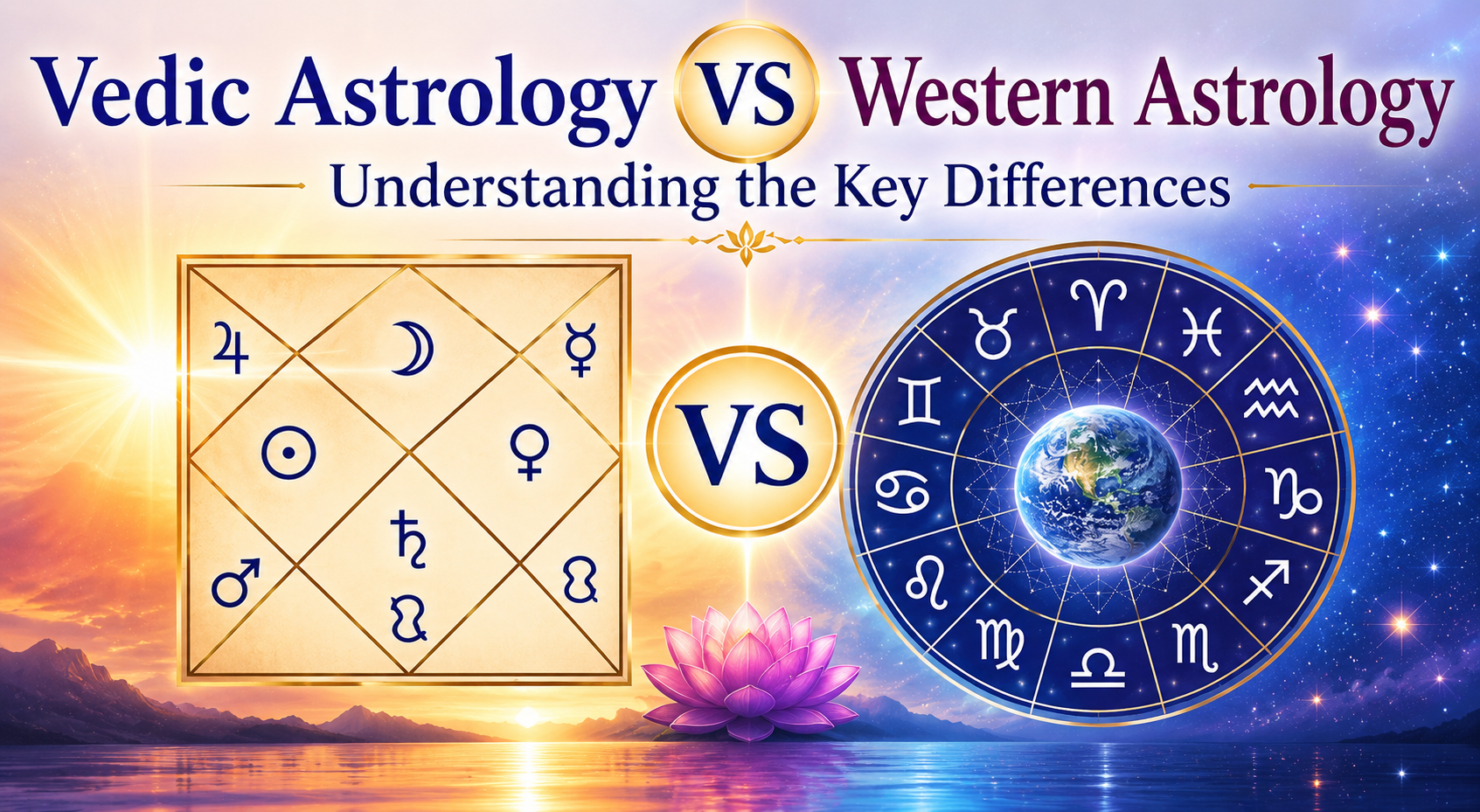
Vedic Astrology vs Western Astrology

Vedic Astrology vs Western Astrology: Understanding the Key Differences

If you’ve ever compared your Vedic birth chart to your Western astrology chart, you may have noticed something surprising.

Your zodiac sign may have changed.

A person who identifies as a Leo in Western Astrology might discover they are actually a Cancer in Vedic Astrology. A Sagittarius could become a Scorpio. For many people, this creates confusion and raises an important question:

Which system is correct?

The answer may surprise you.

According to most astrologers, both systems can offer valuable insight. The real difference lies not in whether one is right and the other is wrong, but in what each system is designed to reveal.

While Western Astrology often focuses on personality, psychology, and self-expression, Vedic Astrology places greater emphasis on karma, destiny, timing, and spiritual growth.

Think of them as two different maps describing the same journey.

🔮 Psychic Insight

Many professional astrologers study both systems. Rather than competing with one another, they often provide different perspectives on the same life experiences.

A Shared Beginning

Many people assume Vedic Astrology and Western Astrology developed completely independently. In reality, both systems share many similarities.

Both use:

  • Twelve zodiac signs
  • Planetary symbolism
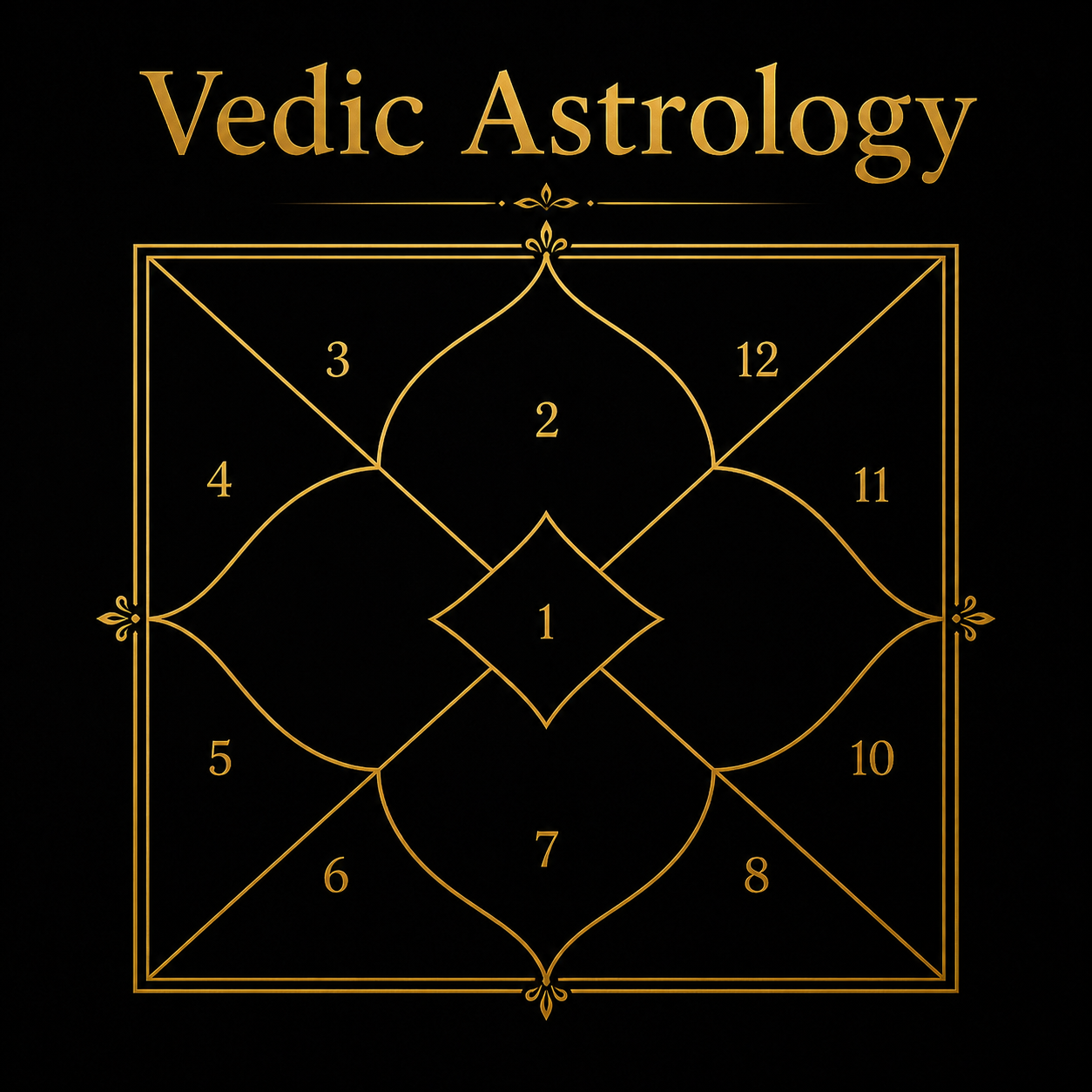
  • Houses representing different areas of life
  • Birth charts calculated from the time and place of birth

In both traditions, Mars symbolizes action, Venus relates to love, and Saturn is associated with responsibility and discipline.

Despite these similarities, the two systems eventually evolved in different directions.

The Biggest Difference: The Zodiac

The most obvious difference between the two systems involves the zodiac itself.

Western Astrology primarily uses the Tropical Zodiac.

The Tropical Zodiac is tied to the seasons and begins at the Spring Equinox.

Vedic Astrology uses the Sidereal Zodiac, which is aligned with the actual constellations in the sky.

Because the Earth slowly wobbles on its axis over thousands of years, the constellations have gradually shifted relative to the seasonal zodiac. This phenomenon is known as the Precession of the Equinoxes.

As a result, there is currently a difference of roughly twenty-four degrees between the two systems.

This is why your Sun sign may appear different when calculated using Vedic Astrology.

✨ Did You Know?

Many people who discover their Vedic sign for the first time are surprised by how strongly they relate to it, especially when they learn about their Moon sign and Nakshatra.

Personality Versus Destiny

One of the easiest ways to understand the difference between these two systems is to examine their primary focus.

Western Astrology often asks:

  • Who am I?
  • How do I express myself?
  • What motivates me?
  • How do I relate to others?

Vedic Astrology often asks:

  • Why am I here?
  • What lessons am I meant to learn?
  • What karmic patterns am I carrying?
  • What opportunities are unfolding at this stage of life?

Neither approach is superior.

They simply emphasize different aspects of the human experience.

The Importance of the Moon

In Western Astrology, the Sun sign receives most of the attention.

In Vedic Astrology, the Moon often plays an equally important—and sometimes greater—role.

The Moon represents:

  • Emotions
  • Habits
  • Mental patterns
  • Intuition
  • Daily experiences

Many predictive systems begin with the Moon’s placement because it reflects how life is actually experienced from moment to moment.

This emphasis on the Moon is one reason Vedic Astrology often feels deeply personal and emotionally accurate.

Vedic Astrology’s Secret Weapon: Dashas

One of the most powerful features of Vedic Astrology is a timing system known as Dashas.

Dashas divide life into planetary chapters that unfold over time.

Imagine reading a book.

Each chapter focuses on a different theme.

Life, according to Vedic Astrology, unfolds in much the same way.

  • A Venus period may emphasize relationships and creativity.
  • A Saturn period may focus on responsibility and maturity.
  • A Jupiter period may bring growth, learning, and opportunity.
  • A Rahu period may introduce dramatic changes and new experiences.

This timing system is one reason many people seek Vedic Astrology when facing major life decisions.

Rather than feeling lost, they gain a framework for understanding why certain experiences are occurring now.

🌙 Spiritual Lesson

Life unfolds in seasons. Vedic Astrology teaches that every chapter serves a purpose, even those that initially appear difficult or confusing.

Nakshatras: The Missing Layer

Another unique feature of Vedic Astrology is its use of Nakshatras, often called Lunar Mansions.

The zodiac is divided into twenty-seven Nakshatras, each carrying its own symbolism, mythology, strengths, and challenges.

This creates a level of detail rarely found in mainstream astrology.

Two people may share the same zodiac sign yet have completely different Nakshatras, resulting in very different personalities and life experiences.

Many astrologers consider the Nakshatras among the most revealing features of a Vedic chart.

Which System Should You Choose?

This is one of the most common questions asked by astrology enthusiasts.

The truth is that many professional astrologers study both systems.

Western Astrology often excels at understanding personality dynamics, relationships, and psychological development.

Vedic Astrology often excels at timing, karmic analysis, and life-path interpretation.

Rather than choosing one over the other, many people find value in exploring both perspectives.

Together, they can provide a more complete picture of who you are and where your life may be headed.

Final Thoughts

Vedic Astrology and Western Astrology are not rivals.

They are different languages describing the same sky.

One focuses more heavily on psychological insight. The other places greater emphasis on karma, destiny, and spiritual evolution.

Whether you choose one system or study both, each offers valuable tools for understanding yourself and your life’s journey.

The real question is not which system is correct.

The real question is which perspective helps you better understand your unique path.

🌟 Personalized Insight

General astrology articles can explain the differences between Vedic and Western Astrology, but your personal birth chart reveals how these systems uniquely apply to your life. Two people may share the same sign yet experience very different opportunities, relationships, and life lessons based on their complete chart.


Related Vedic Astrology Topics

  • What Is Vedic Astrology?
  • Understanding Karma Through Vedic Astrology
  • The Sidereal Zodiac Explained
  • What Are Nakshatras?
  • What Is Vimshottari Dasha?

Vedic Astrology: The Ancient Science of Karma, Destiny, and Spiritual Growth

Vedic Astrology Knowledge Center

Vedic Astrology: The Ancient Science of Karma, Destiny, and Spiritual Growth

For thousands of years, people have looked toward the heavens seeking answers to life’s greatest questions.

Why do certain experiences repeat?

Why do some relationships feel destined?

Why do opportunities appear at specific moments in life?

Is there a deeper purpose behind the challenges and successes we experience?

Vedic Astrology, known in Sanskrit as Jyotish or the Science of Light, is one of humanity’s oldest and most sophisticated systems for exploring these questions.

More than simply a method of prediction, Vedic Astrology seeks to illuminate the relationship between karma, destiny, free will, and spiritual evolution.

For countless generations, astrologers have used this ancient system to better understand personality, relationships, career paths, life timing, spiritual growth, and the deeper patterns that shape human experience.

Whether you are completely new to astrology or a seasoned student seeking deeper knowledge, this Vedic Astrology Knowledge Center will guide you through the essential concepts that form the foundation of this remarkable tradition.

🔮 Psychic Insight

Vedic Astrology does not view life as random. Instead, it sees each individual as participating in a meaningful journey of growth, experience, and spiritual development.

What Makes Vedic Astrology Different?

Many people first discover astrology through Western Astrology.

Vedic Astrology shares many familiar elements, including zodiac signs, planets, houses, and birth charts.

However, it approaches astrology from a unique perspective.

Vedic Astrology places greater emphasis on:

  • Karma and life lessons
  • Planetary timing systems
  • Spiritual growth
  • The Moon and emotional experience
  • Nakshatras (Lunar Mansions)
  • Divisional charts

Rather than focusing solely on personality, Vedic Astrology explores how life unfolds through cycles of growth, opportunity, and transformation.

The Foundations Of Vedic Astrology

Every Vedic birth chart is built upon several core components working together.

Each layer contributes to a deeper understanding of the individual’s life path.

The Nine Grahas

The Nine Grahas represent the primary cosmic influences within Vedic Astrology.

These include:

Each Graha symbolizes a different aspect of life and personal development.

Continue Reading: The Nine Grahas

The Twelve Houses

The houses, known as Bhavas, represent the different arenas of life through which experiences unfold.

They govern areas such as:

  • Identity
  • Relationships
  • Career
  • Finances
  • Family
  • Spiritual growth

Continue Reading: Vedic Astrology Houses

✨ Did You Know?

The houses are traditionally grouped into Dharma, Artha, Kama, and Moksha categories, representing purpose, resources, desires, and spiritual liberation.

The Lunar Mysteries: Nakshatras

One of the most fascinating features of Vedic Astrology is its use of Nakshatras.

These twenty-seven lunar mansions add remarkable depth to chart interpretation.

Many astrologers consider the Moon’s Nakshatra among the most revealing indicators of:

  • Personality
  • Emotional tendencies
  • Relationships
  • Life purpose
  • Spiritual lessons

Two people may share the same zodiac sign and yet be dramatically different because their Moon occupies different Nakshatras.

Continue Reading: What Are Nakshatras?

Understanding Karma And Destiny

Few subjects are more closely associated with Vedic Astrology than karma.

In this tradition, karma is not viewed as punishment.

Rather, it represents the ongoing process of learning, growth, and evolution.

The birth chart is often viewed as a symbolic map showing:

  • Life lessons
  • Natural talents
  • Areas of growth
  • Recurring themes
  • Spiritual opportunities

One of the most important indicators of karmic development is the relationship between Rahu and Ketu, often called the Karmic Axis.

Continue Reading:

  • Understanding Karma Through Vedic Astrology
  • Rahu and Ketu: The Karmic Nodes of Destiny

Life Unfolds In Cycles

Have you ever wondered why certain years seem focused on relationships while others emphasize career, family, or personal transformation?

Vedic Astrology answers this question through its remarkable timing system known as Dashas.

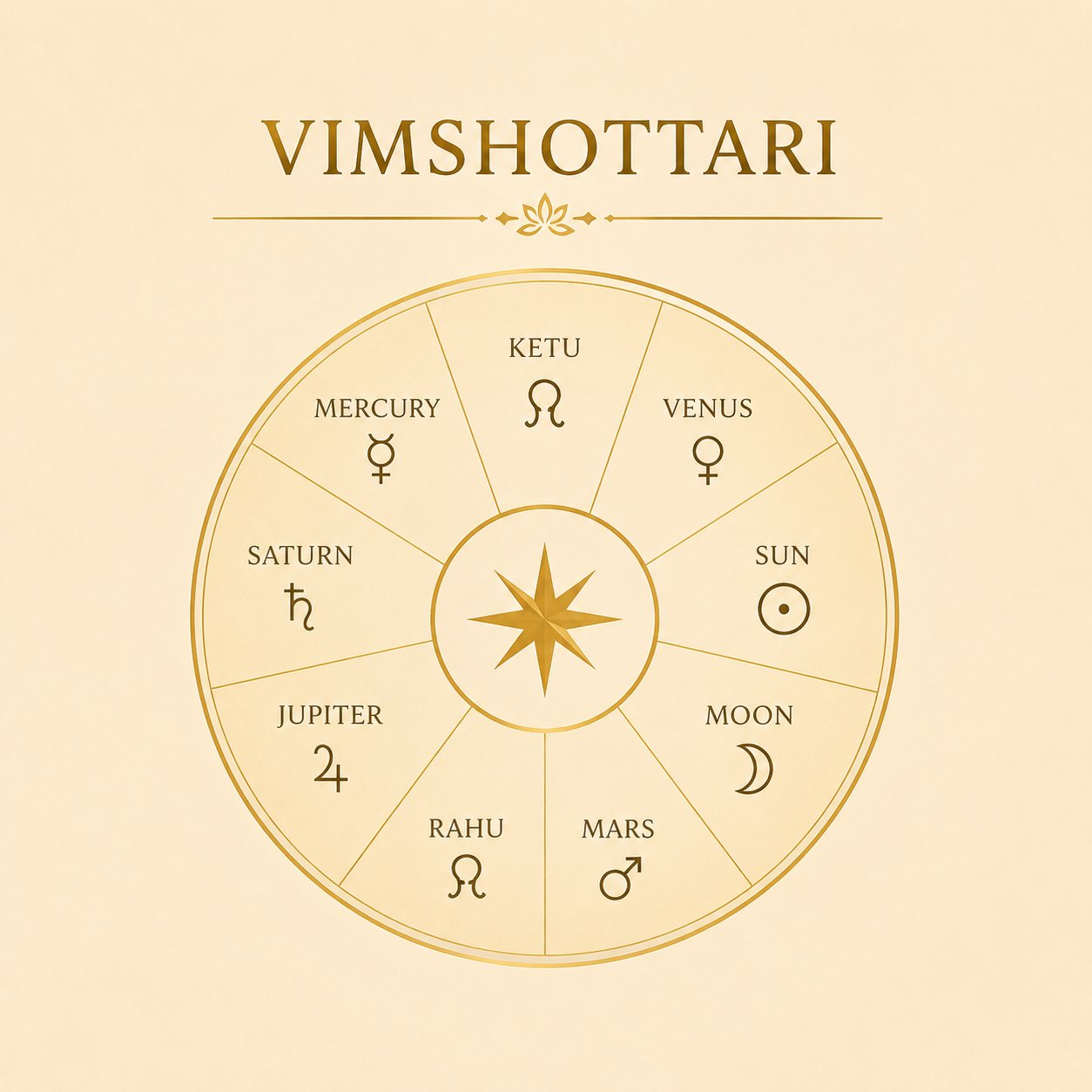
The most widely used system is the Vimshottari Dasha, which divides life into planetary chapters.

Each chapter highlights different lessons, opportunities, and experiences.

Understanding these cycles helps explain why life often unfolds in distinct stages rather than as a random sequence of events.

Continue Reading: What Is Vimshottari Dasha?

🌙 Spiritual Lesson

Every chapter of life serves a purpose. Some periods focus on achievement, while others encourage reflection, healing, wisdom, or spiritual growth.

Special Combinations And Hidden Strengths

Not every chart expresses planetary energies in the same way.

Vedic astrologers pay close attention to Yogas, special planetary combinations that may reveal:

  • Leadership potential
  • Financial opportunity
  • Creativity
  • Wisdom
  • Spiritual development
  • Personal influence

These combinations help explain why certain talents and opportunities appear more prominently in some charts than others.

Continue Reading: Vedic Astrology Yogas

The Hidden Blueprint: The Navamsa Chart

Beyond the birth chart lies another important layer of interpretation.

The Navamsa Chart (D9) is one of the most respected divisional charts in Vedic Astrology.

Many astrologers consider it essential for understanding:

  • Relationships
  • Marriage
  • Spiritual growth
  • Planetary strength
  • Long-term development

The Navamsa often reveals the deeper story unfolding beneath the surface of the birth chart.

Continue Reading: The Navamsa Chart Explained

Can Astrology Help Us Navigate Challenges?

One unique feature of Vedic Astrology is its use of remedies.

Traditional remedies may include:

  • Mantras
  • Meditation
  • Charity
  • Spiritual practices
  • Yantras
  • Gemstones

Rather than attempting to avoid life’s lessons, remedies encourage conscious participation in personal growth and self-awareness.

Continue Reading: Vedic Astrology Remedies

Where Should Beginners Start?

If you are new to Vedic Astrology, begin with these foundational articles:

  1. What Is Vedic Astrology?
  2. Vedic Astrology vs Western Astrology
  3. The Sidereal Zodiac Explained
  4. The Nine Grahas
  5. What Are Nakshatras?
  6. What Is Vimshottari Dasha?

Together these topics provide a strong foundation for understanding the larger system.

Final Thoughts

Vedic Astrology has survived for thousands of years because it continues to address timeless human questions.

Who am I?

Why am I here?

What lessons am I meant to learn?

How can I better understand myself and the path unfolding before me?

Whether approached as a spiritual tradition, a symbolic language, or a tool for self-discovery, Vedic Astrology offers a rich and fascinating perspective on the journey of life.

The more deeply one explores its teachings, the more one discovers that astrology is not simply about predicting the future.

It is about understanding the deeper meaning behind the experiences that shape us.

🌟 Personalized Insight

General astrology articles provide valuable knowledge, but your personal birth chart reveals how these principles uniquely apply to your life. Understanding your planets, houses, Nakshatras, Dashas, and karmic patterns can provide remarkable insight into your personal journey.


Explore The Vedic Astrology Library

  • What Is Vedic Astrology?
  • Vedic Astrology vs Western Astrology
  • Understanding Karma Through Vedic Astrology
  • The Sidereal Zodiac Explained
  • The Nine Grahas
  • Rahu and Ketu: The Karmic Nodes of Destiny
  • What Are Nakshatras?
  • What Is Vimshottari Dasha?
  • Vedic Astrology Houses
  • Vedic Astrology Yogas
  • The Navamsa Chart Explained
  • Vedic Astrology Remedies

What Is Vimshottari Dasha? Understanding Planetary Time Cycles in Vedic Astrology

What Is Vimshottari Dasha

What Is Vimshottari Dasha? Understanding Planetary Time Cycles in Vedic Astrology

Have you ever wondered why certain periods of life seem filled with opportunity while others feel focused on challenge, responsibility, or transformation?

Perhaps there was a season when relationships became the center of attention. Another period may have brought career advancement, financial growth, or spiritual awakening.

According to Vedic Astrology, life unfolds in cycles.

These cycles are known as Dashas, and among all Dasha systems, none is more widely used than the Vimshottari Dasha.

For many astrologers, the Vimshottari Dasha system is one of the most powerful predictive tools in astrology because it helps explain not only what may happen, but when important themes are likely to emerge.

🔮 Psychic Insight

A birth chart shows the potential energies present in a person’s life. Dashas help reveal when those energies are most likely to become active.

What Is A Dasha?

The Sanskrit word Dasha can be translated as “period” or “condition.”

In Vedic Astrology, Dashas divide life into a series of planetary chapters.

Each chapter is ruled by a specific Graha and brings attention to particular themes, opportunities, lessons, and experiences.

Think of your life as a book.

The birth chart describes the entire story.

The Dashas reveal which chapter you are currently reading.

This is one reason Vedic Astrology is often praised for its ability to identify important timing patterns.

What Does Vimshottari Mean?

The word Vimshottari means “120.”

The Vimshottari Dasha system is based upon a symbolic cycle lasting 120 years.

Within this cycle, each of the nine Grahas receives a specific period of rulership.

Together these planetary periods create a complete framework for understanding the timing of life’s major chapters.

The sequence follows this order:

Each period carries its own unique energy and lessons.

✨ Did You Know?

Most people do not begin life at the start of the full 120-year cycle. The Moon’s Nakshatra determines where an individual’s personal Dasha sequence begins.

How Dashas Work

A common misconception is that a Dasha automatically creates events.

In reality, Dashas activate the potentials already present within the birth chart.

For example:

  • A strong Venus may bring opportunities involving love, creativity, beauty, or relationships.
  • A powerful Jupiter may support education, growth, teaching, or financial expansion.
  • A Saturn period may emphasize discipline, responsibility, and long-term planning.

The specific outcome depends upon the entire chart, not simply the Dasha itself.

The Ketu Mahadasha

Ketu is associated with spirituality, introspection, detachment, and inner growth.

Many people experience periods of reflection, personal transformation, or changing priorities during Ketu Mahadasha.

External success may become less important while deeper questions gain significance.

Ketu often asks:

“What truly matters?”

The Venus Mahadasha

Lasting twenty years, Venus rules the longest planetary period in the Vimshottari system.

This chapter often emphasizes:

  • Love
  • Relationships
  • Marriage
  • Creativity
  • Artistic pursuits
  • Comfort and enjoyment

For many people, Venus periods coincide with important relationship developments and personal fulfillment.

The Sun Mahadasha

The Sun represents confidence, leadership, identity, and personal authority.

Sun periods frequently encourage individuals to define themselves more clearly and take greater ownership of their life direction.

Questions involving purpose, recognition, and achievement often become important.

The Moon Mahadasha

The Moon governs emotions, intuition, family, and daily experiences.

Moon periods often bring heightened emotional awareness and increased focus on relationships, home life, and personal wellbeing.

This chapter may feel deeply personal and emotionally significant.

The Mars Mahadasha

Mars emphasizes action, courage, ambition, and determination.

Many people feel motivated to pursue goals, overcome obstacles, and assert themselves more confidently during Mars periods.

While productive, this period may also require patience and careful decision-making.

The Rahu Mahadasha

Few periods generate more curiosity than Rahu Mahadasha.

Rahu is associated with ambition, innovation, expansion, and new experiences.

This eighteen-year period often introduces unexpected opportunities, dramatic changes, and significant personal growth.

Many people experience major life shifts during Rahu periods.

🌙 Spiritual Lesson

Rahu teaches growth through experience. It often pushes people beyond familiar territory so they can discover abilities and opportunities they never knew existed.

The Jupiter Mahadasha

Jupiter is associated with wisdom, growth, abundance, education, and spiritual development.

Many astrologers consider Jupiter periods among the most supportive chapters of life.

Opportunities involving learning, teaching, travel, and personal expansion frequently emerge.

The Saturn Mahadasha

Saturn’s nineteen-year period often receives a dramatic reputation, but its purpose is far more constructive than many people realize.

Saturn teaches:

  • Responsibility
  • Discipline
  • Persistence
  • Maturity
  • Long-term success

While Saturn may demand effort, it often rewards patience and commitment with lasting achievements.

The Mercury Mahadasha

Mercury governs communication, business, learning, networking, and intellectual pursuits.

During Mercury periods, opportunities involving education, writing, speaking, technology, and commerce often become more prominent.

This chapter tends to encourage curiosity and adaptability.

Mahadashas And Antardashas

The Vimshottari system becomes even more precise through the use of Antardashas, or sub-periods.

Think of a Mahadasha as the main chapter of a book.

The Antardasha is the chapter within the chapter.

This additional layer helps astrologers refine timing and understand why life experiences may shift even within a larger planetary period.

Why People Find Dashas So Fascinating

Many astrology enthusiasts are drawn to Dashas because they help explain timing.

Two people may share similar chart placements, yet their experiences unfold at different times.

The Dasha system helps explain why.

Rather than viewing life as random, Dashas reveal patterns and cycles that can bring greater clarity and perspective.

Final Thoughts

The Vimshottari Dasha system is one of the cornerstones of Vedic Astrology.

By dividing life into planetary chapters, it provides a framework for understanding growth, challenges, opportunities, and transformation.

While no system can predict every detail of life, Dashas offer valuable insight into the timing of important themes and experiences.

For many people, understanding their current Dasha brings a deeper sense of meaning and direction to the journey ahead.

🌟 Personalized Insight

Your current Dasha may reveal why certain themes are dominating your life right now. A personalized Vedic chart reading can identify which planetary period you are experiencing and how it may influence relationships, career, finances, and spiritual growth.


Related Vedic Astrology Topics

  • What Are Nakshatras?
  • The Nine Grahas
  • Rahu and Ketu: The Karmic Nodes of Destiny
  • The Navamsa Chart
  • Vedic Astrology Remedies

Vedic Astrology Yogas: Powerful Planetary Combinations Explained

Vedic Astrology Yogas

Vedic Astrology Yogas: Powerful Planetary Combinations Explained

If planets are the actors and houses are the stages, then Yogas are the special storylines that emerge when certain planetary combinations come together.

In Vedic Astrology, a Yoga is a specific arrangement of planets that creates a unique pattern of energy within the birth chart.

Some Yogas are associated with leadership and success.

Others emphasize wealth, creativity, spiritual growth, intelligence, or personal influence.

For centuries, astrologers have studied these combinations because they often reveal hidden strengths, opportunities, and life themes that might otherwise go unnoticed.

While no single Yoga determines a person’s destiny, they can add powerful layers of meaning to a chart and help explain why certain individuals seem naturally drawn toward particular experiences or achievements.

🔮 Psychic Insight

Many people are surprised to learn that Yogas are not guarantees of success or failure. They reveal potential. How that potential is expressed depends upon the entire chart and the choices a person makes throughout life.

What Is A Yoga?

The Sanskrit word Yoga means union, connection, or combination.

In astrology, a Yoga occurs when planets form specific relationships through their signs, houses, or aspects.

These combinations create distinct energetic patterns that influence different areas of life.

Think of it like a recipe.

Flour by itself is one ingredient.

Sugar is another.

Butter is another.

When combined correctly, something entirely new emerges.

Yogas work in much the same way.

The interaction between planets often creates effects greater than the individual planets alone.

Why Yogas Matter

One of the reasons Vedic Astrology is so detailed is because it looks beyond individual placements.

Two people may have Jupiter in the same sign.

Yet one person’s Jupiter may participate in a powerful Yoga while the other’s does not.

This can create very different life experiences.

Yogas help astrologers identify:

  • Natural talents
  • Areas of opportunity
  • Leadership potential
  • Financial tendencies
  • Creative abilities
  • Spiritual inclinations
  • Personal strengths

Rather than focusing on isolated placements, Yogas reveal how multiple chart factors work together.

Raja Yoga: The Yoga Of Achievement

Among the most famous Yogas is Raja Yoga.

The word Raja means king.

Traditionally, Raja Yoga was associated with authority, influence, leadership, and success.

In modern life, Raja Yoga may appear as:

  • Leadership opportunities
  • Professional success
  • Public recognition
  • Influence within a community
  • Strong personal achievement

Raja Yogas can form through several different planetary combinations, which is why astrologers carefully evaluate the entire chart rather than relying on simple formulas.

✨ Did You Know?

A strong Raja Yoga does not always indicate political power or wealth. In modern times it may simply reflect leadership ability, personal influence, or success within a chosen profession.

Dhana Yoga: The Wealth Combination

Another highly discussed combination is Dhana Yoga.

The word Dhana refers to wealth and resources.

When favorable connections exist between certain houses and planets, astrologers may identify a Dhana Yoga.

This combination is often associated with:

  • Financial opportunity
  • Resource management
  • Business success
  • Material prosperity
  • Income growth

However, Dhana Yoga does not guarantee riches.

It simply suggests that financial development may become an important theme within the person’s life story.

Gaja Kesari Yoga: Wisdom And Protection

One of the most respected Yogas in Vedic Astrology is Gaja Kesari Yoga.

This combination involves Jupiter and the Moon.

Traditionally, it is associated with:

  • Intelligence
  • Wisdom
  • Popularity
  • Good judgment
  • Personal respect
  • Supportive opportunities

Many astrologers consider this one of the more favorable Yogas because it blends emotional awareness with wisdom and insight.

Neecha Bhanga Raja Yoga

This Yoga teaches one of astrology’s most fascinating lessons.

Sometimes a weakness becomes a strength.

Neecha Bhanga Raja Yoga occurs when a debilitated planet receives specific forms of support that help reverse or overcome its weakness.

Many astrologers associate this Yoga with individuals who overcome adversity and achieve success despite difficult beginnings.

Its symbolism reminds us that setbacks often become stepping stones toward future growth.

🌙 Spiritual Lesson

Some of life’s greatest strengths emerge from challenges. Neecha Bhanga Raja Yoga symbolizes the ability to transform obstacles into opportunities.

Spiritual Yogas

Not all Yogas focus on material success.

Some emphasize spiritual growth and self-discovery.

Certain planetary combinations may increase interest in:

  • Meditation
  • Philosophy
  • Mysticism
  • Religious studies
  • Personal transformation
  • Inner development

These Yogas often appear in the charts of teachers, healers, spiritual seekers, and individuals drawn toward deeper questions about life.

Can Yogas Be Activated?

A Yoga may exist in a birth chart, but its influence often becomes more noticeable during specific Dashas.

Planetary periods help determine when certain chart potentials become active.

This is one reason two people with similar Yogas may experience their effects at different times.

Timing remains one of the most important factors in chart interpretation.

Why Beginners Become Obsessed With Yogas

Many students of astrology discover Yogas and immediately begin searching their charts for every possible combination.

This enthusiasm is understandable.

Yogas are fascinating.

However, experienced astrologers know that context matters.

A powerful Yoga must always be evaluated alongside:

  • Planetary strength
  • House placement
  • Aspects
  • Nakshatras
  • Dashas
  • The overall chart structure

No single Yoga tells the entire story.

Final Thoughts

Yogas are among the most intriguing features of Vedic Astrology.

They reveal how planets combine to create unique patterns of potential, opportunity, and personal development.

Some Yogas emphasize success.

Others highlight wisdom, wealth, creativity, spirituality, or resilience.

When viewed within the context of the entire chart, they provide valuable insight into the themes shaping an individual’s journey through life.

🌟 Personalized Insight

Many people discover powerful Yogas within their birth chart without realizing it. A personalized Vedic Astrology reading can identify these combinations and explain how they may influence your career, finances, relationships, personal growth, and life purpose.


Related Vedic Astrology Topics

  • The Nine Grahas
  • What Is Vimshottari Dasha?
  • The Navamsa Chart
  • Rahu and Ketu: The Karmic Nodes of Destiny
  • Vedic Astrology Remedies

Gemini and Sagittarius Compatibility: Love, Friendship, Marriage & Astrology Insight

Gemini and Sagittarius Compatibility

Gemini and Sagittarius Compatibility astrology compatibility image

Compatibility Score: 90/100

Gemini and Sagittarius Compatibility brings Gemini’s mutable air nature into relationship with Sagittarius’s mutable fire energy. Gemini is ruled by Mercury, so love is experienced through language, curiosity, observation, humor, questions, and mental movement. Sagittarius is ruled by Jupiter, creating a relationship with its own attraction pattern and emotional lesson.

Introduction

Mutable Air meets Mutable Fire. Gemini and Sagittarius are opposite signs, creating a lively polarity of facts and meaning, curiosity and belief, conversation and adventure. Gemini is not usually drawn to emotional heaviness without mental oxygen. This sign wants a relationship that can breathe, talk, laugh, learn, and change. Sagittarius, by contrast, brings the relationship style of a Mutable Fire sign: adventurous, honest, expansive, philosophical, humorous, and freedom-loving.

Sun sign compatibility is only the beginning. A deeper synastry reading would compare the Moon, Venus, Mars, Mercury, rising signs, houses, and aspects. Still, the Sun signs reveal how two people express identity, attention, curiosity, pride, and life-force inside the relationship. In this pairing, Gemini asks: Can I talk, learn, move, and remain mentally alive here? Sagittarius asks through its own chart language whether the relationship supports its deeper needs.

Compatibility Overview

Gemini needs conversation, variety, humor, ideas, flexibility, and mental stimulation. Sagittarius needs space, truth, adventure, optimism, movement, and shared meaning. This relationship becomes stronger when both people stop treating those needs as flaws. Gemini may seem changeable, but often it is simply responding to information in real time. Sagittarius may bring a different emotional tempo, which can either ground Gemini, challenge Gemini, inspire Gemini, or make Gemini feel confined.

The challenge is that Gemini’s gift and shadow live close together. The same flexibility that keeps a relationship fresh can become inconsistency. The same intelligence that creates sparkling conversation can become avoidance of feeling. Gemini must watch for scattered attention, avoidance of heavy feelings, inconsistency, and overthinking. Sagittarius must be conscious of restlessness, bluntness, avoidance of limits, and promising more than can be delivered.

Emotional Compatibility

Emotionally, Gemini often needs to understand a feeling before fully entering it. This sign may talk around an emotion, name it, joke about it, question it, or compare it to something else. That does not mean Gemini lacks feeling. It means the doorway into feeling is often mental. Sagittarius may need a different emotional language, so the couple must learn how reassurance, attention, vulnerability, and honesty are expressed by each person.

Romance feels exciting, open, and restless. Sagittarius inspires Gemini to think bigger, while Gemini keeps Sagittarius mentally agile. This pairing thrives when there is space, honesty, and a shared adventure. Emotional compatibility improves when Gemini does not use movement to avoid intimacy, and Sagittarius does not demand that Gemini process feelings in a way that feels unnatural. Love deepens when conversation becomes a bridge to vulnerability instead of a substitute for it.

Communication Style

Communication is animated and honest, but both can exaggerate or dodge emotional heaviness. The couple must learn to talk not only about ideas, but also about needs. Gemini communicates best when there is room to explore ideas without being punished for changing perspective. If pressured into a final answer too quickly, Gemini may become evasive or scattered. Sagittarius communicates through the lens of Fire and Mutable energy, which means tone and timing matter.

The best communication rule for this pair is simple: Gemini should say what is real rather than only what is interesting, and Sagittarius should stay curious before assuming Gemini’s movement means lack of care.

Love and Romance

In romance, Gemini brings flirtation, wit, curiosity, variety, and the excitement of discovery. Gemini often loves through messages, conversation, shared jokes, questions, trips, stories, and the feeling that the relationship is still mentally alive. Sagittarius brings its own romantic signature through adventurous, honest, expansive, philosophical, humorous, and freedom-loving.

This pairing thrives when romance includes both movement and attention. Gemini must remember that being interesting is not the same as being emotionally present. Sagittarius must remember that Gemini needs air, words, and play. The more both people respect these differences, the more the relationship can become flexible without becoming unstable.

Strengths of Gemini and Sagittarius Compatibility

  • Powerful mental and adventurous chemistry
  • Shared love of freedom, travel, learning, and humor
  • Both signs dislike emotional stagnation
  • The relationship can expand both people’s worldview

Challenges of Gemini and Sagittarius Compatibility

  • Both may avoid commitment or routine responsibilities
  • Blunt honesty can become careless
  • Too much movement can prevent emotional grounding
  • Promises may outpace follow-through

Friendship and Daily Life

As friends, Gemini and Sagittarius can support each other when the relationship allows enough conversation, movement, and respect for different rhythms. Gemini brings humor, adaptability, and mental agility. Sagittarius brings the qualities of adventurous, honest, expansive, philosophical, humorous, and freedom-loving. Daily life works best when neither person expects the other to live by only one speed.

Career and Creative Compatibility

In work or creative collaboration, Gemini is often the messenger, connector, brainstormer, or translator. Gemini can gather ideas, adapt quickly, communicate clearly, and see several angles at once. Sagittarius may contribute initiative, stability, imagination, ambition, emotional intelligence, beauty, loyalty, or vision. The partnership works when Gemini follows through and Sagittarius leaves room for experimentation.

Psychic Insight

This is a seeker relationship. Gemini gathers the pieces; Sagittarius searches for the pattern. The lesson is turning curiosity into wisdom and freedom into shared purpose.

Marriage Potential

Marriage potential with Gemini depends on communication, flexibility, trust, and the ability to keep the relationship mentally and emotionally alive. Gemini may resist relationships that feel repetitive, overly controlled, or silent. A partner who allows honest dialogue, humor, and movement will usually receive more consistency than one who tries to trap Gemini into certainty before trust is built.

For Gemini and Sagittarius Compatibility, the long-term outlook depends on whether the couple can balance Gemini’s need for movement with Sagittarius’s natural relationship rhythm. When both people mature, this pairing can become a place where love remains curious, verbal, and awake.

Related Articles

For deeper insight, explore these related astrology topics:

Get a Deeper Compatibility Reading

A complete astrology compatibility reading can reveal the Venus attraction, Moon connection, Mars chemistry, karmic lessons, relationship strengths, timing patterns, and deeper spiritual purpose behind your relationship.

Aquarius and Pisces Compatibility: Love, Friendship, Marriage & Astrology Insight

Aquarius and Pisces Compatibility

Aquarius and Pisces Compatibility astrology compatibility image

Compatibility Score: 70/100

Aquarius and Pisces Compatibility brings Aquarius’ fixed air nature into relationship with Pisces’s mutable water energy. Aquarius is ruled by Saturn and Uranus, so love is experienced through friendship, freedom, ideas, individuality, loyalty to principles, innovation, and the courage to be different. Pisces is ruled by Jupiter and Neptune, giving this pairing its own emotional rhythm and relationship lesson.

Introduction

Fixed Air meets Mutable Water. Aquarius approaches life through ideas and perspective; Pisces approaches through feeling, imagination, and spiritual sensitivity. Aquarius is rarely satisfied with a relationship that feels possessive, narrow, or mentally stagnant. This sign needs space to think, grow, question, and remain authentic. Pisces, by contrast, brings the relationship style of a Mutable Water sign: sensitive, imaginative, compassionate, spiritual, receptive, and poetic.

Sun sign compatibility is only the beginning. A deeper synastry reading would compare the Moon, Venus, Mars, Mercury, rising signs, houses, and aspects. Still, the Sun signs reveal how two people express identity, belonging, independence, and life-force inside the relationship. In this pairing, Aquarius asks: Can I be myself, stay free, and still belong here? Pisces asks through its own chart language whether the relationship supports its deeper needs.

Compatibility Overview

Aquarius needs freedom, friendship, ideas, individuality, equality, and emotional breathing room. Pisces needs gentleness, empathy, inspiration, emotional safety, dreams, and soulful connection. This relationship becomes stronger when both people stop treating those needs as flaws. Aquarius’ gift is perspective, originality, loyalty to ideals, and future vision. Aquarius’ shadow can appear as detachment, stubborn opinions, unpredictability, and resisting emotional demands. Pisces must also be conscious of escapism, blurred boundaries, idealization, confusion, and avoidance.

The relationship works best when Aquarius can preserve individuality without using detachment as a shield. Pisces must be allowed to remain true to its own nature, while Aquarius needs enough freedom and respect to stay emotionally present. When love becomes ownership, Aquarius pulls away. When love becomes friendship with depth, Aquarius becomes loyal in a powerful way.

Emotional Compatibility

Emotionally, Aquarius may process feelings through thought, distance, perspective, or friendship before becoming personally vulnerable. This does not mean Aquarius lacks feeling. It means emotion often needs space before it can be named. Pisces may need a different emotional language, so the couple must learn how reassurance, vulnerability, affection, and honesty are expressed by each person.

Romance can be unusual, poetic, and idealistic. Pisces brings tenderness and imagination; Aquarius brings friendship and originality. Love works when ideals are supported by emotional presence. Emotional compatibility improves when Aquarius does not hide behind intellect, and Pisces does not treat Aquarius’ need for space as lack of love. Love deepens when freedom and emotional presence are allowed to coexist.

Communication Style

Aquarius needs clarity and space; Pisces needs empathy and gentleness. They must avoid disappearing into either theory or fantasy. Aquarius communicates best when there is room for ideas, honesty, and unconventional perspectives. If emotionally cornered, Aquarius may detach or become fixed in principle. Pisces communicates through the lens of Water and Mutable energy, which means tone and timing matter.

The best communication rule for this pair is simple: Aquarius should name feelings as clearly as ideas, and Pisces should allow space without assuming distance means rejection.

Love and Romance

In romance, Aquarius brings friendship, originality, loyalty to individuality, mental connection, and the desire to create a relationship that feels authentic rather than scripted. Aquarius often loves through ideas, shared causes, humor, unusual experiences, personal freedom, and respect for the other person’s uniqueness. Pisces brings its own romantic signature through sensitive, imaginative, compassionate, spiritual, receptive, and poetic.

This pairing thrives when romance includes both independence and affection. Aquarius must remember that love is not only respect for space; Pisces must remember that Aquarius needs room to breathe. The more both people invest in trust, friendship, and honest definition, the more the relationship can become unconventional and strong.

Strengths of Aquarius and Pisces Compatibility

  • Strong creative, spiritual, and humanitarian potential
  • Aquarius gives Pisces perspective and future vision
  • Pisces gives Aquarius compassion and emotional softness
  • Both can care deeply about humanity and healing

Challenges of Aquarius and Pisces Compatibility

  • Pisces may feel Aquarius is emotionally distant
  • Aquarius may feel Pisces is too vague or sensitive
  • Boundaries and expectations can become unclear
  • Mental detachment and emotional absorption must be balanced

Friendship and Daily Life

As friends, Aquarius and Pisces can support each other when the relationship allows individuality, honesty, and respect for different rhythms. Aquarius brings perspective, originality, social awareness, and independence. Pisces brings the qualities of sensitive, imaginative, compassionate, spiritual, receptive, and poetic. Daily life works best when Aquarius is not forced into emotional confinement and Pisces is not expected to live only inside Aquarius’ ideals.

Career and Creative Compatibility

In work or creative collaboration, Aquarius is often the innovator, strategist, reformer, analyst, networker, or future thinker. Aquarius can see systems and imagine alternatives. Pisces may contribute initiative, stability, language, emotional depth, creativity, diplomacy, intensity, discipline, optimism, or imagination. The partnership works when Aquarius’ vision is grounded enough to become real.

Psychic Insight

The lesson is universal love made personal. Aquarius dreams of humanity; Pisces feels the suffering of the soul. Together they must ground compassion.

Marriage Potential

Marriage potential with Aquarius depends on friendship, freedom, trust, honesty, and shared values. Aquarius can be deeply loyal when the relationship allows individuality and authentic choice. A partner who uses control, emotional pressure, or rigid expectations may trigger distance. A partner who respects Aquarius’ need for space can discover a principled and devoted companion.

For Aquarius and Pisces Compatibility, the long-term outlook depends on whether the couple can balance Aquarius’ need for independence and vision with Pisces’s natural relationship rhythm. When both people mature, this pairing can become a place where love feels intelligent, free, and meaningful.

Related Articles

For deeper insight, explore these related astrology topics:

Get a Deeper Compatibility Reading

A complete astrology compatibility reading can reveal the Venus attraction, Moon connection, Mars chemistry, karmic lessons, relationship strengths, timing patterns, and deeper spiritual purpose behind your relationship.