.83¢/min Intro Offer

We Charge 60% LESS than our competitors!

All Psychics tested before hire.

Tag Archives: tarot cards

Tarot cards, Astrology, and Psychic Readings, 99 cents minute. 1-800-498-8777.  Many Over 500 FREE videos on our site Psychic-Tarot-Astrology and more!

Kabbalah and Tarot part 1

Tarot cards originated in 15th-century Europe, near what is now northern Italy. At that time, the decks were commissioned by wealthy nobles for entertainment as a new card game. Originally, the game bore a strong similarity to bridge—or more familiarly today, spades. Known as Tarocchi, the cards were highly illustrated, lavishly painted with gold leaf, and intricately detailed. Over the centuries, their role shifted from entertainment to spiritual instruments, as mystics began to see archetypal symbolism layered into the imagery.

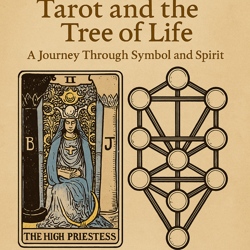
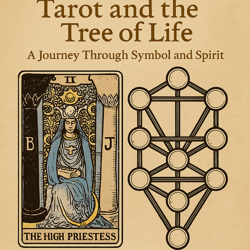
By the 19th century, tarot had become central to esoteric study within the Hermetic Order of the Golden Dawn. Influenced by the teachings of Eliphas Levi, members of this order reinterpreted the Major Arcana as a map of spiritual evolution. One of their most influential contributions was aligning the 22 Major Arcana cards with the twenty-two paths of the Kabbalistic Tree of Life.

The Tree of Life, central to Jewish mysticism, outlines ten Sephirot (emanations of divine energy) and the connecting paths that represent the soul’s journey toward unity. Within this system, each tarot card serves as a symbolic key to spiritual development, transformation, and awakening.

For example, The Fool marks the path from Keter to Chokhmah, embodying limitless potential stepping into wisdom. The High Priestess bridges Keter and Binah, reflecting the threshold between the visible and the unseen. The Empress joins Chokhmah and Binah, where creative impulse meets divine understanding. The Lovers fall between Binah and Tiphereth, standing for choice, union, and integration.

Other cards bring added layers of initiation: Strength invites us to harmonize power with compassion; Death calls for deep surrender and transformation; and The Tower awakens through disruption—or even destruction. As the journey continues, The Star inspires hope, The Moon asks us to navigate illusion, and The Sun offers clarity. The World, completing the descent from Yesod to Malkuth, celebrates fulfillment, embodiment, and the unity of self with Source.

In this sacred fusion of tarot and Kabbalah, the cards become more than archetypes or fortune-telling tools. They are way-showers—each one illuminating a step on the path of personal and spiritual evolution. Through their images and meanings, seekers are invited into an ever-deepening conversation with the divine, the self, and the mystery that links them. A beautiful expression of illumination along an often-shrouded path.
Kabbalah and Tarot part 2

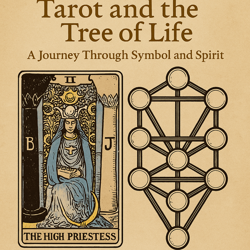
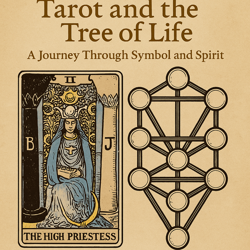
While the Major Arcana commands attention with its mythic journeys and spiritual truths, the Minor Arcana weaves those cosmic themes into our everyday lives. Often overlooked, these fifty-six cards are the living pulse of the Tarot—revealing emotional nuance, personal growth, and the sacred dance of being human.

Just like playing cards, the Minor Arcana is divided into suits. But in Tarot, these suits reflect elemental forces rooted in the Earth. We begin with Earth (Pentacles), then Air (Swords), Fire (Wands), and Water (Cups). These aren’t mere poetic symbols—they’re lenses through which we engage with the world: Earth grounds us in structure and substance; Water flows with emotion, spirituality, and memory; Fire sparks inspiration and courage; and Air sharpens clarity, tension, and truth.

These elements don’t stand alone—they animate the Tree of Life. Each numbered card from Ace to Ten corresponds to a Sephirah, a divine emanation. The Two of Swords speaks to Chokhmah, holding wisdom in tension; the Five of Cups mirrors Geburah, where disciplined emotion catalyzes healing; the Nine of Pentacles echoes Yesod, celebrating self-sufficiency rooted in spirit.

From this perspective, “minor” is a misnomer. These cards become sacred maps, tracing divine energies as they ripple through personal experience. Every reading holds a layered meaning: celestial insight paired with earthly reflection.

The court cards deepen this bridge. Each embodies elemental personality and archetype. The Queen of Wands radiates courage and magnetic Fire; the Knight of Cups moves with Water’s gentle devotion. These aren’t distant figures, but spiritual companions traversing the paths between Sephiroth, guiding us through identity, initiation, and integration.

In essence, the Minor Arcana is the soul’s diary—a real-time record of journeys sparked in the Major Arcana. The Fool steps into the infinite unknown, but it’s the Ace of Pentacles that plants intention into fertile ground. The Star promises hope, yet the Eight of Swords challenges us to release limiting thought patterns.

To honor the Minor cards is to honor life itself: the clarity found through tension, the joy held in fleeting moments, and the sacred friction that moves us forward. These are the Tree’s leaves, dancing with the winds of experience. They ask, gently but powerfully: What are you doing with what you’ve been given?

Kabbalah and Tarot part 3

With the elemental foundations of the Minor Arcana in mind, let us step forward to explore how tarot blends the playful structure of card games with the deep currents of Kabbalah, esotericism, mysticism, and spiritual insight. Over centuries, this fusion has crystallized into one of the most consistently used divinatory tools—and, intriguingly, one of the most accurate.
 
The structure of the cards is deceptively simple. Like the game it echoes, tarot begins with the Ace and climbs to the King. The Ace, as in many card games, is all or nothing—pure potential and new beginnings. Twos evoke duality, choices, and balance. Threes, sacred in many spiritual traditions, symbolize growth, collaboration, and an early burst of success. Fours offer foundation, stability, and rest. Fives bring disruption, conflict, and necessary change. Sixes signal harmony, healing, and forward movement. Sevens encourage reflection, challenge, and strategy. Eights speak to mastery, progress, and power—resonating with the concept of infinity found in the Major Arcana. Nines initiate completion with intensity and fulfillment. Tens culminate the journey with transformation and transmutation. 

Then come the Court Cards, which bring in the human nuance. The Page carries curiosity, fresh ideas, and youthful wonder. The Knight charges forward—an agent of movement, challenge, and pursuit. The Queen embodies nurturing wisdom and emotional intelligence, yet protects fiercely. The King rules with maturity, leadership, and grounded authority.
 
This framework is straightforward, but tarot’s magic emerges through combination and contrast. For instance, the King of Pentacles differs profoundly from the King of Wands. 

Pentacles stand for earth, work, health, finances, and material life. The King of Pentacles builds through steady growth and careful investments. Structure and loyalty are paramount; proven results, physical well-being, and reliability anchor his world.

Wands, however, are fire—passion, creativity, and bold action. The King of Wands charges ahead, often without preplanning. He ignites ideas, commands attention, and thrives on high-energy momentum. Bold, charismatic, and instinctive, he dances with possibility and pivots with ease. 

Two kings. Two paths. Both leaders—but one rooted in stability, the other aflame with vision.
 
Now imagine we’re reading for a person deciding on a business venture. They’ve been moving forward with King of Pentacles energy—methodical, strategic—but nothing’s working. When asking how best to proceed, the King of Wands flies out. Our client loosens their hold and embraces a spontaneous, quick-fire approach. Suddenly, things begin falling into place. They remain in King energy—but in this instance, slow and steady would not lead to movement.

Cartomancy

Cartomancy is a divination practice that involves using a deck of cards, to gain insight and guidance into various aspects of a person’s life or to predict future events. It’s a form of divination that has been practiced for centuries and is often considered a type of psychic or mystical art.  The reader interprets the symbolism, imagery, and arrangement of the cards drawn or laid out in a specific pattern. Different cards are associated with different meanings and concepts, and the way they are combined and positioned can influence the interpretation. The reader might consider the relationships between cards, their positions in the spread, and their orientations (reversed or upright) to provide insights and predictions.

There are several different forms of cartomancy, each using a specific type of card deck and interpretation method. Here are some notable forms of cartomancy:

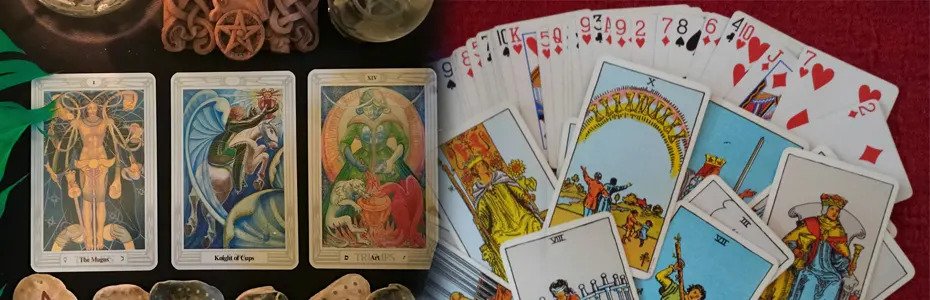
Tarot Card Reading: This is the most popular forms of cartomancy. The 78-card deck is divided into the Major Arcana and Minor Arcana, each with its own set of meanings. Tarot readers use various spreads and combinations of cards to offer insights into different aspects of a person’s life.

Lenormand Card Reading: The Lenormand deck consists of 36 cards, each depicting a simple image or symbol. This form of cartomancy focuses on clear and direct interpretations, often involving combinations of two or more cards to form a sentence-like statement about a situation.

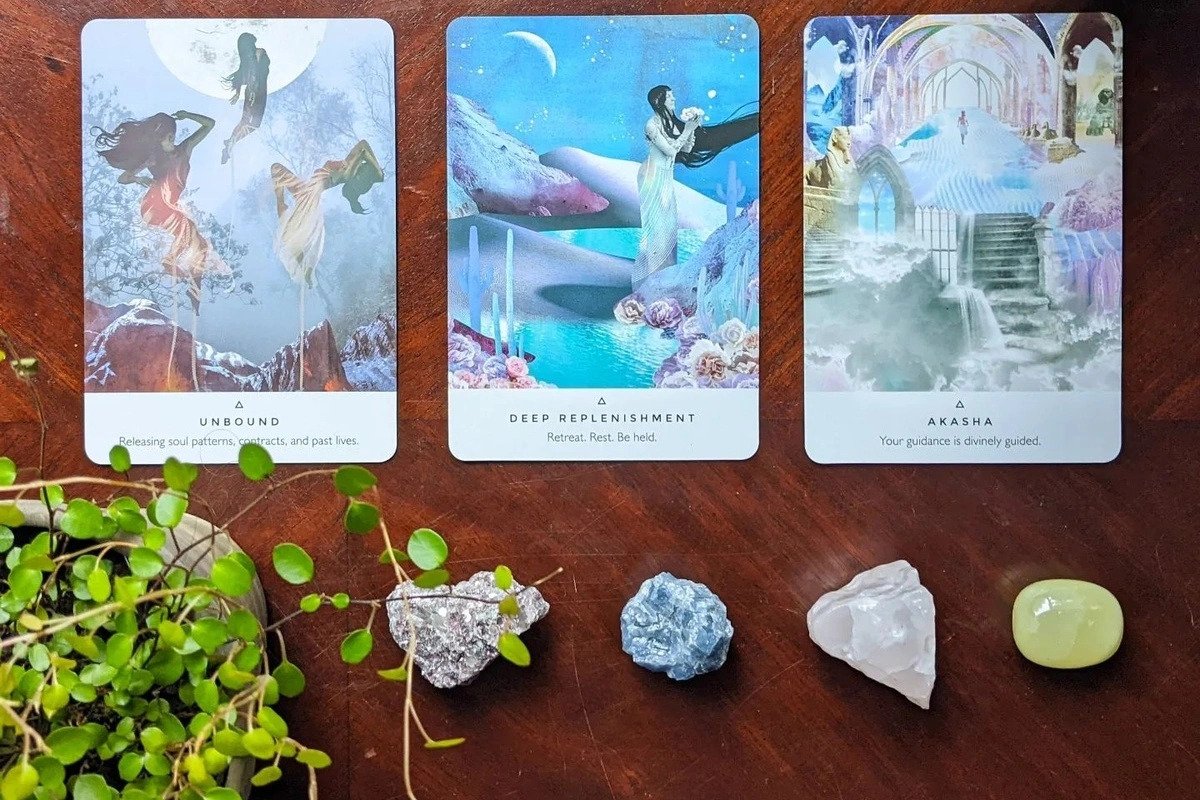
Oracle Card Reading: Oracle decks come in a wide range of themes and designs. Unlike tarot and Lenormand, oracle cards don’t follow a standardized system. They might have inspirational messages, affirmations, or symbolic imagery that the reader interprets based on their intuition and the theme of the deck.

Playing Card Reading: Using a standard deck of 52 playing cards, this form of cartomancy assigns meanings to each card based on their rank and suit. Different spreads and combinations are used to provide insights into various life situations.

Gypsy Card Reading: Also known as the Kipper cards, this method uses a deck of 36 cards with specific images and meanings. Gypsy card readings often focus on practical matters and day-to-day life situations.

Regular Playing Cards: Similar to playing card reading, this form of cartomancy uses the standard 52-card deck, attributing meanings to each card based on their number and suit. Different spreads and techniques are used to provide guidance and predictions.

Sibilla Card Reading: The Sibilla card deck contains a varied number of cards (often 52 or more) with intricate imagery and symbolism. Readers combine and interpret cards in response to questions or situations.

Destiny Card Reading: This system assigns a specific playing card to each day of the year based on a person’s birthdate. These birth cards are thought to hold insights into a person’s strengths, challenges, and life path.

These are just a few examples of the many different forms of cartomancy. Each form has its own unique characteristics, interpretations, and spreads, and practitioners often choose the one that resonates most with them or the one that fits the type of guidance they seek to offer.

Oracle Cards

Oracle cards are a type of divination tool used for gaining insight and guidance. Unlike tarot cards, which have a standardized set of 78 cards with specific meanings, oracle cards can have any number of cards with a wide range of themes and artwork.

Oracle cards are typically used for personal growth and self-reflection, and they can be used for a variety of purposes, such as gaining insight into a situation, finding inspiration, or receiving guidance on a particular issue.

There are many different types of oracle cards available, each with their own unique themes and artwork. Here are some common types of oracle cards:

  1. Angel Cards: These cards feature images and messages from angels and can provide guidance, comfort, and support.
     
  2. Goddess Cards: These cards feature images and messages from various goddesses from different cultures and can provide insight and guidance on feminine energy and empowerment.
     
  3. Animal Cards: These cards feature images and messages from different animals and can provide guidance on connecting with nature and understanding animal symbolism.
     
  4. Chakra Cards: These cards feature images and messages related to the chakras, or energy centers in the body, and can provide guidance on balancing and healing these centers.
     
  5. Tarot-inspired Oracle Cards: These cards are similar to tarot cards but with less strict structure and can provide guidance on various aspects of life such as love, career, and personal growth.
     
  6. Affirmation Cards: These cards feature positive affirmations and can be used as a tool for self-reflection and self-improvement.
     
  7. Numerology Cards: These cards feature numbers and can provide guidance on understanding the significance of numerology in one’s life.
     
  8. Elemental Cards: These cards feature images and messages related to the four elements (earth, air, fire, and water) and can provide guidance on understanding and connecting with these elements.

There are many other types of oracle cards available, and new decks are constantly being created with unique themes and artwork.

Tarot Card Superstitions

Tarot Card Readings
Superstitions

Tere are many superstitions and traditions surrounding the practice of reading the Tarot.  These are the views of a longtime Tarot Reader, and may not be shared by all Tarot Readers.

 
The first practice starts with getting the deck, itself. It is customary for the Tarot Cards to be given as a gift. Buying a deck for myself will give me pretty cards, but without influences. My first deck was the traditional Rider-Waite deck, given to me by my boyfriend’s mother. The cards came in a container with a little book full of definitions and spreads. This is still the deck I use to this day, and get the best results with. I have been given other decks, and I have purchased some.


The one I purchased was gorgeous, colorful and well thought out.  However, using them for readings did not work for me.  Most Tarot Readers readily give decks to others.  I have given that colorful deck away and many more Tarot decks over the years.  This spirit of giving and sharing gives good energy to the cards.


The next tradition is card protection.  The Tarot cards are very absorbent of surrounding energies.  Many superstitions and methods surround protecting the deck from interfering vibes.  One method is wrapping the cards in a silk cloth when not in use.  Another is keeping decks away from electronic devices to avoid EMF exposure.  And lastly, guarding against negative people and their energies around the cards. 


The third tradition is cleansing the deck.  Many times after a reading the cards may feel unclean, as if the energies from the reading are still lingering in the deck.  A good shuffle will cleanse out those vibes.  I like to smear the cards all over the table and swish them around when they feel especially tainted.  Every month, many readers place their cards outside under the full moon.  Along with charging crystals, the full moon energy charges the cards with purifying energy.  Another method popular with readers is using smoke to clean the cards.  I will light some incense, and hover the deck over the smoke, shuffling them slightly.  The smoke will purify and energize the deck.


Every Tarot Reader adapts their traditions and superstitions, which are just as unique as they are.  It takes several years to develop skills in reading, plus an innate gift of powerful intuition to understand the messages in the cards.

Lotus Tarot Card Reading

Let’s see what the cards have in store for you with a free tarot card reading online or on 1-800-498-8777. Try the network for just $1 minute! 1-800-498-8777!  Our Network Established in 2001 and has 3 decades of experience.  We know how to staff only the BEST Psychics!

Tarot Card Readings

Tarot Card Readings

A tarot card deck is assembled up of 78 cards. Each card has its importance. Although each psychic has its implication for the cards, the meanings are very similar. Tarot cards are not planned to make life choices for someone. However, they are created to give an understanding into situations. When you get a reading with tarot cards, remember to keep an open mind and understand that tarot reading are there for guidance. When you ask for a tarot reading, you are looking for insight into options. You must feel comfortable and connected to the psychic to get a clear and accurate reading. If the psychic cannot correlate with you, it will be challenging for the psychic to read for you. When asking the tarot cards your questions, keep in mind that issues like, “Who am I bearing to Marry” will be oppugning to answer, instead of questions like, “What can I do to find my significant other.” Again, tarot cards are not there to make your life choice for you; they are there to help guide you with your decision.

Most gifted psychics give positive readings, and their clients should leave a reading, feeling uplifted and positive. When getting your tarot cards to read, think of it this way, the tarot cards are YOUR inner voice trying to communicate with you. Tarot cards are just a tool that some psychics use to bring clarity and understanding to a situation and to help leave you better informed before deciding that you may be anxious about it. So, if you are thinking about a tarot card reading, check around, the psychics that jump out at you, are usually the psychics that can connect with you the most. The right psychic will have you leaving the reading, and coming back to them telling them, everything or mostly everything the cards read to you, came true. My advice to you, be patient after the reading, as the psychic before leaving the reading, how long until the reading manifests. When that time frame passes, the psychic’s tarot reading should be accurate and help you feel secure in your decisions.

Let’s see what the cards have in store for you.

Love questions? Find a psychic near me 

Try the network for just $1 minute! 1-800-498-8777!  Our Network Established in 2001 and has 3 decades of experience.  We know how to staff only the BEST Psychics!