
83¢/min
Intro Offer
We charge 60% LESS than our competitors!
Tons of spot-on predictions in our newsletter.

category: Astrology Encyclopedia

Beholding Signs

Definition

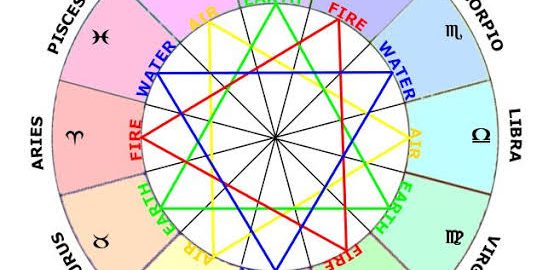
Beholding signs are zodiac signs connected by a whole-sign aspect, allowing them to symbolically “see” one another. In traditional astrology, signs behold each other when they form a sextile, square, trine, or opposition. Signs without one of these relationships are considered to be in aversion. Planets occupying the signs participate in that connection regardless of their exact degrees.

Astrological Meaning

When planets are in beholding signs, traditional astrologers interpret them as capable of witnessing, supporting, challenging, or otherwise engaging with each other. The type of aspect describes the relationship: trines and sextiles tend to indicate easier cooperation, while squares and oppositions suggest tension, negotiation, or competing aims. Planetary condition, house rulership, and whether one planet is overcoming another refine the judgment. An exact degree-based aspect may strengthen the contact, but the underlying whole-sign relationship remains important.

Why It Matters

Beholding helps clarify whether planets can meaningfully interact within a natal chart, election, or horary figure. It also explains aversion, in which planets occupy signs lacking a recognized whole-sign aspect and may have difficulty coordinating their topics. The concept gives traditional chart interpretation a structural foundation, but it should be considered alongside dignity, house placement, reception, and other testimony rather than used as a stand-alone verdict.

Related Encyclopedia Entries

Destiny

Definition

Destiny is the idea that a person’s life follows an underlying pattern or direction. In astrology, the term usually refers to themes suggested by the birth chart rather than a fixed sequence of unavoidable events. It can describe enduring potentials, recurring lessons, significant choices, or circumstances that shape personal development.

Astrological Meaning

Astrologers may explore destiny through the natal chart as a whole, paying particular attention to the Sun, Moon, Ascendant, chart ruler, lunar nodes, Saturn, and the houses they occupy. Traditional astrology may also examine planetary condition, house rulership, lots, and timing techniques to identify major life topics. These factors do not all mean the same thing: the natal chart describes underlying patterns, while transits, progressions, and other timing methods indicate periods when those patterns may become more active. Interpretations vary by astrological school, and no single placement proves that a particular outcome must occur.

Why It Matters

The concept of destiny helps connect separate chart symbols into a broader life narrative. Used carefully, it can highlight meaningful tendencies without denying free will, social conditions, or changing circumstances. A balanced interpretation treats the chart as a map of possibilities and pressures, allowing choices, preparation, and self-awareness to influence how its themes are expressed.

Related Encyclopedia Entries

Descending

Definition

Descending is an astrological and astronomical term for moving downward toward the western horizon. A celestial body is descending after passing the Midheaven and traveling toward the Descendant, where it sets and moves below the visible horizon. The term describes a phase of daily motion and should not be confused with the Descendant itself or the descending lunar node.

Astrological Meaning

In traditional chart interpretation, a descending planet occupies the western side of the horoscope between the Midheaven and Descendant. Its position may emphasize movement from public visibility toward encounter, exchange, or completion. The planet’s house, sign, aspects, condition, and proximity to an angle remain more important than the word descending alone. Some texts also use ascending and descending more broadly when discussing planetary strength, quadrant placement, or the apparent rise and fall of celestial bodies, so context matters.

Why It Matters

Recognizing whether a planet is ascending or descending helps clarify its relationship to the angles and the chart’s diurnal cycle. This can refine judgments about visibility, orientation, and how planetary themes are expressed. It also prevents confusion among three distinct ideas: motion toward setting, the Descendant angle, and the south or descending lunar node.

Related Encyclopedia Entries

Aquarius, Sagittarius and Capricorn

Definition

Aquarius, Sagittarius and Capricorn are three zodiac signs with distinct elements, modes, and planetary rulers. Sagittarius is mutable fire, traditionally ruled by Jupiter; Capricorn is cardinal earth, ruled by Saturn; and Aquarius is fixed air, traditionally ruled by Saturn and associated with Uranus in modern astrology. Together, they do not form one standard astrological configuration, but they may all be prominent within a natal chart, transit pattern, or relationship comparison.

Astrological Meaning

Sagittarius symbolizes exploration, conviction, learning, and the search for broader meaning. Capricorn emphasizes structure, responsibility, ambition, and practical achievement. Aquarius relates to independent thought, social networks, reform, and future-oriented ideas. When all three are emphasized, interpretation may focus on the movement from vision to organization and then innovation. Jupiterian expansion can encourage possibility, while Saturnian influence asks what is sustainable. The signs’ different modes also matter: Sagittarius adapts, Capricorn initiates, and Aquarius consolidates. Exact meaning depends on the planets involved, their houses, aspects, and condition.

Why It Matters

Recognizing the differences among these signs prevents broad or contradictory readings. A Sagittarius Sun, Capricorn Moon, and Aquarius rising, for example, describe separate parts of personality rather than a blended “triple-sign” identity. In transits or synastry, each planet-to-sign placement should likewise be assessed individually before drawing a combined theme. This approach produces a more balanced interpretation of freedom, discipline, ideals, and long-term direction.

Related Encyclopedia Entries

Depression

Definition

In traditional astrology, depression is an older term for a planet’s fall: the zodiac sign opposite the sign of its exaltation. A planet in depression is considered essentially debilitated because that sign does not readily support the planet’s customary qualities. This technical meaning should not be confused with clinical depression or ordinary sadness.

Astrological Meaning

A planet in depression may express its functions with less ease, consistency, or authority than it would in a sign of greater dignity. It is not powerless or automatically harmful. Interpretation also depends on the planet’s house, aspects, sect, reception, angularity, and other dignities or debilities. For example, the Sun is traditionally exalted in Aries and therefore in depression, or fall, in Libra. This can suggest that solar themes such as autonomy, visibility, and self-direction must operate through Libran concerns such as cooperation and balance.

Why It Matters

Depression helps astrologers evaluate a planet’s overall condition, especially in classical natal, horary, and electional work. It should be weighed alongside exaltation, domicile, detriment, and accidental dignity rather than treated as a final verdict. Because the term is technical, it should never be used by itself to infer a mental health condition or predict emotional suffering.

Related Encyclopedia Entries

Bel

Definition

Bel is an ancient Mesopotamian title meaning “lord” or “master,” rather than the name of a single deity in every period. It became especially associated with Marduk, the chief god of Babylon, whose celestial counterpart was Jupiter. In historical astrological texts, Bel may therefore refer to a divine authority connected with Babylonian religion and astral symbolism.

Astrological Meaning

When Bel appears in discussions of ancient astrology, it generally points toward Jupiterian themes expressed through Mesopotamian religious language: sovereignty, law, social order, judgment, protection, prosperity, and legitimate authority. The term should not automatically be treated as a separate planet, zodiac sign, or standard natal-chart point. Its precise meaning depends on the date, culture, and translation of the source, since the title could be applied differently across traditions.

Why It Matters

Understanding Bel helps readers interpret early astrological material without forcing modern chart terminology onto ancient concepts. It also illustrates how planetary meanings developed alongside religion, kingship, omen reading, and civic life. In a contemporary interpretation, Bel may provide historical context for Jupiter’s association with leadership, justice, expansion, and social standing, but it does not replace an assessment of Jupiter’s sign, house, aspects, condition, and role within the whole natal chart.

Related Encyclopedia Entries

