83¢/min
Intro Offer
We charge 60% LESS than our competitors!
Tons of spot-on predictions in our newsletter.

category: Astrology Encyclopedia

Fixed Signs

Definition

Fixed Signs are Taurus, Leo, Scorpio, and Aquarius, the four zodiac signs associated with the fixed modality. Modality describes how a sign tends to direct energy: by initiating, sustaining, or adapting. In the tropical zodiac, fixed signs occupy the middle of each season and are traditionally connected with continuity, concentration, and stabilization.

Astrological Meaning

A strong fixed emphasis in a natal chart can suggest persistence, loyalty, sustained attention, and a desire to consolidate what has already begun. It may also indicate resistance to abrupt change or a tendency to hold firmly to established positions. Each element shapes the modality differently: Taurus sustains material resources, Leo maintains creative expression, Scorpio preserves emotional intensity, and Aquarius upholds ideas or collective aims. Astrologers assess the whole chart rather than judging fixed qualities from the Sun sign alone.

Why It Matters

Recognizing fixed energy helps clarify how a person may maintain commitments, manage change, and bring plans to completion. It can also explain why certain chart factors favor consistency over speed. Balancing fixed strength with cardinal initiative and mutable flexibility may support a more nuanced interpretation of temperament, relationships, and timing.

Related Encyclopedia Entries

Climate

Definition

In classical astrology, climate refers to the broad environmental and geographic conditions associated with a place, especially latitude, seasonal patterns, and the length of daylight. Older texts may use the related term “clime” for a band of the Earth defined by its position relative to the equator. This concept concerns regional context rather than a short-term weather forecast.

Astrological Meaning

Traditional astrologers considered climate when adapting planetary symbolism to different locations. The rising and setting of signs, the duration of planetary hours, and the prominence of particular constellations vary with latitude. Climate could also be included in mundane astrology, where the chart of a city, nation, season, or notable event is interpreted alongside local geography. In natal work, birthplace determines the angles and houses, but climate itself is usually treated as background context rather than a separate chart factor.

Why It Matters

Climate illustrates that astrology developed through observation of both the sky and the local environment. It helps explain why classical rules may not operate identically at every latitude, particularly near the equator or polar regions. Modern astrologers may use the idea cautiously when selecting house systems, evaluating planetary visibility, or interpreting location-based charts, without assuming that geography fixes personality or fate.

Related Encyclopedia Entries

First point

Definition

In astrology, the First point usually refers to the First Point of Aries, or 0° Aries. It marks the beginning of the tropical zodiac and corresponds to the Sun’s position at the March equinox. Despite its name, this coordinate is no longer located within the astronomical constellation Aries because of the precession of the equinoxes.

Astrological Meaning

As the starting degree of the tropical zodiac, the First point symbolizes initiation, emergence, and the opening of a new cycle. It is also one of the cardinal points, alongside 0° Cancer, 0° Libra, and 0° Capricorn. A natal planet or chart angle placed very close to 0° Aries may emphasize directness, beginnings, or a strong impulse to act, although its sign, house, aspects, and overall chart context remain essential to interpretation.

Why It Matters

The First point provides the reference from which tropical zodiacal longitude is measured, making it fundamental to chart calculation and seasonal astrology. It also clarifies the difference between zodiac signs and similarly named constellations. Astrologers may pay particular attention when planets cross 0° Aries because the ingress begins a fresh zodiacal cycle, but its practical significance depends on the planets involved and the chart being examined.

Related Encyclopedia Entries

Cold planets

Definition

Cold planets are planets classified as possessing the quality of coldness in traditional astrology. Cold is one of four primary qualities—hot, cold, wet, and dry—used to describe planetary natures. Saturn is considered strongly cold and dry, while the Moon is cold and moist. Venus is moderately cold and moist, and Mercury may be treated as cold and dry by nature, although it readily takes on the qualities of nearby planets. Classifications can vary slightly among traditional authorities.

Astrological Meaning

Astrological coldness symbolizes contraction, stillness, preservation, receptivity, and reduced outward activity. Its expression depends on the planet’s accompanying quality and chart condition. Saturn’s cold dryness may suggest restraint, boundaries, or isolation, whereas the Moon’s cold moisture is associated with responsiveness, embodiment, and changeability. Venus blends coolness with moisture in ways traditionally connected with cohesion and pleasure. Sign placement, house, aspects, sect, and essential dignity can moderate or intensify these qualities.

Why It Matters

Recognizing cold planets helps astrologers assess temperament, planetary compatibility, and the overall balance of a natal chart. An emphasis on cold qualities may describe a reflective, cautious, conserving, or inwardly focused style, but it should not be interpreted alone. Traditional analysis weighs coldness alongside heat, moisture, dryness, and the planet’s specific role. The concept is therefore a descriptive tool rather than a fixed judgment about personality or events.

Related Encyclopedia Entries

Fire Signs

Definition

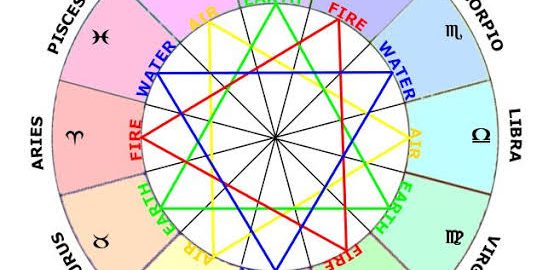
Fire Signs are the three zodiac signs associated with the classical element of fire: Aries, Leo, and Sagittarius. In astrology, fire symbolizes vitality, enthusiasm, confidence, creativity, and the impulse to act. These signs share an expressive, energetic quality, although each demonstrates it through a different modality and planetary ruler.

Astrological Meaning

Aries expresses fire through cardinal initiative, often emphasizing courage, immediacy, and the desire to begin. Leo channels fixed fire into sustained creativity, personal expression, loyalty, and leadership. Sagittarius represents mutable fire, directing enthusiasm toward exploration, learning, belief, and broader horizons. A strong fire emphasis in a natal chart may suggest an animated, spontaneous, or self-motivated temperament. When fire is less prominent, a person may approach action more cautiously or draw motivation from other elemental qualities. Interpretation should consider the entire chart, including planets, houses, aspects, and the balance among fire, earth, air, and water. Fire placements can be inspiring and decisive, but they may also correspond with impatience, overconfidence, or difficulty maintaining restraint when unsupported by balancing factors.

Why It Matters

Understanding Fire Signs helps an astrologer assess how a chart approaches motivation, risk, creativity, and self-expression. Elemental balance adds context to individual placements without reducing someone to a single sign. It can also clarify relationship dynamics by showing where enthusiasm flows naturally and where different pacing or communication styles may require adjustment.

Related Encyclopedia Entries

  • Traditional Astrology
  • Astrological Terminology
  • Natal Chart
  • Four Elements
  • Aries
  • Leo Influences Explained: Traits, Associations, and Chart Meaning in Astrology Today Clearly, Explained Simply, Now, for Beginners and Astrology Readings Worldwide – Modern Guide Edition 2024-2025, Updated Edition. Including Love, Career, Health, Compatibility, and Famous People Examples. Also Covers Decans, Degrees, Houses, Planets, Aspects, Transits, Progressions, Solar Returns, Synastry, Composite Charts, Midpoints, Asteroids, Fixed Stars, Sabian Symbols, Arabic Parts, Lots, Nodes, Chiron, Lilith, Vertex, Part of Fortune, MC, IC, ASC, DSC, and More Advanced Techniques for Professional Astrologers and Students. Comprehensive Resource with Practical Tips, Case Studies, Charts, Tables, Glossary, FAQs, and Further Reading Recommendations to Master Leo Energy and Interpretation Skills Effectively Today and Beyond, Always. Bonus: Includes 100+ Examples, Exercises, Worksheets, Checklists, Templates, and Quick Reference Guides for Easy Learning and Application in Real-Life Readings and Personal Growth Journey. Perfect for Beginners, Intermediate, and Advanced Astrologers Seeking Deep Understanding and Accurate Interpretations. Updated with Latest Research, Trends, and Insights from Leading Experts in the Field. Start Your Astrology Mastery Journey Now and Transform Your Readings with Confidence and Clarity! Limited Time Special Edition with Exclusive Content and Resources. Get Your Copy Today and Join Thousands of Happy Readers Worldwide! Money-Back Guarantee. Free Shipping. Instant Digital Download Available. Order Now!

Cold Signs

Definition

Cold Signs are zodiac signs traditionally classified as having the primary quality of coldness. In classical astrology, the earth signs—Taurus, Virgo, and Capricorn—and the water signs—Cancer, Scorpio, and Pisces—are considered cold. Earth combines cold with dryness, while water combines cold with moisture. “Cold” describes an elemental quality, not an uncaring personality.

Astrological Meaning

Symbolically, coldness suggests concentration, conservation, receptivity, and a tendency to contain energy rather than disperse it. Earth signs may express this quality through practicality, stability, restraint, or attention to material conditions. Water signs may show it through sensitivity, inwardness, emotional memory, or responsiveness. A chart containing many planets in cold signs can indicate a more reflective, preserving, or cautious temperament, but this is only one layer of interpretation. Planetary condition, houses, aspects, sect, and the balance of other elemental qualities can substantially modify the result.

Why It Matters

The classification helps astrologers assess elemental balance and temperament within traditional chart interpretation. It can clarify how a person gathers, protects, and processes energy, especially when compared with hot signs, which are associated with outward movement and activation. Cold signs should not be read as inherently negative or as proof of emotional distance; their symbolism can also support patience, depth, endurance, and careful judgment.

Related Encyclopedia Entries

