
All posts by admin

Positive sign

Definition

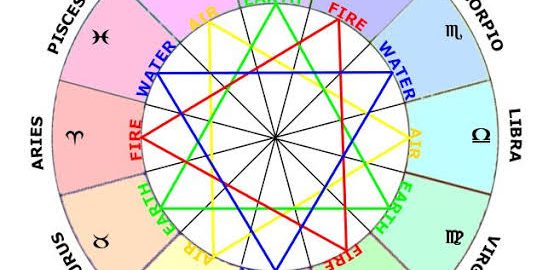
A positive sign is one of the six zodiac signs traditionally classified as masculine or active: Aries, Gemini, Leo, Libra, Sagittarius, and Aquarius. These are the odd-numbered signs and belong to the fire and air elements. “Positive” describes polarity, not whether a sign is fortunate, virtuous, or better than another.

Astrological Meaning

Positive signs are associated with outwardly directed, expressive, and initiating energy. Planets placed in them may operate through visible action, communication, engagement, or projection into the surrounding world. Fire signs tend to express this polarity through inspiration, confidence, and creative movement, while air signs often express it through ideas, relationships, and social exchange. The planet, house, aspects, sect, and overall chart determine how strongly this quality appears.

Why It Matters

Sign polarity offers a quick way to assess the balance between outward expression and inward receptivity in a natal chart. A concentration of planets in positive signs may suggest a person who processes experience through activity or external interaction, but it does not automatically indicate sociability or confidence. Few placements in positive signs do not imply weakness; they may simply place greater emphasis on reflection and response. Polarity is most useful when interpreted alongside elements, modalities, and planetary condition.

Related Encyclopedia Entries

Planetary Significators – Mundane

Definition

Mundane planetary significators are the people, institutions, conditions, and public affairs traditionally represented by each planet in mundane astrology. Rather than describing an individual personality, they help astrologers interpret collective subjects such as governments, economies, social movements, agriculture, conflict, and national welfare.

Astrological Meaning

The Sun commonly signifies rulers, heads of state, and prominent authorities; the Moon, the public, food supply, and changing popular concerns. Mercury relates to communication, trade, education, and transport, while Venus is associated with diplomacy, culture, pleasure, and agreements. Mars can signify armed forces, disputes, fires, and forceful action. Jupiter often represents law, religion, finance, and expansion; Saturn corresponds with institutions, restrictions, land, labor, and established structures. Modern astrologers may connect Uranus with disruption and technology, Neptune with collective ideals or uncertainty, and Pluto with concentrated power and deep transformation. Meanings vary by tradition and must be judged alongside houses, signs, aspects, rulerships, and chart context.

Why It Matters

These significators provide a consistent vocabulary for reading ingress charts, national horoscopes, eclipses, and major transits. They help identify which areas of public life may be emphasized without treating one planet as a guaranteed event. Careful interpretation considers planetary condition, relevant houses, repeated testimony, and the historical circumstances surrounding the chart.

Related Encyclopedia Entries

Moon: The querent – if a woman

Definition

“Moon: The querent—if a woman” is a traditional horary astrology attribution. The querent is the person asking the question, and older texts sometimes assigned the Moon to a female querent. This convention belongs to a historical system of planetary significators and should not be confused with the Moon’s general meaning in a natal chart.

Astrological Meaning

In horary practice, the ruler of the first house usually serves as the querent’s primary significator, while the Moon commonly acts as a secondary or co-significator regardless of gender. Its sign, house, dignity, aspects, and next applying aspect can describe the querent’s emotional involvement, changing circumstances, or the direction in which the matter may unfold. When using the older female-querent attribution, the Moon should be considered alongside the Ascendant ruler rather than interpreted in isolation.

Why It Matters

Understanding this rule helps readers interpret classical horary texts without treating their gender conventions as universal requirements. The Moon can add timing, context, and emotional nuance, but its testimony must be weighed against the whole chart. Contemporary astrologers may retain its role as a general co-significator while using the querent’s actual identity and the question’s context instead of making assumptions based on sex or gender.

Related Encyclopedia Entries

Slow of Course: slow in motion

Definition

Slow of course is a traditional astrological term for a planet moving more slowly than its customary daily speed as observed from Earth. It describes apparent planetary motion rather than movement through a particular house or sign. A planet may become slow before a station, although slowness, stationary motion, and retrograde motion are distinct conditions. It should not be confused with the Moon being void of course.

Astrological Meaning

In classical astrology, slow motion is generally treated as an accidental debility because the planet has less momentum to carry out its significations. Matters represented by that planet may develop gradually, encounter hesitation, or require sustained effort. In a natal chart, it can suggest that the planet’s functions are deliberate, measured, or slower to become visible. In horary or electional astrology, it may describe delayed progress or limited readiness. Interpretation depends on the planet’s actual speed, its proximity to a station, and supporting factors such as dignity, house placement, aspects, and sect.

Why It Matters

Planetary speed adds practical nuance to chart interpretation. Two planets in the same sign can operate differently when one is moving swiftly and the other is nearly stationary. Recognizing slow of course helps an astrologer assess pace and capacity without assuming failure: strong dignity or helpful aspects may stabilize the planet, while several weakening conditions can emphasize delay or reduced agency.

Related Encyclopedia Entries

Re-direct

Definition

Re-direct is an uncommon and nonstandard astrological term. In most contexts, it refers to a planet resuming direct motion after a period of apparent retrograde motion. Some practitioners may also use it informally for redirecting or recalculating a symbolic direction, so its intended meaning should be confirmed from the technique or text in which it appears.

Astrological Meaning

When Re-direct describes a planet turning direct, the relevant factors are the planet, its station, zodiacal position, house, aspects, and rulerships. Astrologers often interpret the change as a gradual shift from review, delay, or inward processing toward renewed outward movement. The station itself may be emphasized because the planet appears nearly motionless. In directional systems, however, the term may concern a technical adjustment rather than planetary motion, and it should not automatically be read as a station direct.

Why It Matters

Recognizing the term’s ambiguity prevents two different ideas from being confused. A station direct is an astronomical phase used in natal interpretation, transits, electional work, and horary astrology. A recalculated direction belongs to a symbolic forecasting method with its own rules. Checking the surrounding terminology, chart type, and author’s definitions leads to a more reliable interpretation. Even when a planet turns direct, astrology does not imply an instant or guaranteed outcome; developments may unfold gradually and remain shaped by the whole chart.

Related Encyclopedia Entries

Rapt

Definition

Rapt is an older astrological term derived from a word meaning “carried” or “swept along.” It usually refers to the apparent daily motion that carries celestial bodies westward across the sky as Earth rotates. Traditional texts may call this the rapt, primary, or diurnal motion, distinguishing it from a planet’s own movement through the zodiac.

Astrological Meaning

Rapt motion is especially relevant to classical timing methods, including primary directions. In these techniques, planets, angles, and other chart points are symbolically directed according to the rotation of the celestial sphere. References to rapt aspects or rapt parallels generally concern relationships formed through this rotational movement rather than ordinary zodiacal aspects based on planetary longitude. Exact usage can vary among traditional authors, so the method and historical context should be checked before interpreting the term.

Why It Matters

Understanding rapt motion helps readers distinguish two different kinds of celestial movement: the rapid daily rising, culminating, and setting of the heavens, and the slower zodiacal motion of individual planets. This distinction prevents confusion when studying older astrological terminology or advanced predictive methods. Rapt factors are not usually interpreted as standalone natal placements; their significance depends on the directional system, chart angles, planets involved, and the practitioner’s chosen traditional framework.

Related Encyclopedia Entries

