
All posts by admin

Periodical Lunation

Definition

A periodical lunation is a recurring alignment in the Sun–Moon cycle, usually identified by the Moon returning to the same phase or angular distance from the Sun. Because terminology differs among traditional schools, the phrase may refer generally to a regularly calculated New Moon, Full Moon, or repetition of a natal lunar phase. It is based on the synodic month of approximately 29.5 days rather than simply the Moon’s return to one zodiacal degree.

Astrological Meaning

Astrologers may calculate a periodical lunation to examine the tone of a month or another repeating lunar interval. The chart for the exact Sun–Moon relationship is interpreted through its zodiac signs, houses, aspects, and connections with the natal chart. The Moon describes changing circumstances, habits, and responses, while the Sun indicates purpose, visibility, or central concerns. Strong contacts to natal planets may emphasize the themes associated with those planets without guaranteeing a particular event.

Why It Matters

Periodical lunations offer a structured way to follow short-term cycles and observe how familiar themes develop over time. They can help distinguish a repeating emotional or practical rhythm from longer planetary transits. Interpretation is most useful when the astrologer states which phase is being repeated and compares the lunation with broader timing factors. Used this way, the technique supports reflection and planning rather than fixed prediction.

Related Encyclopedia Entries

Perigee

Definition

Perigee is the point in an orbit at which the Moon, or another object orbiting Earth, comes closest to Earth. Its opposite is apogee, the farthest point. Because the Moon’s orbit is elliptical rather than perfectly circular, its distance and apparent size vary throughout the month. A New or Full Moon near perigee is sometimes informally called a supermoon.

Astrological Meaning

In astrology, lunar perigee may be considered when exploring the Moon’s changing proximity, apparent size, and symbolic emphasis. Some astrologers view a Moon near perigee as more immediate, noticeable, or concentrated in expression, particularly around lunar phases. However, perigee is not interpreted as uniformly or as widely as the Moon’s sign, house, aspects, and phase. It should also be distinguished from lunar apogee points commonly associated with Black Moon Lilith calculations.

Why It Matters

Perigee adds astronomical context to lunar interpretation and can refine work with lunations, eclipses, mundane cycles, or electional timing. In a natal chart, it is best treated as a supporting condition rather than a stand-alone indicator. Its relevance depends on the astrological method being used and on whether the astrologer works with the Moon’s actual distance. Consulting a precise ephemeris helps separate perigee from phase, declination, and other lunar factors.

Related Encyclopedia Entries

Peregrine

Definition

Peregrine is a traditional astrology term for a planet occupying a degree where it has no essential dignity. In most classical systems, this means the planet is not in its domicile, exaltation, triplicity, term, or face. The word suggests a traveler or foreigner: the planet is operating without authority over, or established support within, its location.

Astrological Meaning

A peregrine planet may have difficulty expressing its nature consistently because it lacks essential resources in that part of the zodiac. In horary astrology, it can describe a significator with limited control, uncertain standing, or dependence on circumstances and other planets. In a natal chart, it may indicate a planetary function developed through adaptation, experience, or outside assistance rather than through an immediately secure mode of expression. Peregrine status does not automatically make a planet harmful or powerless. Accidental dignity, house placement, aspects, reception, sect, and the condition of the dispositor can substantially alter the interpretation. Some traditional authorities also differ in how they weigh minor dignities, so the dignity table being used should be identified.

Why It Matters

Recognizing peregrine status prevents an astrologer from judging a planet only by sign or aspect. It adds context about available support and agency, especially in horary and electional work. The most useful reading considers the planet’s complete condition rather than treating peregrine as a fixed verdict.

Related Encyclopedia Entries

Benefic and Malefic

Definition

Benefic and malefic are traditional astrological classifications describing how planets tend to operate. Benefics are associated with support, growth, pleasure, or ease, while malefics are linked with pressure, conflict, limitation, or separation. Traditionally, Jupiter and Venus are the principal benefics, and Saturn and Mars are the principal malefics. Mercury’s classification varies according to its condition and associations.

Astrological Meaning

These labels describe broad planetary tendencies rather than fixed outcomes. A benefic may bring opportunity or enjoyment, but difficult placement, rulership, or aspects can complicate its expression. A malefic may indicate obstacles, effort, or discomfort, yet it can also promote discipline, courage, boundaries, and decisive action. Interpretation depends on factors such as sect, house placement, zodiacal dignity, planetary rulership, aspects, and whether the chart is natal, horary, electional, or mundane. Traditional techniques may also distinguish the greater benefic, Jupiter, from the lesser benefic, Venus, and the greater malefic, Saturn, from the lesser malefic, Mars.

Why It Matters

Understanding benefic and malefic symbolism helps clarify why astrologers do not judge planets solely as good or bad. The distinction provides a practical starting point for assessing support and challenge within a chart, while planetary condition supplies the necessary nuance. Used carefully, the framework can reveal where circumstances may flow more readily, where greater effort may be required, and how seemingly difficult influences might serve constructive purposes.

Related Encyclopedia Entries

Cold and hot

Definition

Cold and hot are two of the four primary qualities used in classical astrology, alongside moist and dry. They describe symbolic modes of energy rather than physical temperature. Heat tends to signify motion, activation, outward expression, and separation. Cold tends to signify stillness, concentration, inwardness, and consolidation. Combined with moisture or dryness, these qualities form the traditional temperaments of the elements.

Astrological Meaning

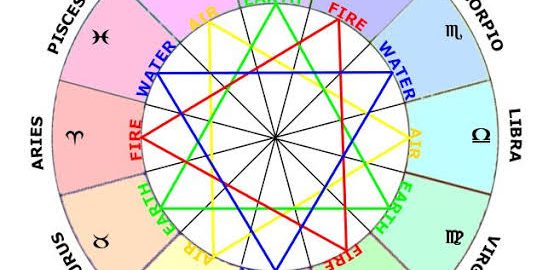
Fire is traditionally hot and dry, air hot and moist, water cold and moist, and earth cold and dry. Planets are also assigned qualitative temperaments: the Sun and Mars are generally hot, while the Moon and Saturn are generally cold, though classifications and emphasis can vary among traditional authorities. Astrologers assess these qualities through planetary condition, signs, aspects, sect, and the overall balance of a chart rather than treating one placement in isolation.

Why It Matters

Cold and hot help an astrologer describe how readily a chart expresses, contains, initiates, or stabilizes energy. A strong hot emphasis may suggest greater outward momentum, while a cold emphasis may favor reflection, preservation, or restraint. Neither quality is inherently favorable or unfavorable. Their usefulness lies in showing balance, excess, or deficiency within a broader traditional judgment, especially when evaluating temperament and planetary behavior.

Related Encyclopedia Entries

Diurnal and nocturnal

Definition

Diurnal and nocturnal mean “of the day” and “of the night.” In traditional astrology, these terms describe sect: a chart is diurnal when the Sun is above the horizon and nocturnal when the Sun is below it. Planets are also assigned to sects. The Sun, Jupiter, and Saturn are diurnal; the Moon, Venus, and Mars are nocturnal. Mercury’s sect can vary according to its relationship with the Sun.

Astrological Meaning

A planet generally operates more comfortably when its sect agrees with the chart. Jupiter tends to be especially supportive in a day chart, while Venus is often emphasized as the benefic of a night chart. Saturn is considered more constructive or manageable by day, whereas Mars may be less disruptive by night. Planets contrary to sect are not automatically harmful; they may simply require more care, context, or conscious direction. Sign, house, aspects, dignity, and condition still shape the final interpretation.

Why It Matters

Sect adds an important layer to natal, electional, and horary interpretation. It helps astrologers judge which planets are better positioned to offer support and which may express their difficult qualities more sharply. Rather than replacing modern chart analysis, the diurnal-nocturnal distinction refines planetary assessment and explains why similar placements can function differently in day and night charts.

Related Encyclopedia Entries

