
.83¢/min Intro Offer

We Charge 60% LESS than our competitors!

All Psychics tested before hire.

category: Astrology Encyclopedia

Reception by Dignity

Definition

Reception by dignity occurs when one planet occupies a zodiacal dignity belonging to another planet. For example, the Moon in Aries is received by Mars because Mars rules Aries. Reception may involve rulership, exaltation, triplicity, term, or face, depending on the astrological tradition. When two planets receive each other, the arrangement is called mutual reception.

Astrological Meaning

Reception describes a relationship in which the planet holding the dignity acts as a host to the visiting planet. This may suggest support, cooperation, permission, or access to resources. Its strength depends on the dignity involved, each planet’s overall condition, and the aspect between them. Some traditional techniques require an aspect for reception to operate fully, while others treat sign-based reception as meaningful on its own. A debilitated or poorly placed host may still offer help, but with limited capacity or complications.

Why It Matters

Reception adds nuance to natal, horary, electional, and predictive interpretation. It can show how planets that appear strained may nevertheless cooperate, or why an otherwise favorable connection lacks practical support. Examining reception alongside essential dignity, house placement, aspects, and dispositors helps clarify which planet has influence and whether it can assist the other effectively.

Related Encyclopedia Entries

Dispositor Tree

Definition

A dispositor tree is a diagram showing how planets in a chart are connected through sign rulership. Each planet is linked to the ruler of the sign it occupies, creating chains of influence. A chain may lead to a final dispositor, divide into several branches, or form a closed loop such as a mutual reception. Results can vary according to whether traditional or modern planetary rulers are used.

Astrological Meaning

Astrologers use the tree to identify which planets organize or channel the chart’s planetary activity. A final dispositor may function as a central influence because every rulership chain eventually reaches it. A mutual reception can indicate two planets that continually reinforce or redirect one another, while separate chains may suggest distinct centers of emphasis. Interpretation still depends on each planet’s sign, house, aspects, condition, and natal or predictive context; the diagram does not establish importance by itself.

Why It Matters

A dispositor tree condenses complex rulership relationships into a form that is easier to follow. It can reveal underlying structure, clarify why certain planets carry broader influence, and help connect placements that initially appear unrelated. In transit or predictive work, the natal dispositor pattern can also provide context for how an activated planet may feed into the wider chart, without guaranteeing a particular outcome.

Related Encyclopedia Entries

Final Dispositor

Definition

A final dispositor is the planet at the end of a chart’s chain of sign rulerships. To find it, astrologers identify the ruler of each planet’s sign, then follow that ruler to the planet governing its sign. When the chain ends with a planet in its own domicile, that planet is the final dispositor. Some charts have more than one, a closed loop through mutual reception, or no single final dispositor.

Astrological Meaning

In natal interpretation, a final dispositor may act as a central organizing influence, showing how different planetary drives ultimately express themselves. Its sign, house, aspects, dignity, and condition help describe whether this influence operates directly, subtly, smoothly, or with tension. A strongly placed final dispositor can lend coherence to the chart, but it does not override the Ascendant, luminaries, angles, or other prominent factors. Results can also vary according to whether an astrologer uses traditional rulers, modern rulers, or a clearly defined combination of both.

Why It Matters

Final dispositorship offers a structured way to connect placements that might otherwise seem unrelated. It can highlight recurring motivations, decision-making patterns, and the planetary themes through which a person integrates experience. The technique is most useful as part of a broader chart synthesis rather than as a stand-alone verdict, and rulership conventions should be stated consistently before drawing conclusions.

Related Encyclopedia Entries

Dominant Planet

Definition

A dominant planet is a planet considered especially influential within a natal chart. Astrologers identify dominance by weighing factors such as proximity to the Ascendant or Midheaven, rulership of key chart points, angular placement, numerous aspects, and strong essential dignity. Because different schools use different scoring systems, a chart may have more than one plausible dominant planet.

Astrological Meaning

The dominant planet can describe a recurring style through which a person approaches life. A prominent Mercury may emphasize curiosity, communication, or analysis, while a strong Saturn may highlight discipline, caution, responsibility, or structure. Planetary condition remains important: the sign, house, aspects, and retrograde status help explain how the planet operates. Dominance does not automatically make a planet beneficial, difficult, or stronger in every situation. Instead, it suggests that the planet’s themes are unusually visible or frequently activated. Some astrologers also assess dominant elements, modes, signs, or chart rulers alongside planetary dominance to avoid reducing the chart to one influence.

Why It Matters

Identifying a dominant planet offers a practical entry point into a complex natal chart. It can reveal major motivations, familiar behavioral patterns, and areas where personal energy tends to concentrate. However, it is best treated as an interpretive emphasis rather than a fixed label. Comparing the dominant planet with the Sun, Moon, Ascendant, chart ruler, and overall aspect pattern produces a more balanced reading.

Related Encyclopedia Entries

Chart Signature

Definition

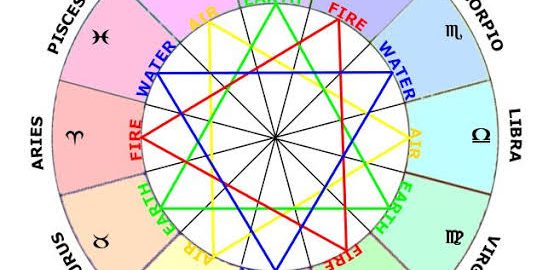
A chart signature is a shorthand description of the dominant elemental and modal pattern in a natal chart. Astrologers commonly calculate it by counting planets in the four elements—fire, earth, air, and water—and the three modalities—cardinal, fixed, and mutable. The leading element and modality are then combined into a zodiac sign; for example, dominant fire and fixed energy suggest a Leo signature. Calculation methods vary, especially regarding whether to include angles, nodes, or other points.

Astrological Meaning

The chart signature highlights a broad style through which a person may approach life. A cardinal-earth signature, associated with Capricorn, can emphasize practical initiative, while a mutable-air signature, associated with Gemini, may suggest adaptability expressed through ideas and communication. This signature does not replace the Sun, Moon, Ascendant, chart ruler, or planetary aspects. It is a synthesis tool, and its relevance depends on how clearly one element and modality dominate the chart.

Why It Matters

Identifying the chart signature can help organize a complex natal chart and reveal recurring themes that might otherwise be overlooked. It is particularly useful when several placements reinforce the same temperament or operating style. If counts are tied or nearly balanced, the chart may not have a distinct signature, and forcing one can oversimplify the interpretation. Used alongside planetary strength, house emphasis, aspects, and rulerships, the technique offers a helpful overview rather than a fixed verdict about personality or future events.

Related Encyclopedia Entries

Duplicated House Cusp

Definition

A duplicated house cusp occurs when the same zodiac sign appears on the cusps of two consecutive houses in a chart. It is found in unequal house systems, where houses vary in size according to birth time and location. For example, Gemini might occupy both the second-house and third-house cusps. Duplicated cusps commonly appear alongside intercepted signs, which fall entirely within a house without ruling a cusp.

Astrological Meaning

The repeated sign gives two neighboring houses the same planetary ruler, creating a structural connection between their topics. If Gemini rules both the second and third houses, Mercury may link matters of resources, values, communication, learning, and the immediate environment. Interpretation should consider the shared ruler’s sign, house, aspects, and condition. Each house remains distinct; the duplication describes a common style or channel through which both areas may be approached rather than making their meanings identical.

Why It Matters

Recognizing a duplicated cusp helps prevent an astrologer from assigning different rulers where the chart does not support them. It can reveal how developments in one life area may influence an adjacent one, especially when the shared ruler is activated by transits, progressions, or other timing techniques. The pattern is best read within the whole natal chart and should not be treated as inherently favorable, difficult, or predictive on its own.

Related Encyclopedia Entries

