
.83¢/min Intro Offer

We Charge 60% LESS than our competitors!

All Psychics tested before hire.

category: Astrology Encyclopedia

Sign: Libra

Definition

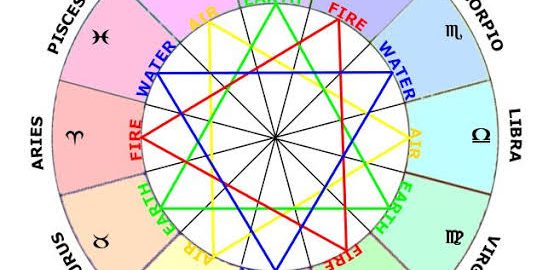
Libra is the seventh sign of the zodiac, represented by the Scales. It is a cardinal air sign ruled by Venus and traditionally associated with balance, proportion, partnership, diplomacy, and social exchange. Libra begins at the September equinox in the tropical zodiac and stands opposite Aries on the zodiac wheel.

Astrological Meaning

Libra describes an approach that compares, relates, and seeks a workable middle ground. In a natal chart, planets in Libra may express themselves through cooperation, aesthetic judgment, fairness, or awareness of other people’s perspectives. Its cardinal quality encourages initiative, while its air element emphasizes ideas, communication, and social reasoning. Libra’s desire to consider every side can support mediation and tact, though it may also correspond with indecision, conflict avoidance, or excessive dependence on external approval. Traditional astrology gives Venus rulership in Libra, Saturn exaltation, Mars detriment, and the Sun fall; these dignities modify interpretation but do not determine outcomes by themselves.

Why It Matters

Understanding Libra helps astrologers interpret where negotiation, reciprocity, and thoughtful comparison may be prominent. The sign’s meaning should be combined with the planet involved, its house placement, aspects, condition, and the chart as a whole. Libra is not simply a sign of romance or constant harmony; it can also indicate the active work required to create equitable relationships and balanced decisions.

Related Encyclopedia Entries

Form and the differentiation of sex

Definition

Form and the differentiation of sex is a historical astrological idea concerning how bodily appearance and sex characteristics were classified from a nativity. Classical authors often associated planets, zodiac signs, houses, and chart sectors with masculine or feminine qualities. These categories belonged to older cosmological and social systems and should not be treated as equivalent to modern understandings of biological sex, gender identity, or expression.

Astrological Meaning

In traditional interpretation, astrologers might compare the Ascendant and its ruler, planets near the Ascendant, the luminaries, and the balance of masculine and feminine signs. Planetary condition, aspects, sect, and sign qualities could modify the judgment. Such techniques were neither uniform nor consistently applied across different schools. In contemporary practice, these symbols are more often read as contrasting modes of expression—such as active and receptive, outward and inward, or assertive and responsive—rather than as reliable indicators of a person’s sex or gender.

Why It Matters

Understanding this concept helps readers approach classical texts accurately while recognizing their historical limitations. It also prevents traditional symbolic language from being mistaken for a fixed statement about identity or anatomy. When used today, masculine and feminine classifications are best handled as contextual metaphors within the chart, interpreted alongside the whole nativity and the individual’s lived experience.

Related Encyclopedia Entries

Mercury

Definition

Mercury is the planet associated with communication, reasoning, language, learning, commerce, and the exchange of information. In traditional astrology, it is considered a swift, adaptable planet whose expression changes readily according to its zodiac sign, house placement, aspects, and relationship to the Sun.

Astrological Meaning

In a natal chart, Mercury describes how a person tends to gather information, organize thoughts, speak, listen, study, and solve problems. Its sign suggests a preferred mental and communicative style, while its house shows the life area where curiosity and analysis are especially active. Aspects from other planets can modify Mercury’s expression: Saturn may encourage precision or restraint, Jupiter may broaden ideas, and Mars may add speed or directness. Mercury also rules Gemini and Virgo and is traditionally linked with writing, negotiation, travel, trade, and practical skills. During transits, Mercury may highlight periods of discussion, planning, paperwork, learning, or changing perspectives. Its retrograde phases are commonly used for review and revision, though they do not guarantee disruption.

Why It Matters

Understanding Mercury helps clarify how someone processes experience and conveys ideas. It can reveal communication strengths, recurring misunderstandings, and productive ways to learn or collaborate. Mercury should be interpreted within the whole chart rather than treated as a simple measure of intelligence or verbal ability.

Related Encyclopedia Entries

September 22

Definition

September 22 is a calendar date often associated with the Sun’s seasonal transition from Virgo into Libra and with the September equinox. It is not assigned one unchanging zodiac sign: the Sun’s exact position varies by year, time, and location. An accurate natal chart is therefore necessary to determine the Sun sign of someone born on this date.

Astrological Meaning

In tropical astrology, a September 22 birth may place the Sun in late Virgo or early Libra. A Virgo Sun is traditionally linked with discernment, practical improvement, and attention to detail, while a Libra Sun is associated with balance, relationship awareness, and considered judgment. Because this date lies near a sign boundary, astrologers should verify the Sun’s longitude rather than rely on the popular idea of a cusp personality. Other chart factors—including the Moon, Ascendant, planets, houses, and aspects—add essential context and may emphasize qualities not usually associated with either sign.

Why It Matters

September 22 illustrates why astrology depends on precise astronomical calculations. Knowing the birth time and birthplace can clarify the Sun’s sign, house placement, and relationship to the angles. Its proximity to the equinox may also give the date symbolic associations with balance and seasonal change, but these themes should complement, not replace, interpretation of the complete natal chart.

Related Encyclopedia Entries

Sign: Leo

Definition

Leo is the fifth sign of the zodiac, represented by the Lion. It is a fixed fire sign traditionally ruled by the Sun. In the tropical zodiac, the Sun usually travels through Leo from approximately July 22 to August 22, although dates can vary slightly by year. Leo is associated with vitality, creativity, visibility, pride, and personal expression.

Astrological Meaning

In a natal chart, Leo describes an area of life where a person may seek to create, lead, perform, celebrate, or express individuality. Its fire element suggests enthusiasm and inspiration, while its fixed quality can bring loyalty, perseverance, and a strong commitment to chosen goals. Leo’s solar rulership emphasizes identity, confidence, and the desire to shine. Challenging expressions may include stubbornness, excessive pride, or dependence on recognition. Leo’s meaning changes according to its house placement, any planets occupying the sign, and aspects involving those planets; a Leo Sun, Leo Moon, and Leo Ascendant therefore describe different dimensions of personality.

Why It Matters

Understanding Leo helps clarify how confidence, generosity, creativity, and self-expression operate within a chart. It can reveal where warmth and courageous leadership come naturally, as well as where humility or flexibility may need cultivation. Leo should be interpreted alongside the full natal chart rather than treated as a complete personality description.

Related Encyclopedia Entries

Sign: Cancer

Definition

Cancer is the fourth sign of the zodiac, traditionally associated with the Moon and the element of water. It is a cardinal sign, linking emotional sensitivity with initiative and the urge to create security. Symbolized by the Crab, Cancer concerns protection, belonging, memory, family, home, and the private foundations of life.

Astrological Meaning

In a natal chart, Cancer describes an area of life approached through feeling, instinct, and attentiveness to changing emotional conditions. Planets in Cancer may express themselves protectively or indirectly, often responding strongly to atmosphere, familiarity, and personal bonds. Its cardinal quality can make Cancer active and resourceful rather than merely receptive. Constructive expressions include care, loyalty, emotional perception, and the ability to establish supportive environments. Under strain, the sign may be associated with defensiveness, withdrawal, overprotection, or difficulty releasing the past. Interpretation depends on the planet involved, its house, its aspects, and the condition of the Moon, Cancer’s ruler.

Why It Matters

Understanding Cancer helps clarify how a chart handles vulnerability, attachment, nourishment, and emotional safety. The sign on a house cusp can show where protective instincts and a need for belonging become prominent, while a Cancer planet indicates which psychological function takes on this responsive style. Cancer should not automatically be equated with literal family life or emotional fragility; its symbolism can also describe stewardship, persistence, strong boundaries, and sensitivity to collective needs.

Related Encyclopedia Entries

