
All posts by admin

Zodiacal Aspects

Definition

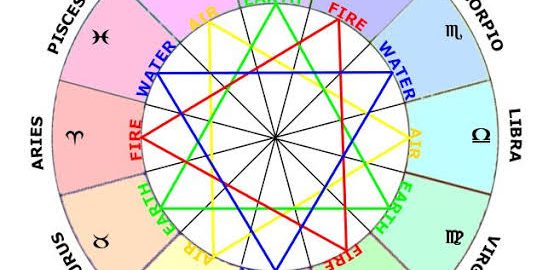
Zodiacal aspects are angular relationships between planets or points measured through the zodiac. The principal aspects are the conjunction, sextile, square, trine, and opposition. In some traditional methods, signs themselves form aspects according to their relative positions, even when the planets involved are not within a narrow degree-based orb.

Astrological Meaning

Each aspect describes a particular kind of connection. Conjunctions combine influences; sextiles suggest compatible opportunities; squares indicate tension requiring adjustment; trines show ease or reinforcement; and oppositions highlight polarity, awareness, or negotiation. Interpretation depends on the planets, signs, houses, exactness, and condition of the bodies involved. A close degree-based aspect may be emphasized differently from a broad sign-based relationship. Traditional astrologers may also consider whether planets can “see” one another by sign, along with applying or separating motion and planetary dignity.

Why It Matters

Zodiacal aspects reveal how different parts of a chart interact rather than operating in isolation. They help astrologers identify cooperation, friction, contrast, and concentrated themes in natal charts, forecasting techniques, and relationship comparisons. No aspect is automatically fortunate or harmful; its expression depends on the complete chart and the choices, circumstances, and awareness of the person involved.

Related Encyclopedia Entries

Zero Hour Circles

Definition

Zero Hour Circles are celestial coordinate circles associated with zero hours of right ascension. The principal zero-hour circle passes through the celestial poles and the vernal equinox, where right ascension begins. The expression belongs primarily to positional astronomy rather than to a widely standardized astrological technique. Historical astrological texts may use the singular or plural when discussing celestial measurement, chart construction, or related reference circles.

Astrological Meaning

In astrology, a zero-hour circle provides a technical reference for locating bodies on the celestial sphere. Right ascension measures position eastward from the vernal equinox along the celestial equator, while ordinary zodiacal longitude measures position along the ecliptic. These coordinate systems should not be treated as interchangeable. Most natal charts emphasize zodiacal longitude, but right ascension and hour circles can assist with older calculation methods, mundane work, primary directions, and the study of planets rising, culminating, setting, or reaching the lower meridian.

Why It Matters

Understanding the term helps readers distinguish astronomical framework from symbolic interpretation. A zero-hour circle does not carry an established meaning comparable to a planet, sign, house, or aspect; its importance lies in measurement and orientation. When it appears in a traditional source, the surrounding method should determine its relevance. Checking whether the author is using equatorial coordinates, ecliptic coordinates, or a directional system can prevent technical language from being mistaken for an independent predictive factor.

Related Encyclopedia Entries

Zenith

Definition

The zenith is the point in the sky directly above an observer’s location. It is an astronomical reference point determined by local position rather than a planet, sign, or fixed degree of the zodiac. Its opposite is the nadir, located directly below the observer. Although sometimes loosely associated with the top of a horoscope, the zenith is not identical to the Midheaven.

Astrological Meaning

In astrology, the zenith helps describe the local celestial framework used to construct a chart. It lies on the observer’s meridian, the great circle passing through the north point, zenith, south point, and nadir. The Midheaven is where this meridian intersects the ecliptic above the horizon, so it may symbolize public direction, visibility, or vocation; the zenith itself is primarily a spatial reference. Keeping the two terms distinct supports accurate chart interpretation.

Why It Matters

Understanding the zenith clarifies how a natal or event chart connects a particular moment with a particular place. It also prevents the common mistake of treating every chart’s highest-looking point as the exact overhead point. This distinction becomes especially useful when studying house systems, angles, mundane astrology, and traditional chart calculation, where horizon, meridian, ecliptic, and geographic location each play different roles.

Related Encyclopedia Entries

Year

Definition

A year is a unit of time based on Earth’s orbit around the Sun. Astrology may use the tropical year, measured through the cycle of seasons, or the sidereal year, measured relative to the fixed stars. A calendar year is a civil convention and does not always match the timing of an individual astrological cycle.

Astrological Meaning

In astrology, the year provides a framework for studying recurring cycles and annual themes. Solar returns cast a chart for the moment the Sun returns to its natal longitude, while annual profections advance the chart by one house for each year of life. Traditional astrologers may also examine annual revolutions, planetary transits, and time-lord techniques. These methods are distinct: a solar return describes the year’s symbolic atmosphere, profections identify emphasized houses and planets, and transits show when moving planets activate natal placements.

Why It Matters

Understanding what “year” means helps prevent different timing methods from being blended indiscriminately. An astrological year may begin on a birthday, at the Aries ingress, or at another technique-specific point rather than on January 1. Annual methods can help organize interpretation around likely priorities, developmental phases, and periods of heightened activity, but they do not guarantee particular events. Their value increases when the relevant time lords, natal chart condition, return chart, and major transits are considered together and interpreted in context.

Related Encyclopedia Entries

Whole Signs

Definition

Whole Signs, more commonly called the whole-sign house system, is a method of dividing a horoscope into twelve houses. The entire zodiac sign containing the Ascendant becomes the first house, the following sign becomes the second house, and so on. Each house therefore begins at 0 degrees of a sign and ends at 30 degrees, rather than starting at a calculated cusp within the sign.

Astrological Meaning

In interpretation, a planet’s house is determined by the sign it occupies in relation to the rising sign. Its meaning is then refined through its zodiac sign, aspects, condition, and the placement of the house ruler. The Ascendant degree remains important, but it does not mark the first-house cusp. Likewise, the Midheaven is treated as a sensitive point and may fall in the ninth, tenth, or eleventh house rather than automatically defining the tenth-house boundary.

Why It Matters

Whole Signs offers a clear framework for connecting signs, houses, and planetary rulers. It is especially important in traditional astrology, although many modern astrologers also use it. Comparing it with other house systems can reveal shifts in house placement and emphasis without making one system universally correct.

Related Encyclopedia Entries

Weak Signs

Definition

Weak Signs is an older astrological expression for zodiac signs considered less forceful, stable, or supportive within a particular traditional method. It does not have one universally accepted list. Some sources associate weakness with mutable signs because they are adaptable rather than fixed, while others use the phrase when discussing a sign’s condition, rulership, element, or suitability for a specific question.

Astrological Meaning

A sign described as weak may indicate that a planet expresses itself with less consistency, authority, or endurance in the matter being judged. This should not be confused with essential debility, which concerns defined conditions such as detriment or fall. Sign quality is also distinct from house strength: a planet in a supposedly weak sign may still be influential if it is angular, dignified, supported by favorable aspects, or otherwise well placed. In horary and electional astrology, the term may emphasize instability or limited staying power rather than failure.

Why It Matters

Understanding this term helps readers interpret older astrological texts without treating historical value judgments as absolute rules. “Weak” is contextual, not a verdict about a person, sign, or entire natal chart. A careful interpretation identifies the system being used and then considers modality, planetary dignity, house position, aspects, sect, and reception. Modern astrologers may prefer terms such as adaptable, less stable, or conditionally supported because they describe the symbolism more precisely.

Related Encyclopedia Entries

