
83¢/min
Intro Offer
We charge 60% LESS than our competitors!
Tons of spot-on predictions in our newsletter.

category: Astrology Encyclopedia

Movable Signs

Definition

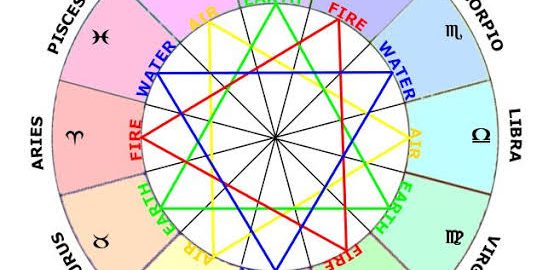
Movable signs are the four zodiac signs Aries, Cancer, Libra, and Capricorn. More commonly called cardinal signs in modern astrology, they begin the four seasons in the tropical zodiac: Aries begins spring, Cancer summer, Libra autumn, and Capricorn winter in the Northern Hemisphere. They form one of the three modalities, alongside fixed and mutable, traditionally called common, signs.

Astrological Meaning

Movable signs symbolize initiation, transition, and the impulse to set events in motion. When emphasized in a natal chart, they may suggest a person who readily starts projects, responds to changing circumstances, or assumes an active role. Each expresses this quality through its element: Aries acts through fire and direct initiative; Cancer through water and protective engagement; Libra through air and relationship-building; and Capricorn through earth, structure, and practical ambition. Expression also depends on the planets, houses, aspects, and overall chart balance involved.

Why It Matters

Recognizing movable emphasis helps an astrologer assess how a chart approaches action and change. Several planets or angles in these signs can indicate strong initiating energy, though follow-through may need to be evaluated through fixed-sign placements and other stabilizing factors. A lack of movable signs does not imply passivity; initiative may appear through angular planets, Mars, house emphasis, or other configurations. In traditional techniques, modality can also help describe timing, pace, and the relative stability of a matter, but it should be interpreted with the complete chart rather than used as a stand-alone judgment.

Related Encyclopedia Entries

Motion

Definition

Motion describes the apparent movement of the Sun, Moon, planets, and other chart factors through the zodiac as observed from Earth. Astrologers distinguish direct motion, retrograde motion, and the near-pause known as a station. They may also assess whether a body is moving faster or slower than its average speed.

Astrological Meaning

In traditional astrology, motion is one measure of a planet’s condition and ability to act. Direct and relatively swift motion may suggest straightforward expression or developing momentum, while retrograde or unusually slow motion can indicate revision, delay, return, or a less direct process. A stationary planet often receives special emphasis because its symbolism appears concentrated around the degree where it changes direction. Motion also helps determine whether two planets are applying toward an aspect or separating from one, an important distinction when judging how a situation is forming or unfolding. These indications should be considered alongside sign, house, rulership, aspects, and sect rather than interpreted alone.

Why It Matters

Evaluating motion adds timing and direction to chart interpretation. In a natal chart, it can refine how a planetary function is expressed. In transits, elections, or horary work, it may clarify whether circumstances are gathering force, pausing, reversing, or moving toward resolution. Motion does not guarantee a particular outcome, but it provides useful context for understanding planetary activity.

Related Encyclopedia Entries

Roman calendar

Definition

The Roman calendar was the civil dating system used in ancient Rome. Its early forms were adjusted to keep lunar months aligned with the solar year, while the Julian reform of 46 BCE established a more regular solar calendar. Romans identified dates by counting backward from the Kalends, Nones, and Ides rather than numbering days consecutively as modern calendars do.

Astrological Meaning

In classical astrology, the Roman calendar provides historical context for dating births, public events, religious observances, and surviving horoscopes. It should not be confused with the zodiac, which measures planetary positions along the ecliptic. Roman date notation, month lengths, intercalations, and the transition to the Julian calendar can all affect the conversion of an ancient record into a usable chronological date. Astrologers studying Roman-era charts may also encounter planetary weekdays, festival dates, or civic timekeeping conventions, but these belong to the cultural framework surrounding a horoscope rather than its planetary symbolism.

Why It Matters

Understanding the Roman calendar helps prevent chronological errors when reconstructing ancient charts or interpreting classical astrological texts. A mistaken conversion may shift the recorded day and, in some cases, alter the Moon, angles, or house placements. Careful calendar research therefore supports more reliable historical interpretation while clarifying how astrology operated within Roman social and religious life.

Related Encyclopedia Entries

December

Definition

December is the twelfth month of the modern civil calendar. In tropical Western astrology, the Sun generally travels through Sagittarius during most of the month and enters Capricorn near the December solstice. Exact ingress and solstice times vary slightly by year and time zone, so an ephemeris is needed for precise chart work.

Astrological Meaning

December combines two distinct solar phases rather than carrying one fixed astrological meaning. Sagittarius is traditionally associated with exploration, belief, learning, and broad perspective, while Capricorn emphasizes structure, responsibility, ambition, and practical limits. The December solstice marks the Sun’s entrance into Capricorn in tropical astrology and the beginning of winter in the Northern Hemisphere and summer in the Southern Hemisphere. Other planets continue moving independently, so their signs, aspects, stations, and retrogrades alter the character of any particular December. In sidereal systems, the Sun occupies different zodiacal positions because another reference framework is used.

Why It Matters

December can provide useful seasonal and calendrical context for natal charts, transits, electional work, and mundane astrology. However, the month alone does not determine personality or events. A person born in December may have a Sagittarius or Capricorn Sun, but the birth date, exact time, location, Moon, Ascendant, houses, and planetary aspects create the fuller interpretation. For forecasting, astrologers examine the specific year’s planetary configurations rather than treating every December alike.

Related Encyclopedia Entries

St

Definition

St, usually written ST, commonly abbreviates sidereal time in astrological tables, chart calculations, and older technical texts. Sidereal time measures Earth’s rotation relative to the stars rather than the Sun. Greenwich sidereal time may be adjusted for longitude to obtain local sidereal time, a value used when calculating the angles and houses of a horoscope. Because abbreviations vary, the source’s notation key should always be checked.

Astrological Meaning

ST is a calculation factor rather than a planet, sign, aspect, or interpretive symbol. Astrologers use local sidereal time to determine which degree of the zodiac is crossing the eastern horizon and which is culminating at the meridian for a particular time and place. These points become the Ascendant and Midheaven, while the remaining house cusps depend on the selected house system. In traditional hand calculation, sidereal-time tables helped astrologers construct charts before software automated the process.

Why It Matters

Understanding ST clarifies how birth time and geographic location shape a chart’s angles and houses. Even a small timing difference can alter cusp degrees, especially near a sign boundary, although its interpretive importance depends on the chart and method used. Recognizing the abbreviation also makes historical ephemerides, tables of houses, and calculation manuals easier to read accurately.

Related Encyclopedia Entries

November

Definition

November is the eleventh month of the Gregorian calendar. It is a civil time period rather than a formal astrological division, so it should not be treated as having one fixed planetary meaning. In tropical astrology, the Sun generally travels through Scorpio during most of November and enters Sagittarius late in the month; the exact ingress can vary slightly by year and time zone.

Astrological Meaning

November is often interpreted through the contrast between Scorpio and Sagittarius. Scorpio symbolism emphasizes depth, privacy, commitment, shared resources, and processes of release or renewal. Sagittarius shifts attention toward exploration, belief, education, candor, and broader perspective. These themes describe the Sun’s seasonal zodiac cycle, not everyone born during the month. An individual interpretation requires the exact birth date, time, location, and complete natal chart. Monthly transits, lunations, and retrogrades also change from one November to another.

Why It Matters

Recognizing November as a calendar container helps prevent overly broad forecasts. Astrologers may use it to organize ephemerides, identify likely solar ingresses, and discuss the month’s New Moon, Full Moon, and planetary movements. Seasonal associations should also be handled carefully: November is autumnal in the Northern Hemisphere and springlike in the Southern Hemisphere. For personal guidance, compare that year’s planetary positions with the natal chart rather than relying on the month alone.

Related Encyclopedia Entries

