
Definition
Precession is the slow change in the orientation of Earth’s rotational axis, caused mainly by the gravitational influence of the Sun and Moon on Earth’s equatorial bulge. As the axis traces a gradual circle over roughly 26,000 years, the celestial poles shift among the stars. At the same time, the equinoctial points move westward along the ecliptic by about one degree every 72 years. These are two observable effects of the same astronomical process.
Astrological Meaning
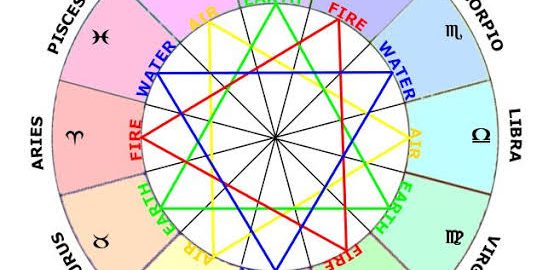
Precession explains why the tropical and sidereal zodiacs no longer align. The tropical zodiac fixes 0° Aries to the March equinox and therefore remains tied to the seasonal cycle. Sidereal systems reference stellar positions and apply an offset called the ayanamsha. Precession is also central to discussions of astrological ages, although astrologers use different boundaries and methods when dating them. The changing celestial pole has greater importance in historical astronomy and long-term celestial orientation than in routine chart interpretation.
Why It Matters
Understanding precession helps distinguish zodiac frameworks and prevents confusion between signs, constellations, and seasons. It is especially useful when comparing ancient star positions, traditional texts, tropical charts, and sidereal charts. Precession is a gradual background cycle rather than a personal transit, so it is not usually treated as an indicator of immediate events in a natal chart. Its value lies chiefly in clarifying astrological reference systems and long-range historical cycles.

