
All posts by admin

Polarity

Definition

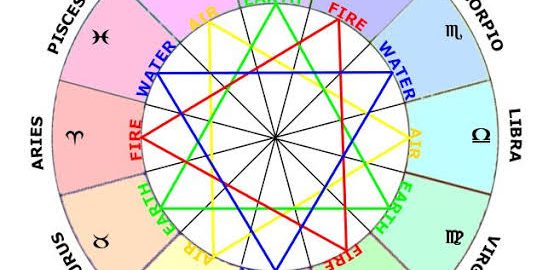
Polarity is the division of the twelve zodiac signs into two alternating groups. Traditionally called positive and negative, or masculine and feminine, these categories are often described today as active and receptive. Fire and air signs belong to the active polarity, while earth and water signs belong to the receptive polarity. The terms describe contrasting modes of expression, not value, gender, or desirability.

Astrological Meaning

Active-polarity signs—Aries, Gemini, Leo, Libra, Sagittarius, and Aquarius—tend to direct energy outward through initiative, interaction, or visible response. Receptive-polarity signs—Taurus, Cancer, Virgo, Scorpio, Capricorn, and Pisces—tend to process experience inwardly, consolidate resources, or respond through reflection and sensitivity. An astrologer considers the overall balance of polarities in a natal chart alongside planets, houses, elements, and modalities. Opposite signs also form complementary axes, showing different approaches to a shared theme, such as individuality and partnership across Aries and Libra.

Why It Matters

Polarity offers a quick way to understand how a chart may engage with experience. A strong active emphasis can suggest ease with external action and exchange, whereas a receptive emphasis may favor observation, containment, or adaptation. Neither pattern is inherently better, and an uneven distribution does not indicate deficiency. It simply highlights preferred channels of expression and areas where conscious balance may be helpful.

Related Encyclopedia Entries

Ponderous, or Ponderable planets

Definition

Ponderous, or ponderable planets, is an older astrological expression for planets regarded as heavy, slow, or deliberate in motion and effect. It most often refers to the traditional superior planets—Mars, Jupiter, and Saturn—whose cycles are longer than those of the Moon, Mercury, and Venus. Usage varies between historical authors, so the surrounding text should guide interpretation.

Astrological Meaning

In traditional interpretation, a ponderous planet may suggest matters that develop gradually, carry lasting consequences, or require sustained effort. Saturn most clearly embodies weight, delay, structure, and endurance; Jupiter adds measured growth and judgment; Mars can represent force that takes time to gather or unfold. This general classification should not be confused with a planet’s actual speed in a particular chart, which is a separate consideration involving direct motion, retrogradation, stations, and daily motion.

Why It Matters

Recognizing this term helps readers understand older astrological texts without treating “heavy” as automatically unfavorable. A slower or weightier planetary influence may describe seriousness, durability, consolidation, or a longer timeframe rather than simple obstruction. In a natal chart, the planet’s sign, house, aspects, dignity, and condition remain essential. In predictive work, its current motion and relationship to the chart should be examined instead of relying on the category alone.

Related Encyclopedia Entries

Posited

Definition

In astrology, posited means located or placed in a particular sign, house, degree, or other chart division. An astrologer might say that Mars is posited in the tenth house or that the Moon is posited in Taurus. The term describes chart position rather than interpretation by itself.

Astrological Meaning

A planet’s position provides the setting through which its symbolism is interpreted. When a planet is posited in a sign, the sign describes its style of expression; when posited in a house, the house points to areas of life where its themes may become noticeable. Degree, dignity, aspects, sect, and rulership can further modify the reading. For example, Venus posited in Capricorn does not have one fixed outcome: its expression also depends on its house, aspects, condition, and the chart as a whole. Traditional texts may use the word broadly for planets, chart rulers, lots, or sensitive points occupying specific locations.

Why It Matters

Understanding this term makes astrological instructions and older chart interpretations easier to follow. It also helps separate location from judgment: being posited somewhere states where a factor is found, not whether it is automatically favorable or difficult. Careful interpretation begins with placement, then considers condition, relationships, and context before drawing conclusions.

Related Encyclopedia Entries

Precession of the Equinoxes

Definition

Precession of the Equinoxes is the gradual shift in the orientation of Earth’s rotational axis, often compared to the slow wobble of a spinning top. This astronomical cycle takes roughly 26,000 years to complete. As a result, the equinoctial points move backward against the background of the constellations at about one degree every 72 years.

Astrological Meaning

Precession helps explain the difference between the tropical and sidereal zodiacs. The tropical zodiac anchors 0° Aries to the March equinox and remains aligned with the seasons. Most sidereal systems instead adjust zodiac positions to account for the equinoctial shift relative to the fixed stars. Precession is also central to theories of astrological ages, although astrologers disagree about their boundaries, starting dates, and interpretive significance.

Why It Matters

Understanding precession clarifies why a tropical Sun sign may not match the astronomical constellation behind the Sun at birth. It also prevents constellations, signs, and zodiac systems from being treated as interchangeable concepts. Precession does not invalidate a natal chart; rather, it shows that different astrological traditions use distinct reference frameworks and should be interpreted according to their own methods.

Related Encyclopedia Entries

Equinox with respect to the steady poles

Definition

Equinox with respect to the steady poles is a historical astronomical expression for considering an equinoctial point within a coordinate framework based on the poles of the celestial equator. An equinox occurs where the ecliptic crosses the celestial equator, producing the reference points associated with 0° Aries and 0° Libra in the tropical zodiac. “Steady poles” means that the equatorial axis is treated as the stable basis of the calculation, rather than describing an equinox permanently fixed among the stars.

Astrological Meaning

In traditional astrology, the phrase is primarily technical rather than interpretive. It helps distinguish measurements made from the celestial equator and its poles from those based on the ecliptic, horizon, or a local oblique sphere. This distinction can matter in older discussions of right ascension, mundane positions, house division, and primary directions. Because the tropical zodiac begins at the vernal equinox, the concept also supports the seasonal framework used to assign zodiacal longitude.

Why It Matters

Understanding this term prevents confusion between coordinate geometry and astrological symbolism. The equinox defines a zodiacal reference point, while the steady poles describe the framework through which celestial position or motion is calculated. Readers of classical texts may encounter such language where modern works would use terms like celestial equator, equatorial poles, or right ascension. Recognizing the underlying geometry makes traditional techniques easier to evaluate and apply without treating an old technical phrase as a separate planet, point, or chart placement.

Related Encyclopedia Entries

Equinox: now speeding it, and again retarding it

Definition

This historical phrase describes the true equinox moving alternately ahead of and behind its mean position. The effect is chiefly associated with nutation, a small periodic wobble in Earth’s rotational axis. It should not be confused with precession, the much slower long-term shift of the equinoctial points through the zodiac.

Astrological Meaning

In classical astrological practice, the phrase concerns astronomical measurement rather than a separate symbolic influence. Corrections involving the true equinox can affect apparent sidereal time and the precise celestial coordinates used to calculate angles and house cusps. Most contemporary chart software applies the relevant astronomical models automatically, so astrologers rarely calculate this variation by hand.

Why It Matters

Understanding the expression helps readers interpret older technical texts without mistaking it for a predictive rule. It also clarifies the distinction between the mean equinox, the true equinox, nutation, and precession. Although the difference is small, accurate reference points support reliable chart calculation, especially when reconstructing historical charts or comparing traditional tables with modern ephemerides.

Related Encyclopedia Entries

