
All posts by admin

MOIST

Definition

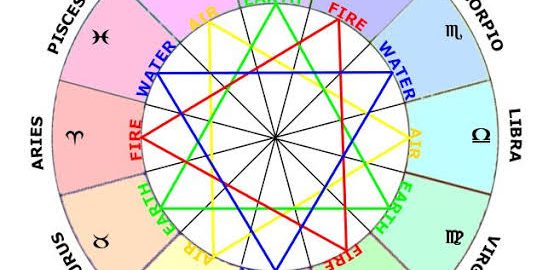
Moist, also called wet, is one of the four primary qualities used in classical astrology, alongside hot, cold, and dry. It describes a tendency to join, blend, soften boundaries, and adapt. Air combines heat with moisture, while water combines cold with moisture. The term is symbolic and does not refer simply to physical dampness.

Astrological Meaning

A moist planet, sign, season, or temperament is traditionally associated with receptivity, connection, flexibility, and the capacity to combine different influences. The Moon and Venus are commonly regarded as moist, while Jupiter also carries a moist quality in many traditional systems. Mercury’s qualities may vary according to its condition and associations. In a natal chart, abundant moisture can suggest sociability, responsiveness, imagination, or ease with emotional and relational exchange. Too much moisture was traditionally interpreted as weak boundaries, inconsistency, or difficulty maintaining separation, although the entire chart must be considered.

Why It Matters

Moisture helps classical astrologers assess elemental balance, planetary temperament, and how readily chart factors cooperate or mingle. It gains meaning through contrast with dryness, which separates, defines, and consolidates. Evaluating moist and dry qualities can add nuance to natal interpretation, electional astrology, and traditional judgments without reducing a person or outcome to a single trait.

Related Encyclopedia Entries

MELANCHOLY

Definition

Melancholy is one of the four temperaments used in classical astrology. It was traditionally associated with the cold and dry qualities, the earth element, Saturn, and the historical concept of black bile. In this context, the term describes a serious, reserved, reflective disposition rather than a medical or psychological diagnosis.

Astrological Meaning

A melancholic emphasis may suggest patience, realism, caution, concentration, and a preference for structure or solitude. Its more difficult expressions can include excessive worry, pessimism, rigidity, or dwelling on shortcomings. Traditional astrologers assess this temperament by weighing several chart factors, such as the Ascendant and its ruler, the Moon, elemental balance, planetary condition, and Saturn’s prominence. No single sign, planet, or placement is sufficient to establish it.

Why It Matters

Understanding melancholy helps place individual chart features within the broader framework of temperament. It can clarify why someone approaches decisions carefully, values reliability, or needs time to process experience. It may also reveal where reserve can become isolation or thoughtful analysis can turn into over-caution. Used constructively, the symbolism points toward grounding routines, patient craftsmanship, and realistic planning. Because temperament methods differ across traditional schools, conclusions are best treated as interpretive tendencies and considered alongside the whole natal chart.

Related Encyclopedia Entries

MASCULINE

Definition

Masculine is a traditional astrological classification describing an outward-directed, active, or expressive polarity. The six masculine signs are the fire signs—Aries, Leo, and Sagittarius—and the air signs—Gemini, Libra, and Aquarius. The term concerns symbolic orientation, not biological sex, gender identity, personality type, or social role.

Astrological Meaning

In chart interpretation, masculine signs are associated with initiative, engagement, visibility, and the tendency to act upon the environment. A planet in one of these signs may express its functions more directly or externally, although its house, aspects, condition, and the rest of the chart can modify that expression. Traditional sources may also call this polarity positive, odd, or diurnal. Masculine and feminine classifications form a complementary pair: one is not considered stronger, better, or more desirable than the other.

Why It Matters

Recognizing masculine polarity helps an astrologer assess the overall balance of expression in a natal chart. A strong emphasis may suggest that energy is readily projected through action, communication, or social participation. A lighter emphasis does not imply passivity or weakness; other placements can supply initiative. The classification is most useful as one interpretive layer combined with elements, modalities, houses, aspects, and planetary strength.

Related Encyclopedia Entries

LUXURIOUS

Definition

Luxurious is a descriptive term found in some traditional astrological writings. It generally refers to a strong attachment to comfort, pleasure, ornament, rich food, leisure, or sensual enjoyment. In older texts, the word may carry a moralizing sense of extravagance or overindulgence rather than simply indicating wealth or refined taste.

Astrological Meaning

Astrologically, luxurious tendencies have often been associated with a prominent or strongly placed Venus, especially when connected with Jupiter, Taurus, Libra, the second house, or the fifth house. Venus can symbolize beauty, pleasure, and attraction, while Jupiter may amplify appetite, generosity, or abundance. The second house concerns resources and values, whereas the fifth relates to enjoyment and recreation. Challenging conditions involving these factors were sometimes interpreted as excess, but no single placement establishes a luxurious character. The whole natal chart, planetary condition, rulerships, aspects, and historical context must be considered.

Why It Matters

Recognizing this term helps modern readers interpret classical chart descriptions without taking their language too literally. A luxurious signature may describe appreciation for quality, hospitality, art, comfort, or celebration; it need not imply wastefulness. Its expression depends on judgment, circumstances, and competing chart factors. Translating the term neutrally makes older interpretations more useful while avoiding outdated assumptions about pleasure and morality.

Related Encyclopedia Entries

LONG ASCENSION

Definition

Long ascension describes zodiac signs that take comparatively longer to rise over the eastern horizon at a particular terrestrial latitude. Because the ecliptic meets the horizon at changing angles, signs do not rise at a uniform rate. In northern latitudes, Cancer through Sagittarius are traditionally called signs of long ascension; in southern latitudes, the pattern is reversed.

Astrological Meaning

The concept concerns astronomical rising time rather than a sign’s strength, virtue, or overall importance. A sign of long ascension occupies the eastern horizon longer, so the Ascendant moves through it more slowly than through a sign of short ascension. The difference generally becomes more pronounced farther from the equator. Traditional astrologers considered these unequal rising times in calculations involving the Ascendant, house cusps, primary directions, and certain timing methods.

Why It Matters

Long ascension helps explain why equal zodiac signs do not always correspond to equal periods of clock time or equal spatial divisions in quadrant house systems. It can clarify unusual house proportions and the varying speed of the Ascendant. When interpreting a chart, the observer’s latitude and hemisphere must be considered; long ascension is not a fixed symbolic trait that applies identically everywhere.

Related Encyclopedia Entries

IDLE

Definition

Idle is a descriptive term found in some traditional astrological writing for a planet, point, or chart factor that appears unable to produce a clear or immediate effect. It is not a universally standardized technical condition. Depending on the author and context, it may suggest inactivity, lack of application, weak engagement with other planets, or a matter that remains undeveloped. The term should therefore be interpreted according to the specific technique being used.

Astrological Meaning

An idle factor may indicate latent potential, delay, limited participation, or circumstances that do not readily move forward. In horary astrology, similar ideas can arise when the Moon or a significator makes no relevant applying aspect, although this should not automatically be equated with the formal condition called void of course. In natal work, an apparently inactive planet is not necessarily unimportant; sign, house, dignity, rulership, and less obvious aspects may reveal how it operates.

Why It Matters

Recognizing idle as a contextual description helps prevent overly rigid conclusions. Before judging a planet as ineffective, an astrologer should check essential and accidental dignity, receptions, applying aspects, house rulerships, and the chart’s purpose. The condition may describe temporary quiet, indirect expression, or unrealized capacity rather than permanent weakness. Comparing the term with established concepts such as peregrine, unaspected, and void of course provides a more precise interpretation.

Related Encyclopedia Entries

