
.83¢/min Intro Offer

We Charge 60% LESS than our competitors!

All Psychics tested before hire.

category: Astrology Encyclopedia

Trigon

Definition

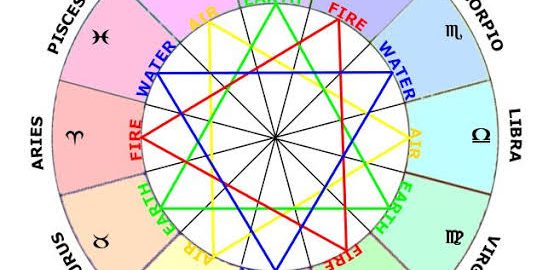
Trigon is a traditional astrological term for a triangular relationship among signs. It commonly refers to a triplicity: the three zodiac signs belonging to the same element, such as Aries, Leo, and Sagittarius in the fire trigon. The word may also describe the 120-degree trine aspect between planets or chart points. Context determines whether it means a group of signs, its traditional rulers, or the aspect itself.

Astrological Meaning

Each elemental trigon links signs that share a broad mode of expression: fire with inspiration, earth with practical development, air with thought and exchange, and water with feeling and responsiveness. In traditional astrology, every trigon also has planetary rulers assigned according to whether a chart is diurnal or nocturnal, with an additional participating ruler. These triplicity rulers can help assess a planet’s dignity, support, and ability to act. When trigon means a trine aspect, it suggests an easy flow between the planets involved, though the planets, signs, houses, and wider chart determine how that ease operates.

Why It Matters

Understanding trigon prevents confusion when reading older astrological texts, where the term may carry more technical meaning than the modern word trine. It also connects elemental symbolism with traditional methods of rulership and dignity. Identifying the intended usage allows for a more precise interpretation of planetary condition, aspect patterns, and the balance of elements in a natal chart.

Related Encyclopedia Entries

Transmutation

Definition

Transmutation is the process of changing something from one state, quality, or expression into another. In astrological language, it usually describes the conscious redirection of a planetary tendency rather than a literal transformation. The term draws on alchemical and esoteric traditions and is not a standardized technique of classical astrology.

Astrological Meaning

Astrologers may use transmutation to explain how challenging chart symbolism can develop a more constructive expression. Mars, for example, may move from impulsive conflict toward disciplined courage, while Saturnian fear may become patience, responsibility, or sound boundaries. Pluto, Scorpio, and the eighth house are often associated with profound change in modern astrology, although these factors are not interchangeable: Pluto is a planet, Scorpio is a sign, and the eighth house is a chart sector. Transmutation depends on the whole chart, including aspects, condition, timing, and personal choices.

Why It Matters

The concept encourages interpretation without treating a natal placement or transit as a fixed verdict. It suggests that planetary symbolism may be expressed across a range of possibilities and refined through awareness, practice, and experience. Transmutation can therefore help astrologers discuss difficult patterns honestly while leaving room for agency, growth, and changing circumstances.

Related Encyclopedia Entries

Translation of Light

Definition

Translation of Light is a traditional astrological technique in which a faster-moving planet separates from an aspect with one planet and then applies to an aspect with another. The faster planet symbolically carries the influence, or “light,” of the first planet to the second, connecting two planets that may not form a direct applying aspect themselves.

Astrological Meaning

Used especially in horary astrology, Translation of Light may describe an intermediary who brings two people, interests, or events together. Interpretation depends on the translating planet, the aspects involved, planetary condition, reception, and the houses ruled by all three planets. Supportive reception and strong essential or accidental dignity can suggest effective mediation, while debility, prohibition, or difficult reception may indicate complications. The configuration does not automatically promise success; the whole chart must support the proposed connection.

Why It Matters

Translation of Light helps astrologers recognize indirect routes through which a matter may develop. It can show that progress depends less on direct contact and more on a messenger, broker, shared circumstance, or sequence of events. Distinguishing it from Collection of Light is important: translation involves a faster planet carrying influence between two others, whereas collection occurs when two planets apply to a third planet that gathers their light.

Related Encyclopedia Entries

Transitor

Definition

Transitor is an uncommon traditional term for a planet currently moving through the zodiac and forming a transit to a natal chart, event chart, or another astrological reference point. The transitor is the moving planet, while the natal planet, angle, or sensitive point receiving its aspect remains part of the underlying chart.

Astrological Meaning

In interpretation, the transitor describes the active planetary influence and its manner of expression. Its nature, sign, house position, speed, direction, and aspects help define the transit. For example, transiting Saturn may emphasize structure, limits, or sustained effort, while transiting Jupiter may correspond with growth, opportunity, or broader perspective. The receiving natal factor shows which established trait or life area is being stimulated. Traditional astrologers may also consider planetary condition, rulership, sect, and whether an aspect is applying or separating.

Why It Matters

Recognizing the transitor helps prevent confusion between a temporary influence and a permanent natal placement. It clarifies which planet is moving, what chart factor it contacts, and how long the activation may remain relevant. A transitor does not guarantee a specific event; it is best read alongside the natal chart, timing techniques, and the person’s circumstances.

Related Encyclopedia Entries

Transit of a planet across the Sun

Definition

A transit of a planet across the Sun occurs when a planet passes directly between Earth and the Sun and appears as a small dark silhouette moving over the solar disk. From Earth, only Mercury and Venus can produce this astronomical event because their orbits lie inside Earth’s orbit. It is not the same as an ordinary astrological transit to the natal Sun, which describes a moving planet forming an aspect to the Sun’s birth-chart position.

Astrological Meaning

This event has no single, universally accepted astrological interpretation. Astrologers who use it may treat the precise Sun–planet alignment as an intensified conjunction. Mercury can emphasize communication, information, commerce, calculation, and changing perspectives; Venus can emphasize relationships, values, diplomacy, aesthetics, and resources. Because the planet is visually crossing the Sun, some practitioners also consider themes of visibility, illumination, and a planetary principle being brought into collective focus. Sign, degree, location, and contacts with an event or natal chart provide essential context.

Why It Matters

A planetary passage across the Sun is rare, exact, and observable, giving astrologers a clearly timed celestial event for research or mundane analysis. Its symbolism should be interpreted cautiously rather than treated as a guaranteed omen. When connected to a natal chart, the conjunction’s house placement, rulerships, and aspects are usually more informative than the spectacle alone. It may mark a period for noticing how Mercury- or Venus-related concerns interact with purpose, identity, leadership, or awareness, depending on the planet involved.

Related Encyclopedia Entries

Revolution or Horary Figure

Definition

“Revolution or horary figure” is traditional terminology for charts calculated for a specific time rather than solely for a birth. A revolution is a return chart, cast when a planet returns to its natal position; the best-known example is the solar revolution, now usually called a solar return. A horary figure is a chart erected for the moment a meaningful question is received and understood by the astrologer.

Astrological Meaning

A revolution chart describes the themes associated with a recurring planetary cycle. In a solar return, astrologers examine the angles, houses, planets, and their connections with the natal chart to explore the year ahead. A horary figure is interpreted differently: the relevant houses identify the people or matters involved, while planetary significators, the Moon, aspects, dignities, and receptions help describe the situation and its likely development. Traditional astrologers may also assess whether the chart is suitable for judgment before offering an interpretation.

Why It Matters

The distinction prevents two specialized methods from being confused. A revolution places a current planetary return in the context of an existing natal cycle, whereas horary addresses one clearly framed question through the symbolism of a particular moment. Understanding which figure is being used helps readers apply the correct interpretive rules and avoid treating every time-based chart in the same way.

Related Encyclopedia Entries

