
.83¢/min Intro Offer

We Charge 60% LESS than our competitors!

All Psychics tested before hire.

category: Astrology Encyclopedia

Triplicities

Definition

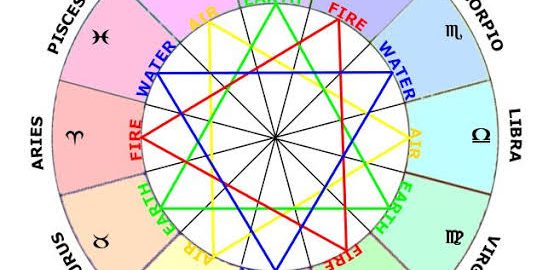
Triplicities are the four groups of three zodiac signs that share the same element. Aries, Leo, and Sagittarius form the fire triplicity; Taurus, Virgo, and Capricorn belong to earth; Gemini, Libra, and Aquarius make up air; and Cancer, Scorpio, and Pisces comprise water. Because each group contains one cardinal, one fixed, and one mutable sign, triplicity describes elemental affinity rather than modality.

Astrological Meaning

In chart interpretation, triplicities reveal broad patterns of temperament and emphasis. Fire is commonly associated with initiative and inspiration, earth with practicality and material concerns, air with thought and social exchange, and water with feeling and intuition. A strong concentration in one triplicity may highlight its style, while a less represented element may indicate qualities developed more consciously. Traditional astrology also assigns planetary rulers to each triplicity, often distinguishing between day and night charts. These triplicity rulers can help assess planetary support, dignity, and the management of particular life topics.

Why It Matters

Triplicities offer a quick way to identify elemental balance without reducing a chart to Sun-sign symbolism. They help connect signs that express themselves differently yet share a basic orientation. In natal work, they can clarify recurring motivations and preferred ways of responding. In traditional techniques, triplicity rulership adds another layer to judging planetary condition. These patterns are best considered alongside houses, aspects, sect, sign rulers, and the overall chart rather than treated as fixed personality labels.

Related Encyclopedia Entries

Trinities

Definition

Trinities is an older astrological term for the four triplicities: groups of three zodiac signs that share an element. The Fire trinity consists of Aries, Leo, and Sagittarius; Earth includes Taurus, Virgo, and Capricorn; Air includes Gemini, Libra, and Aquarius; and Water includes Cancer, Scorpio, and Pisces. Although signs within a trinity are naturally related, this classification should not be confused with an exact trine aspect between planets.

Astrological Meaning

A trinity describes a common mode of expression. Fire tends toward initiative and inspiration, Earth toward practicality and material stability, Air toward ideas and social exchange, and Water toward feeling and responsiveness. In traditional astrology, each triplicity also has planetary rulers, often assigned differently for day and night charts. These rulers can help an astrologer assess support, dignity, and the way a planet operates within its element. Modern chart interpretation often uses the balance of planets among the four trinities to identify emphasized or less prominent elemental qualities.

Why It Matters

Trinities provide a quick structural view of a natal chart without reducing a person to a single sign. A strong elemental emphasis may show familiar ways of engaging with life, while a lightly represented element may indicate qualities developed through circumstances, relationships, or conscious effort. Because exact aspects, house placements, planetary condition, and sect can modify the picture, trinities are most useful as one layer within a complete interpretation rather than as fixed personality labels.

Related Encyclopedia Entries

Trine, vb

Definition

To trine is an astrological verb meaning to form a trine aspect with another planet, point, or chart factor. A trine measures approximately 120 degrees and commonly connects placements in signs of the same element. For example, an astrologer might say that Venus trines Jupiter when the two bodies occupy this angular relationship.

Astrological Meaning

When one factor trines another, their symbolism is generally interpreted as flowing together with relative ease. In a natal chart, this may describe natural abilities, supportive tendencies, or qualities that cooperate without much internal friction. During a transit, a moving planet trining a natal placement can indicate circumstances that make certain developments easier to pursue, though action and context still matter. In synastry, a trine between two people’s placements may suggest rapport or compatibility in the functions represented by those planets. The planets, signs, houses, exactness, and overall chart determine how strongly the aspect operates.

Why It Matters

Recognizing trine as a verb helps readers understand common astrological phrasing and distinguish an aspect’s geometry from its interpretation. Trines can reveal available support, but they should not automatically be labeled fortunate. Because their energy may feel effortless, their possibilities can remain passive or be taken for granted unless they are consciously developed.

Related Encyclopedia Entries

Trine

Definition

A trine is an astrological aspect formed when two planets or chart points are approximately 120 degrees apart. In the zodiac, trines commonly connect signs of the same element: fire, earth, air, or water. The permitted variation from the exact angle is called the orb, and astrologers usually give tighter orbs greater emphasis.

Astrological Meaning

Trines traditionally indicate ease, compatibility, and a natural flow between the planets involved. The planets’ identities show which drives or functions are cooperating, while their signs describe how that cooperation is expressed. Their houses reveal the areas of life in which it may operate. A trine does not automatically promise favorable events; it can also describe habits or abilities that work so effortlessly they receive little conscious attention. In transit work, a trine may coincide with openings that are easier to use than those associated with more demanding aspects.

Why It Matters

Recognizing trines helps an astrologer identify supportive connections, established talents, and places where energy may move with relatively little friction. Interpretation still depends on the whole chart, including planetary condition, house rulership, orb, and other aspects. Balancing trines with squares, oppositions, and conjunctions gives a fuller picture of both available resources and developmental pressures.

Related Encyclopedia Entries

Trimorion

Definition

Trimorion is a rare term from classical astrological terminology meaning a three-degree portion of the zodiac. Each 30-degree zodiac sign therefore contains ten trimoria. The word derives from Greek roots indicating a three-part or three-degree division. Because terminology and subdivision methods differ among traditional authors, the exact procedural use should be confirmed within the system or text being studied.

Astrological Meaning

A trimorion provides a finer layer of zodiacal measurement than the sign as a whole. In techniques that employ three-degree divisions, the section occupied by a planet, angle, or calculated point may add detail to its broader sign placement. Some traditional approaches associate small zodiacal divisions with particular rulers, qualities, or interpretive distinctions. These details are normally considered secondary to the planet’s sign, house, aspects, dignity, and condition rather than interpreted in isolation.

Why It Matters

The concept illustrates how classical astrologers divided the zodiac into increasingly precise units to refine chart interpretation. Recognizing a trimorion can help readers understand older technical texts and distinguish three-degree divisions from decans, terms, dodecatemoria, and individual degrees. In natal work, it may offer nuance when a practitioner follows a tradition that explicitly uses the technique, but it does not override the chart’s primary factors. Clear identification of the chosen historical method is essential, since similarly named subdivisions may be defined or applied differently across sources.

Related Encyclopedia Entries

Trigonocrators

Definition

Trigonocrators are the planetary rulers of the four elemental triplicities: fire, earth, air, and water. The term comes from Greek and is often translated as “triplicity rulers.” In many traditional systems, each triplicity has a daytime ruler, a nighttime ruler, and sometimes a participating ruler. The appropriate planet depends on the sign’s element and whether the chart is diurnal or nocturnal. Exact rulership assignments can vary between classical traditions.

Astrological Meaning

Astrologers use trigonocrators to assess essential dignity and a planet’s ability to operate within a sign. A planet ruling the triplicity of its current sign may possess support, resources, or familiarity even when it lacks domicile or exaltation dignity. In natal interpretation, the trigonocrator connected with the sect of the chart may help describe how elemental themes are sustained. Traditional predictive methods may also assign different triplicity rulers to successive periods of life, although techniques and time divisions differ by school.

Why It Matters

Trigonocrators add nuance to planetary condition. They can show that a planet has moderate standing where a simpler dignity assessment might overlook it. Their use also highlights the importance of sect: a daytime chart generally emphasizes the diurnal triplicity ruler, while a nighttime chart emphasizes the nocturnal ruler. Because historical tables and methods are not completely uniform, astrologers should identify the tradition being followed and interpret triplicity dignity alongside house placement, aspects, rulership, and other chart factors.

Related Encyclopedia Entries

