
.83¢/min Intro Offer

We Charge 60% LESS than our competitors!

All Psychics tested before hire.

category: Astrology Encyclopedia

Umbral Eclipse

Definition

An umbral eclipse occurs when one celestial body enters the umbra, or darkest central portion, of another body’s shadow. In a lunar eclipse, the Moon passes partly or completely through Earth’s umbra. During a total solar eclipse, the Moon’s umbra reaches a narrow region of Earth. The term therefore describes the shadow geometry rather than a separate astrological category.

Astrological Meaning

Astrologers generally interpret an umbral eclipse according to whether it is solar or lunar, its zodiacal sign and degree, and the chart house in which it falls. A solar eclipse is often associated with emerging priorities or changes in direction, while a lunar eclipse may emphasize culmination, awareness, or release. Close contacts with natal planets or angles can make the symbolism more personally relevant. Traditional and mundane approaches may also consider visibility, duration, location, and the eclipse ruler.

Why It Matters

Identifying the umbral phase helps distinguish a deep partial or total eclipse from lighter penumbral shadowing. This can add context when comparing eclipse intensity, although it should not be treated as a guarantee of dramatic events. The eclipse’s degree, planetary ruler, house placement, and connections to the natal chart usually provide more useful interpretation than the label alone.


Related Encyclopedia Entries

Twilight

Definition

Twilight is the interval before sunrise or after sunset when the Sun is below the horizon but still illuminates the sky. Astronomers distinguish civil, nautical, and astronomical twilight according to the Sun’s depth below the horizon. In astrology, twilight is most relevant when determining whether a chart is diurnal or nocturnal, especially for births or events occurring close to sunrise or sunset.

Astrological Meaning

Traditional astrology uses the Sun’s position relative to the horizon to establish sect. A chart with the Sun above the horizon is generally considered a day chart, while one with the Sun below it is a night chart. Twilight can make the sky appear light even when the Sun is technically below the horizon, so visual brightness alone does not determine sect. Accurate birth time, location, horizon calculations, and the Sun’s house position should be considered. Some astrologers also treat twilight symbolically as a transitional or threshold period, although this interpretation belongs more to modern or electional practice than to a universal classical rule.

Why It Matters

Correctly identifying twilight conditions can refine judgments about planetary sect, dignity, and the relative support traditionally assigned to planets such as the Sun, Jupiter, Saturn, the Moon, Venus, and Mars. It is particularly important when a chart falls near dawn or dusk, where a small timing error may move the Sun across the Ascendant or Descendant. Rather than treating twilight as inherently fortunate or difficult, astrologers assess the complete chart and verify the recorded time whenever possible.

Related Encyclopedia Entries

Trutine

Definition

Trutine is an older astrological term derived from a word meaning a balance or weighing instrument. It usually refers to the Trutine of Hermes, also called the Hermetic rule: a traditional calculation connecting the Moon’s position around conception with the Ascendant or Descendant at birth. It is primarily associated with birth-time rectification and prenatal astrology.

Astrological Meaning

In traditional practice, the Trutine proposes a reciprocal relationship between the conception chart and the natal chart. The Moon’s degree at the estimated conception may correspond to the natal Ascendant or Descendant, while the birth horizon can help refine the proposed conception time. Different versions of the method apply distinct rules according to the Moon’s phase, position above or below the horizon, and the estimated length of gestation. Because historical instructions and calculation methods vary, the Trutine is best understood as a specialized rectification technique rather than a single universally standardized formula. It does not function like a planet, sign, house, or aspect and is not interpreted as an independent personality factor.

Why It Matters

The Trutine matters mainly to astrologers researching an uncertain birth time or studying historical approaches to conception and birth. It illustrates how traditional astrology linked lunar cycles, gestation, and the natal horizon. Any result should be compared with documented life events and other rectification methods rather than treated as conclusive proof of an exact birth time.

Related Encyclopedia Entries

True Solar Day

Definition

A true solar day, also called an apparent solar day, is the interval between two successive crossings of the local meridian by the actual Sun. Its length varies slightly through the year because Earth’s orbit is elliptical and its axis is tilted. This differs from the uniform 24-hour mean solar day used by modern clocks.

Astrological Meaning

In astrology, the true solar day belongs mainly to historical timekeeping and chart calculation. Traditional observations often relied on local apparent solar time, as shown by a sundial, rather than standardized civil time. When reconstructing an old natal chart or event chart, an astrologer may need to determine whether the recorded hour followed apparent solar time, local mean time, or another convention. The equation of time describes the changing difference between apparent and mean solar time. True solar time should not be confused with sidereal time, which is used to calculate the rotation of the celestial sphere and determine the Ascendant and house cusps.

Why It Matters

Understanding the true solar day helps prevent timing errors when working with historical records, traditional techniques, or dates from before standardized time zones. Even a modest time correction can alter house cusps and, near a sign boundary, the Ascendant. Most modern charts begin with civil time converted to Universal Time, so true solar time is not usually substituted automatically. Its value lies in clarifying which time standard a source used and supporting more careful chart reconstruction.

Related Encyclopedia Entries

Tropical Year

Definition

A tropical year is the time the Sun takes, as observed from Earth, to return to the same point in the seasonal cycle, such as the March equinox. It lasts approximately 365.2422 days. Because Earth’s rotational axis slowly changes direction through precession, the tropical year is slightly shorter than the sidereal year, which measures Earth’s orbit relative to the fixed stars.

Astrological Meaning

The tropical year provides the astronomical foundation for the tropical zodiac. In this system, 0° Aries begins at the March equinox, with the remaining signs divided into twelve equal 30-degree sections. The signs are therefore anchored to the equinoxes and solstices rather than to the present-day boundaries of similarly named constellations. This seasonal framework is widely used in Western natal, mundane, electional, and horary astrology.

Why It Matters

Understanding the tropical year clarifies why tropical and sidereal charts can assign different zodiac signs to the same planet. It also explains how the tropical zodiac remains aligned with the seasonal turning points despite precession. Accurate calendars and ephemerides account for the year’s fractional length, helping astrologers calculate planetary positions for a specific date and time. The tropical year does not itself interpret a natal chart; instead, it establishes the reference cycle within which tropical zodiac placements are measured.

Related Encyclopedia Entries

Tropical Signs

Definition

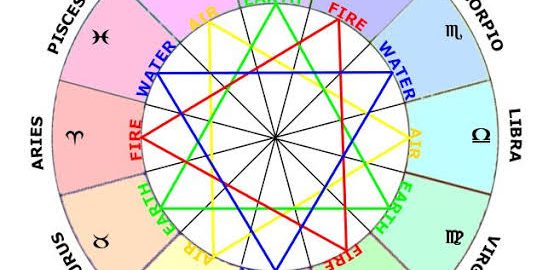
Tropical signs are the twelve equal, thirty-degree divisions of the tropical zodiac, a zodiac measured from seasonal turning points rather than the current positions of constellations. Aries begins at the March equinox, Cancer at the June solstice, Libra at the September equinox, and Capricorn at the December solstice. The remaining signs divide the intervals between these four points.

Astrological Meaning

In tropical astrology, a planet’s sign describes the style, motivation, or mode through which its symbolism may be expressed. The Sun in tropical Aries, for example, is positioned within the first thirty degrees following the March equinox, regardless of where the astronomical constellation Aries currently appears. Each tropical sign is interpreted through an element, modality, polarity, and traditional planetary ruler. Sign meaning is only one part of chart interpretation: house position, aspects, planetary condition, and the wider natal pattern can strengthen, redirect, or complicate its expression. Tropical signs should therefore be read as symbolic seasonal divisions, not as direct equivalents of the visible constellations bearing the same names.

Why It Matters

Understanding tropical signs clarifies which zodiac an astrologer is using and prevents confusion with the sidereal zodiac. This distinction affects calculated sign placements and interpretive language, although both systems have established traditions. Recognizing the tropical zodiac’s seasonal framework also makes it easier to understand sign boundaries, cardinal points, rulerships, and many techniques used in Western natal, predictive, and traditional astrology.

Related Encyclopedia Entries