
83¢/min
Intro Offer
We charge 60% LESS than our competitors!
Tons of spot-on predictions in our newsletter.

category: Astrology Encyclopedia

Equinoctial Signs

Definition

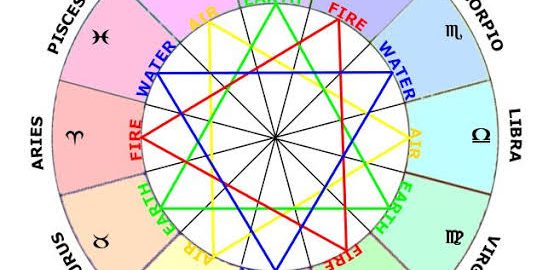
Equinoctial signs are Aries and Libra, the two zodiac signs associated with the equinoxes in the tropical zodiac. The Sun’s entrance into Aries marks the March equinox, while its entrance into Libra marks the September equinox. At these seasonal turning points, day and night are approximately equal in length.

Astrological Meaning

Traditional astrology links equinoctial signs with transition, initiation, and shifts in balance. Aries begins the astrological year and is commonly associated with emergence, direct action, and increasing light in the Northern Hemisphere. Libra marks the opposite point of the zodiac and is associated with adjustment, relationship, and the movement toward decreasing light. Both are cardinal signs, so planets placed in them may express themselves through activity, redirection, or a need to respond to changing circumstances. Interpretation still depends on the planet, house, aspects, sect, and overall condition of the chart.

Why It Matters

Recognizing the equinoctial signs helps clarify the seasonal structure underlying the tropical zodiac. The classification can add context to natal, electional, horary, and mundane interpretation, especially when a chart emphasizes beginnings, reversals, negotiation, or major turning points. It should be treated as one descriptive factor rather than a prediction by itself.

Related Encyclopedia Entries

Equinox

Definition

An equinox is one of two moments each year when the Sun crosses the celestial equator, making day and night approximately equal in length worldwide. The March equinox begins astronomical spring in the Northern Hemisphere and autumn in the Southern Hemisphere; the September equinox reverses those seasons.

Astrological Meaning

In tropical astrology, the equinoxes anchor two cardinal points of the zodiac. The March equinox marks the Sun’s ingress into 0° Aries, while the September equinox marks its ingress into 0° Libra. These points symbolize shifts in direction, initiative, balance, and relationship. Traditional and mundane astrologers may cast an ingress chart for the equinox to explore themes for the coming season, interpreting its Ascendant, planetary placements, aspects, and house emphasis in relation to a particular location.

Why It Matters

The equinox connects astrology’s symbolic calendar to an observable astronomical cycle. It helps explain why the tropical zodiac remains aligned with the seasons rather than the visible constellations. In chart interpretation, planets or angles near the equinoctial degrees may receive added attention, though their significance depends on the full natal, event, or mundane chart rather than the equinox alone.

Related Encyclopedia Entries

Epicycle

Definition

An epicycle is a small circular path whose center travels around a larger circle, traditionally called the deferent. Ancient and medieval astronomers used combinations of these circles to model planetary motion in a geocentric cosmos. The system helped account for observed changes in speed, direction, and distance, especially the apparent backward movement known as retrograde motion.

Astrological Meaning

In classical astrology, an epicycle is primarily an astronomical and computational concept rather than a standalone symbol with a natal interpretation. Epicyclic models allowed astrologers to estimate planetary positions, which were then used to cast horoscopes and assess signs, houses, aspects, dignities, and planetary phases. Understanding the term can clarify how traditional practitioners worked before heliocentric models and modern orbital calculations became standard.

Why It Matters

Epicycles matter because accurate planetary placement has always been fundamental to chart interpretation. The concept also shows how astrology developed alongside historical astronomy and adapted to changing models of the heavens. A modern astrologer does not usually interpret an epicycle directly, but recognizing its role provides useful context for traditional texts, old planetary tables, and the history of retrograde motion.

Related Encyclopedia Entries

Equation of Time

Definition

The Equation of Time is the changing difference between apparent solar time, measured by the Sun’s observed position, and mean solar time, measured by a uniform clock. This difference arises because Earth’s orbit is elliptical and its axis is tilted. Depending on the date, apparent solar time may run ahead of or behind mean solar time by several minutes.

Astrological Meaning

In astrology, the Equation of Time is primarily a technical timing correction rather than a planet, point, or interpretive symbol. It is especially relevant when working with historical birth records, sundial time, local apparent time, or traditional chart-calculation methods. Applying the correction can help convert apparent solar time into mean solar time, or vice versa, before calculating the Ascendant, Midheaven, houses, and other time-sensitive chart factors. The required direction of correction depends on the original time standard and the calculation method being used.

Why It Matters

Accurate time conversion supports a more reliable natal chart, particularly when a birth occurred near a house cusp or when the Ascendant changes signs within a short interval. The Equation of Time should not automatically be applied to modern civil clock times, which usually require adjustments for time zones, daylight saving time, and location instead. Identifying how the recorded time was established is therefore essential before making any correction.

Related Encyclopedia Entries

Era

Definition

An era is an extended span of history identified by shared cultural, political, technological, or symbolic characteristics. In astrology, the word may describe a broad historical period interpreted through recurring planetary cycles, major configurations, or astrological ages. It is a general term rather than a precisely standardized chart factor.

Astrological Meaning

Astrologers most often discuss eras within mundane astrology, which studies collective events and social trends. Slow-moving planets such as Uranus, Neptune, and Pluto can mark generational themes, while conjunction cycles involving Jupiter and Saturn may be used to examine shifts in institutions and public priorities. An era may also refer informally to an astrological age, although astrological ages are a distinct concept associated with the precession of the equinoxes. Because planetary cycles overlap, no single transit necessarily defines an entire historical period.

Why It Matters

Thinking in terms of eras helps place individual charts and events within a larger symbolic setting. A natal chart describes personal potentials and tendencies, while the era provides collective conditions through which those qualities may be expressed. This perspective can clarify why people from different generations encounter different social expectations or opportunities. Interpretations remain contextual: historical evidence, local circumstances, and multiple planetary cycles should be considered rather than treating an era as a fixed destiny.

Related Encyclopedia Entries

Dragon’s Head

Definition

Dragon's Head is a traditional name for the North Lunar Node, also called the ascending node. It is the mathematical point where the Moon’s orbit crosses the ecliptic while moving northward. It is not a physical celestial body. Its counterpart, the South Lunar Node, was traditionally known as the Dragon’s Tail.

Astrological Meaning

Interpretations differ by astrological tradition. In some classical approaches, the Dragon’s Head suggests increase, appetite, acquisition, or amplification, especially regarding the topics of its sign and house. Many modern astrologers associate it with qualities that may feel unfamiliar but invite development, while the South Node represents established habits or familiar patterns. The node’s sign, house, ruler, aspects, and any close planetary conjunctions help refine its meaning. A planet joined to the Dragon’s Head should be interpreted separately before considering how the node may emphasize its expression.

Why It Matters

Understanding this term makes older astrological texts and chart notation easier to follow. The lunar nodes are also central to eclipse symbolism because solar and lunar eclipses occur near them. In natal interpretation, the Dragon’s Head can highlight an area of heightened attention or learning, but it does not guarantee success, fate, or a single prescribed life direction.

Related Encyclopedia Entries

