
83¢/min
Intro Offer
We charge 60% LESS than our competitors!
Tons of spot-on predictions in our newsletter.

category: Astrology Encyclopedia

Emotional Natures

Definition

Emotional natures are the characteristic ways people experience, process, and express feelings. In astrology, the term describes an overall emotional temperament rather than a single trait. It may include instinctive reactions, sensitivity, attachment patterns, comfort needs, emotional resilience, and the manner in which a person responds to changing circumstances.

Astrological Meaning

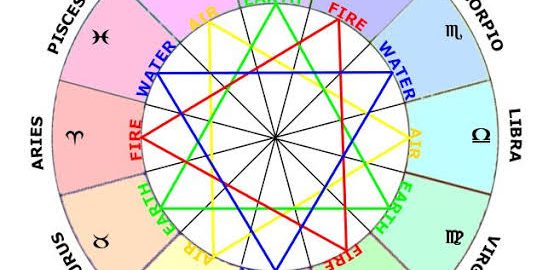
The Moon is the principal indicator of emotional nature in a natal chart, with its sign, house, aspects, condition, and planetary ruler adding important detail. The Ascendant and its ruler can describe outward reactions, while Venus and Mars may show relational preferences and responses to desire or conflict. Elemental and modal emphasis also contributes: water may suggest receptivity, fire immediacy, earth steadiness, and air reflection or verbal processing. Traditional astrologers may additionally assess planetary temperament, sect, dignity, and the balance of qualities such as hot, cold, moist, and dry. No factor should be interpreted alone; apparently conflicting indicators often reveal a layered emotional style.

Why It Matters

Understanding emotional nature helps place individual reactions within the wider structure of the chart. It can clarify what supports a sense of security, how feelings are communicated, and why certain environments or relationships feel easier than others. Used carefully, this interpretation encourages self-awareness without treating temperament as fixed or predicting how someone must feel.

Related Encyclopedia Entries

Eccentric

Definition

In classical astronomical terminology, an eccentric is a circular planetary path whose center does not coincide with Earth. It formed part of the geocentric models used by ancient and medieval astronomers to account for apparent changes in planetary speed and distance. The word describes a geometric device, not an unusual personality trait.

Astrological Meaning

Traditional astrologers relied on astronomical models to calculate where planets appeared in the zodiac. An eccentric, sometimes combined with a deferent, epicycle, or equant, helped represent irregular-looking planetary motion within a system based largely on circles. It does not usually carry an independent symbolic meaning in a natal chart. Its astrological relevance lies in the calculations behind planetary longitude, speed, stations, and retrograde motion—conditions that traditional practitioners may consider when assessing a planet’s expression and accidental dignity.

Why It Matters

Understanding the eccentric clarifies the historical relationship between astrology and astronomy. It shows how earlier practitioners modeled visible planetary movements before modern heliocentric calculations became standard. When encountered in a classical text, the term should therefore be read as technical astronomical language rather than as a character judgment or predictive factor. Recognizing that distinction helps readers interpret traditional methods more accurately and place older chart calculations in their proper intellectual context.

Related Encyclopedia Entries

Easter

Definition

Easter is a Christian festival whose calendar date is determined through a combination of solar, lunar, and weekly cycles. In Western Christianity, it falls on the Sunday following the ecclesiastical full moon on or after the fixed ecclesiastical vernal equinox of March 21. Eastern churches may observe a different date because they can use different calendars and calculation rules.

Astrological Meaning

Easter is not an astrological placement, transit, or natal-chart factor. Its relevance to astrology lies in its historical connection with calendrical astronomy: the spring equinox marks a stage in the Sun’s annual cycle, while the ecclesiastical full moon reflects a formal lunar calculation. Astrologers may discuss Easter when exploring seasonal symbolism, lunar-solar calendars, or the historical overlap among astronomy, religion, and traditional timekeeping. The ecclesiastical calculation should not be confused with interpreting the astronomical Full Moon in a horoscope.

Why It Matters

Understanding Easter’s date helps clarify how celestial cycles have shaped cultural calendars without making the festival itself an astrological indicator. It also illustrates why traditional terminology requires precision: an equinox can be treated as an astronomical event, a calendrical reference, or an astrological ingress into Aries, depending on context. Distinguishing these uses prevents religious calendar rules from being mistaken for natal or predictive techniques.

Related Encyclopedia Entries

Duration of Life

Definition

Duration of Life is a historical branch of classical astrology concerned with estimating longevity from a natal chart. Traditional practitioners used specialized techniques involving planetary condition, house rulership, aspects, and points known as the hyleg and alcocoden. Methods differed considerably among Hellenistic, medieval, Arabic, and Renaissance astrologers.

Astrological Meaning

In traditional interpretation, the hyleg was selected as a potential giver of life, while the alcocoden was used in some systems to assign symbolic periods of years. Difficult planets or aspects could be treated as limiting factors, sometimes through an anareta, or life-destroying indicator. These calculations depend on strict rules involving sect, essential dignity, house placement, and planetary testimony. Because the techniques vary by school and rest on historical cosmologies rather than reliable evidence, they should not be treated as dependable forecasts of an individual’s lifespan or manner of death.

Why It Matters

Studying Duration of Life can illuminate the logic, vocabulary, and worldview of traditional astrology. It also highlights the importance of ethical limits in modern practice. Rather than making literal death predictions, astrologers may examine related chart factors cautiously as symbols of vitality, resilience, major transitions, or periods when additional care and support could be helpful.

Related Encyclopedia Entries

Dwa-da-shamsa

Definition

Dwa-da-shamsa, more commonly transliterated as Dwadashamsha, is a twelvefold division of a zodiac sign used in Indian astrology. Each sign is divided into twelve sections of 2 degrees 30 minutes, producing the D12 divisional chart. The first section corresponds to the sign being divided, with the remaining sections following zodiacal order. A related technique in classical Western astrology is known as the dodecatemoria, although its applications may differ.

Astrological Meaning

The Dwa-da-shamsa chart is traditionally associated with parents, ancestry, family inheritance, and patterns carried through one’s lineage. Astrologers may examine its ascendant, planetary rulers, the Sun, the Moon, and planets relevant to parental or family matters. Signs, houses, aspects, and planetary condition provide context. The D12 is interpreted alongside the natal chart rather than as an independent source of fixed outcomes, and methods vary among astrological schools.

Why It Matters

Dwa-da-shamsa offers a more focused way to explore how family background and inherited tendencies may shape personal experience. It can add nuance to natal indications concerning parents, belonging, tradition, and generational patterns. Because divisional charts depend on an accurate birth time and a consistent calculation method, small timing errors and differences between traditions should be considered before drawing conclusions.

Related Encyclopedia Entries

Dysis

Definition

Dysis is an ancient Greek astrological term meaning “setting.” It usually refers to the western point of the horoscope where the ecliptic meets the horizon, now commonly called the Descendant. Opposite the Ascendant, it is one of the chart’s four principal angles and marks the place where planets and zodiacal degrees descend from view.

Astrological Meaning

In classical astrology, Dysis represents the western angle and is associated with other people, direct encounters, agreements, disputes, and partnerships. A planet close to this angle is considered angular, which traditionally gives it greater prominence and capacity to act in the life. Its expression still depends on the planet’s condition, zodiacal sign, aspects, and rulerships. Dysis should not automatically be equated with marriage alone; its symbolism covers many forms of one-to-one engagement, including allies, advisers, clients, competitors, and open opponents.

Why It Matters

Recognizing Dysis helps readers translate older astrological texts and connect classical terminology with the structure of a modern natal chart. It also clarifies the distinction between the Descendant as an exact horizon point and the seventh house as a broader chart sector. Although some house systems place the Descendant on the seventh-house cusp, interpretive methods and boundaries can vary. Studying Dysis therefore supports more precise work with angularity, planetary strength, and relationship symbolism without treating any single placement as a fixed outcome.

Related Encyclopedia Entries

