
83¢/min
Intro Offer
We charge 60% LESS than our competitors!
Tons of spot-on predictions in our newsletter.

category: Astrology Encyclopedia

Collision with Earth

Definition

A collision with Earth is the physical impact of an asteroid, comet, meteoroid, or other celestial body on the planet. It is primarily an astronomical and geological event, not a standard natal-chart placement or classical astrological technique. Historical astrologers observed unusual celestial phenomena, but modern impact science developed much later.

Astrological Meaning

In astrology, the phrase may appear in discussions of mundane astrology, which considers collective events and historical periods. An astrologer might examine an impact or close approach through event charts, planetary transits, eclipses, comets, or ingress charts. Such interpretations are symbolic rather than scientific forecasts of a collision. Earth is also the geocentric reference point for most horoscopes, so it is not ordinarily interpreted as another planet occupying a zodiac sign in a standard natal chart.

Why It Matters

Understanding the distinction between astronomy and astrology prevents symbolic interpretation from being mistaken for physical prediction. Orbital calculations, impact probabilities, and hazard assessments belong to astronomers and planetary-defense organizations. Astrology may explore how a confirmed event resonates with collective themes such as disruption, vulnerability, adaptation, or changing priorities, but it cannot reliably establish whether or when an object will strike Earth.

Related Encyclopedia Entries

Key-Cycle

Definition

A Key-Cycle is a selected astrological timing cycle used as a framework for studying recurring themes or significant periods. The term is not universally standardized: depending on the traditional method or author, the cycle may be based on a planetary period, a return, a repeated aspect, or another measured interval. Its calculation should therefore be established before interpretation begins.

Astrological Meaning

Astrologers use a Key-Cycle to organize timing indications around a recurring celestial pattern. The planet or planets defining the cycle describe its symbolic subject matter, while the cycle’s phases may show development, culmination, reassessment, and renewal. A Saturn-based cycle, for example, would be interpreted differently from one involving Jupiter or the lunar nodes. The Key-Cycle does not replace the natal chart; it provides a timing structure that must be compared with natal placements, current transits, and the rules of the technique being used.

Why It Matters

The concept matters because it helps distinguish a meaningful timing method from a vague claim that history simply repeats. Identifying the cycle’s astronomical basis, length, and interpretive tradition allows clearer chart work. It also prevents similarly named techniques from being treated as interchangeable. A Key-Cycle is most useful when its indications are supported by other chart factors rather than read as a certain prediction.

Related Encyclopedia Entries

Earth

Definition

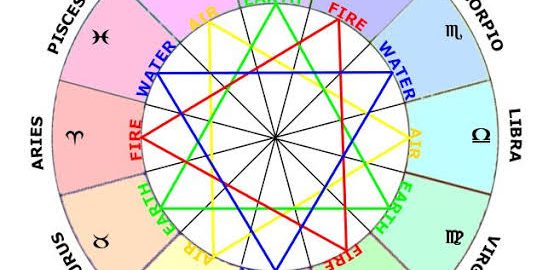
Earth is one of astrology’s four classical elements, alongside Fire, Air, and Water. It is associated with the zodiac signs Taurus, Virgo, and Capricorn. As an element, Earth describes qualities such as practicality, stability, material awareness, patience, and engagement with the physical world. It should not be confused with the planet Earth, which is normally the observational center of a geocentric natal chart rather than a separately interpreted placement.

Astrological Meaning

A strong Earth emphasis may suggest a grounded, methodical approach to life. Taurus often expresses the element through continuity, values, and sensory experience; Virgo through analysis, refinement, and useful skills; and Capricorn through structure, responsibility, and long-term aims. Earth placements can support reliability and tangible achievement, although an imbalance may coincide with excessive caution, rigidity, or preoccupation with measurable results. A relative lack of Earth does not imply impracticality; other chart factors may provide discipline and stability.

Why It Matters

Elemental balance offers a quick way to understand a natal chart’s overall style. Counting planets and significant points in Earth signs can reveal how readily someone turns ideas, feelings, or enthusiasm into practical action. Interpretation should also consider houses, aspects, planetary strength, and the distribution of the other elements. Earth therefore matters less as an isolated label than as part of the chart’s wider pattern, showing where realism, embodiment, resources, and sustained effort may play important roles.

Related Encyclopedia Entries

Commanding Signs

Definition

Commanding Signs are a traditional classification applied to the six zodiac signs north of the celestial equator: Aries, Taurus, Gemini, Cancer, Leo, and Virgo. Each was paired with an “obeying” sign at a corresponding distance south of the equator: Pisces, Aquarius, Capricorn, Sagittarius, Scorpio, and Libra. Thus, Aries commands Pisces, Taurus commands Aquarius, and so forth. The terminology reflects classical astronomical symbolism rather than a claim that people born under these signs are naturally domineering.

Astrological Meaning

Traditional astrologers used commanding and obeying relationships as one consideration when comparing planets, signs, or chart factors. A planet in a commanding sign could be viewed as having greater authority within its paired relationship, especially when the planets represented two people or competing interests. The technique may appear in natal interpretation, horary judgment, and relationship analysis, but its weight varies among schools. It should be assessed alongside planetary dignity, aspects, house placement, reception, and the condition of the relevant rulers.

Why It Matters

This classification helps readers understand how classical astrology organized zodiacal relationships through celestial geometry and seasonal symbolism. It can add nuance when two significators occupy a commanding–obeying pair, suggesting an imbalance of initiative, influence, or visibility rather than a fixed hierarchy. Because the concept arose within a particular historical and geographical framework, modern astrologers often use it selectively. It is best treated as supporting evidence, not as a stand-alone verdict about personality, power, or the outcome of a situation.

Related Encyclopedia Entries

Kether

Definition

Kether, meaning “Crown,” is the highest sephirah on the Kabbalistic Tree of Life. It represents primordial unity, pure potential, and the source from which the remaining sephiroth unfold. Kether is primarily a mystical and ceremonial concept rather than a standard element of classical astrology, although some Western esoteric traditions connect it with planetary and cosmological symbolism.

Astrological Meaning

In occult astrology, Kether may signify consciousness before it takes a specific form: the originating purpose behind a chart, spiritual aspiration, or an encounter with mystery. Correspondences vary by school. Some systems associate Kether with the Primum Mobile, the outermost celestial sphere in medieval cosmology; others connect it with Neptune, Pluto, or no single planet. Because these links are not universal, an interpretation should identify the correspondence system being used rather than treating Kether like a conventional planet, sign, or house.

Why It Matters

Kether offers a framework for considering a natal chart at the level of overarching intention and unity. It can encourage reflection on how diverse placements participate in a larger pattern without overriding their individual meanings. Its value is chiefly philosophical: it adds a contemplative dimension to chart interpretation while reminding astrologers to distinguish later esoteric correspondences from established traditional techniques.

Related Encyclopedia Entries

Fortuna

Definition

Fortuna is the Latin name commonly associated with the Lot, or Part, of Fortune, a calculated point used in classical astrology. It is not a planet or physical body. Its position is derived from the Ascendant, Sun, and Moon, with the formula traditionally reversed according to whether the chart is diurnal or nocturnal.

Astrological Meaning

In traditional interpretation, Fortuna describes embodied life, material circumstances, livelihood, resources, and conditions that may not be fully directed by personal intention. Its sign suggests the manner in which these circumstances operate, while its house identifies the life area where they may become especially noticeable. The condition of Fortuna’s planetary ruler is central: its house, sign, aspects, and dignity can clarify how readily the point’s potential is expressed. Planets closely aspecting or conjoining Fortuna may also shape its meaning. Modern astrologers sometimes associate it with ease, opportunity, or natural flow, although this is narrower than its broader classical significance.

Why It Matters

Fortuna adds context to questions about practical support, changing circumstances, and the relationship between personal effort and external conditions. It is most informative when interpreted through sect, house rulership, and the overall natal chart rather than treated as a guaranteed indicator of wealth or luck. Comparing it with the Lot of Spirit can further distinguish circumstance from intention and purposeful action.

Related Encyclopedia Entries

