
83¢/min
Intro Offer
We charge 60% LESS than our competitors!
Tons of spot-on predictions in our newsletter.

category: Astrology Encyclopedia

Triplicity, Rulers of

Definition

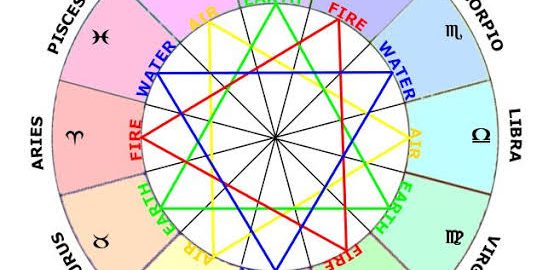
Triplicity rulers are planets assigned to govern the four elemental groups of zodiac signs: fire, earth, air, and water. In traditional astrology, each triplicity usually has a daytime ruler, a nighttime ruler, and, in some systems, a participating ruler. The planet emphasized depends on the chart’s sect—whether it is a day or night chart—and on the traditional rulership scheme being used. Dorothean and Ptolemaic systems differ in some assignments, so the chosen method should be stated clearly.

Astrological Meaning

Triplicity rulership describes how a planet supports topics associated with signs of a shared element. In natal interpretation, the relevant ruler’s condition by sign, house, aspects, and sect may indicate the stability, resources, or cooperation available to a planet or house. Traditional astrologers also use triplicity rulers in timing methods and in evaluating dignity. This rulership is generally considered less concentrated than domicile or exaltation, but it can still provide meaningful support.

Why It Matters

Triplicity rulers add nuance beyond modern elemental descriptions. They help distinguish a planet that merely occupies an element from one that has recognized authority within that elemental group. Because different historical traditions use different tables, consistent technique matters. Used alongside sect, essential dignity, house rulership, and aspects, triplicity rulers can clarify how reliably a planet may express its functions without treating any single dignity as decisive.

Related Encyclopedia Entries

Logarithms

Definition

Logarithms are mathematical values that express one number as a power of another fixed number, called the base. Before electronic calculators, printed logarithm tables allowed astrologers and astronomers to replace difficult multiplication and division with simpler addition and subtraction. Specialized tables also assisted with calculations involving angles, time, and proportional differences.

Astrological Meaning

In astrology, logarithms are calculation tools rather than symbols with an interpretive meaning. They were especially useful when computing planetary positions from ephemerides, converting units of time and arc, interpolating between tabulated values, and completing some house-cusp or directional calculations. Their historical use reflects astrology’s dependence on astronomy, geometry, and accurate timekeeping. Different traditional procedures could require ordinary, trigonometric, or proportional logarithms, so the relevant method and table had to be identified before calculation.

Why It Matters

Understanding logarithms helps readers follow older astrological manuals and reproduce charts made before modern software. They also reveal where rounding, interpolation, or table-reading errors may have affected a historical chart. Most contemporary astrologers do not calculate with logarithm tables, but knowing their purpose makes traditional techniques easier to evaluate and distinguishes the mathematics used to construct a chart from the interpretation applied afterward.

Related Encyclopedia Entries

Other systems of rulership have been variously proposed

Definition

Astrological rulership assigns planets authority or affinity over zodiac signs, houses, or other chart factors. Alongside the classical domicile system, astrologers have proposed alternatives involving the outer planets, co-rulers, minor planets, asteroids, symmetrical arrangements, or specialized esoteric correspondences. These models belong to different traditions and should not be assumed to operate identically.

Astrological Meaning

In traditional astrology, the seven visible planets rule the twelve signs: for example, Saturn rules Capricorn and Aquarius, while Mars rules Aries and Scorpio. Many modern astrologers instead associate Uranus with Aquarius, Neptune with Pisces, and Pluto with Scorpio, sometimes retaining the classical planets as co-rulers. Other experimental systems extend rulership to additional celestial bodies or reorganize planetary relationships according to mythology, orbital order, or zodiacal symmetry. Interpretation therefore depends on which framework the astrologer has chosen and whether it is applied consistently.

Why It Matters

Rulership affects how signs, houses, and their planetary rulers are connected in a natal chart or predictive technique. Mixing systems without explanation can produce contradictory judgments, especially when identifying a house ruler or assessing planetary condition. Comparing approaches can be valuable, but clear methodology matters more than treating one proposal as universally correct. Traditional rulerships also remain important because many established techniques were developed around them.

Related Encyclopedia Entries

Lunar Declination

Definition

Lunar declination is the Moon’s angular distance north or south of the celestial equator, measured in degrees. Unlike zodiac longitude, which places the Moon within a sign, declination describes its position above or below Earth’s equatorial plane. It changes rapidly and is listed in astronomical ephemerides as north or south declination.

Astrological Meaning

Astrologers use lunar declination to add another dimension to natal, predictive, and relationship chart interpretation. When the Moon shares a similar declination with another planet, the bodies form a parallel, often interpreted somewhat like a conjunction. Equal declinations on opposite sides of the celestial equator form a contraparallel, sometimes treated like an opposition. A Moon beyond the Sun’s usual maximum declination is called out of bounds and may suggest emotional responses, instincts, or habits that operate less conventionally. This does not override the Moon’s sign, house, phase, or aspects.

Why It Matters

Lunar declination can reveal connections that are not obvious in a standard zodiac chart. It may clarify why two planets seem strongly linked despite lacking a major longitude aspect. Because the Moon moves quickly, accurate birth times and reliable ephemeris data are important. Declination is most useful as a supporting technique interpreted alongside the complete natal chart rather than as a stand-alone indicator.

Related Encyclopedia Entries

Semi-circle from Cancer backward to Aquarius

Definition

The semi-circle from Cancer backward to Aquarius is a traditional division of the zodiac comprising Cancer, Gemini, Taurus, Aries, Pisces, and Aquarius. “Backward” means moving against the usual zodiacal order. This sequence is commonly called the lunar semicircle because it begins with Cancer, the Moon’s domicile, and mirrors the solar semicircle extending from Leo through Capricorn.

Astrological Meaning

This division illustrates the symmetrical arrangement of traditional planetary domiciles. Beginning with the Moon in Cancer, the signs are assigned in pairs to the visible planets: Mercury rules Gemini, Venus rules Taurus, Mars rules Aries, Jupiter rules Pisces, and Saturn rules Aquarius. On the opposite side, the same planets rule Virgo through Capricorn outward from the Sun’s domicile in Leo. The pattern expresses a classical model of planetary order rather than an independent chart placement or predictive technique.

Why It Matters

Understanding this semicircle helps explain why traditional rulerships form an orderly structure around Cancer and Leo, the domiciles of the Moon and Sun. It can clarify discussions of planetary dignity, sect, zodiacal symbolism, and older astrological terminology. In chart interpretation, however, belonging to the lunar semicircle does not by itself make a sign emotional, passive, fortunate, or unfortunate; its relevance depends on the specific traditional method being used and the condition of the planets involved.

Related Encyclopedia Entries

Lunar

Definition

Lunar means relating to the Moon. In astrology, the term may describe lunar signs, houses, aspects, phases, cycles, returns, or techniques based on the Moon’s motion. A chart factor is often called lunar when its symbolism emphasizes receptivity, instinct, memory, nourishment, fluctuating conditions, or emotional response.

Astrological Meaning

Lunar symbolism concerns how experience is felt, absorbed, and answered at an instinctive level. In a natal chart, the Moon’s sign describes the style of emotional response, while its house shows the life area where security and belonging are often sought. Its aspects indicate how lunar needs interact with other planetary functions. In forecasting, lunar transits are brief and commonly used for timing shifts in mood, attention, or everyday activity. Lunar phases add another layer by describing stages within a cycle, from initiation near the New Moon to culmination around the Full Moon and release during the waning phase.

Why It Matters

Understanding what lunar means helps distinguish Moon-centered interpretation from solar, planetary, or broader chart analysis. It also prevents every reference to the Moon from being treated identically: a natal Moon, a lunar phase, and a transiting Moon describe different factors and timescales. Used with the whole chart, lunar symbolism can clarify habitual reactions, comfort needs, family patterns, and changing emotional rhythms without implying fixed outcomes.

Related Encyclopedia Entries

