
83¢/min
Intro Offer
We charge 60% LESS than our competitors!
Tons of spot-on predictions in our newsletter.

category: Astrology Encyclopedia

January

Definition

January is the first month of the modern Gregorian calendar. In astrology, it is a calendar period rather than a planet, sign, house, or aspect. It usually includes the latter part of the Sun’s passage through Capricorn and the beginning of its passage through Aquarius, although the exact ingress date and time vary slightly by year and location.

Astrological Meaning

January is often interpreted through the signs, planetary movements, lunations, and aspects occurring during that specific year. Capricorn symbolism may emphasize structure, responsibility, endurance, or long-range goals, while Aquarius symbolism may shift attention toward independence, community, innovation, or reform. These are broad seasonal themes, not fixed descriptions of everyone born in January. A January birth chart can contain the Sun in Capricorn or Aquarius, but its fuller interpretation depends on the exact birth date, time, place, Ascendant, Moon, houses, aspects, and other planetary placements. Seasonal associations with winter are culturally familiar in the Northern Hemisphere but should not be treated as universal worldwide.

Why It Matters

Recognizing January as a calendar framework prevents it from being mistaken for an astrological placement. It helps astrologers organize ephemerides, identify transits and ingresses, and study the chart for a particular event or birth. For meaningful interpretation, the month provides context, while the actual planetary positions supply the astrological detail.

Related Encyclopedia Entries

Zodiac

Definition

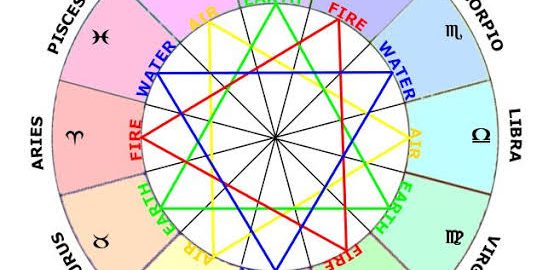
The zodiac is a twelve-part celestial framework used to map the apparent yearly path of the Sun, known as the ecliptic. Its twelve signs—Aries through Pisces—each occupy 30 degrees of a complete 360-degree circle. The astrological zodiac is a symbolic coordinate system and should be distinguished from the unequal astronomical constellations bearing similar names.

Astrological Meaning

In astrology, the zodiac describes twelve distinct modes of expression. A planet indicates what function is active, while its zodiac sign suggests how that function tends to operate. A house shows the area of life involved, and aspects describe relationships between chart factors. Western astrology commonly uses the tropical zodiac, aligned with the equinoxes and seasons; many Indian and some Western traditions use a sidereal zodiac referenced to stellar positions.

Why It Matters

The zodiac provides the basic vocabulary for interpreting natal charts, transits, and other astrological techniques. Understanding its structure prevents common errors, such as treating a Sun sign as the whole personality or confusing signs with houses. It also helps readers compare traditions thoughtfully, since tropical and sidereal systems may assign different signs to the same planet while remaining internally coherent within their respective methods.

Related Encyclopedia Entries

Month

Definition

A month is a unit of time used to organize the calendar, historically associated with the Moon’s cycle. Calendar months vary from 28 to 31 days, while astronomy distinguishes several lunar periods, including the synodic month from one New Moon to the next and the sidereal month measured against the stars.

Astrological Meaning

In astrology, the month helps establish the general position of the Sun and provides part of the date needed to calculate a natal chart, transit, election, or horary figure. It also frames recurring lunar phases and planetary movements. However, a calendar month has no single astrological meaning by itself. Accurate interpretation depends on the complete date, exact time, location, zodiac positions, houses, and aspects. Traditional calendars may also divide time according to lunar months or the Sun’s movement through zodiac signs.

Why It Matters

Understanding what “month” means prevents calendar divisions from being confused with astrological cycles. Two people born in the same month may have different Sun signs, Moon signs, house placements, and aspects. The month is therefore useful as a timekeeping reference, but it is only one component of chart calculation and interpretation.

Related Encyclopedia Entries

Monad

Definition

Monad means an indivisible unity or primary “one.” The term comes from Greek philosophical and numerical traditions, especially Pythagorean and later Neoplatonic thought. It describes the single source from which plurality, number, and ordered existence emerge. In astrological writing, the Monad is a cosmological idea rather than a planet, sign, house, aspect, or calculated chart point.

Astrological Meaning

Astrologically, the Monad can symbolize underlying wholeness: the unified order expressed through the many components of a horoscope. Some traditional philosophical frameworks associate unity with the first principle, the number one, or a central creative source. Depending on the author and school, solar symbolism may provide an analogy because the Sun represents coherence, vitality, and centrality, but Monad should not automatically be treated as another name for the Sun. Its meaning is usually interpretive and philosophical, helping explain how diverse planetary influences may belong to one integrated cosmic pattern.

Why It Matters

Understanding the Monad helps readers recognize the philosophical foundations behind some forms of traditional astrology. It encourages a natal chart to be read as a connected whole rather than as a collection of isolated placements. The concept is most useful when studying astrological cosmology, number symbolism, and older technical language; it is not normally used as an independent predictive factor.

Related Encyclopedia Entries

Moisture

Definition

Moisture is one of the primary qualities used in classical astrology to classify planets, signs, elements, seasons, and temperaments. Also called wetness or humidity, it describes a tendency to combine, connect, soften boundaries, and receive impressions. Air is traditionally considered hot and moist, while water is cold and moist; dryness represents the contrasting quality.

Astrological Meaning

In traditional interpretation, moisture suggests flexibility, cohesion, sociability, emotional receptivity, and the capacity to blend different influences. The Moon and Venus are commonly described as moist, while Jupiter is often considered moderately moist; exact classifications can vary among astrological authorities. Moisture never operates alone: heat may make it more active and expansive, whereas cold can make it more inward, retentive, or contemplative. An astrologer may assess the balance of moist and dry factors when considering a planet’s condition, a chart’s elemental emphasis, or a person’s symbolic temperament.

Why It Matters

Understanding moisture helps clarify how classical astrologers move from basic planetary and elemental qualities to richer chart interpretation. A strong moist emphasis may point toward adaptability and connection, but it can also suggest porous boundaries or changeability. Its significance depends on the complete natal chart, including planetary dignity, aspects, houses, and counterbalancing dry influences.

Related Encyclopedia Entries

Moderators

Definition

Moderators are planets understood to regulate, temper, or direct the expression of another planet or chart configuration. The term appears in traditional astrological writing, although its precise use varies by author and technique. A moderator may be identified through rulership, essential dignity, reception, dispositorship, or an aspect that connects otherwise conflicting influences.

Astrological Meaning

A moderator is interpreted as influencing how strongly, smoothly, or constructively a configuration operates. Its condition matters: a well-dignified and suitably placed planet may provide coherence, resources, or restraint, while a debilitated, combust, retrograde, or poorly placed moderator may have less capacity to help. The houses ruled and occupied by the moderating planet show where its influence may be expressed. Moderation does not erase the original planets’ meanings; it describes an additional factor that can redirect or balance them.

Why It Matters

Recognizing moderators can prevent an interpretation from treating an aspect or placement in isolation. They add context by showing whether another planet supports negotiation between competing tendencies, channels excess energy, or complicates an attempted resolution. Because the term is not standardized across every traditional school, astrologers should determine how a particular source defines it before applying the technique. In natal work, moderators are best considered alongside dignity, reception, house rulership, sect, and the overall condition of the chart.

Related Encyclopedia Entries

