
All posts by admin

Solomon’s Seal

Definition

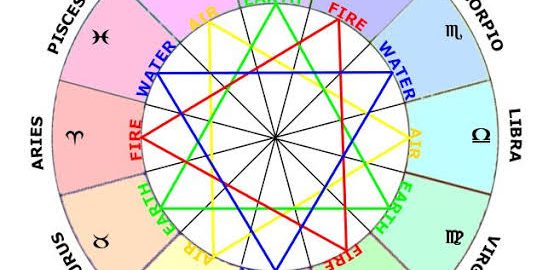
Solomon's Seal is an interlaced six-pointed figure formed by an upward-pointing triangle and a downward-pointing triangle. It appears in several religious, magical, and esoteric traditions, sometimes in forms more elaborate than a simple hexagram. Although it is used in astrological symbolism, it is not a planet, aspect, house, or standard natal chart placement.

Astrological Meaning

In astrological and Hermetic contexts, the two triangles commonly represent complementary forces: above and below, active and receptive, spirit and matter, or fire and water. Their union suggests balance, integration, and the correspondence between celestial patterns and earthly experience. Some traditional diagrams arrange the seven classical planets around the seal’s six points and center, but assignments can differ between texts and schools. Interpretation therefore depends on the specific diagram and its stated correspondences rather than on the symbol alone. When used as a talismanic image, it may signify harmony among planetary influences, protection, or an effort to bring opposing qualities into a workable relationship.

Why It Matters

Recognizing Solomon's Seal helps readers distinguish symbolic or magical astrology from ordinary chart interpretation. Its appearance may indicate that a manuscript, talisman, or diagram combines astrology with Hermeticism, alchemy, or ceremonial practice. Because there is no single universal planetary arrangement, checking the source tradition prevents misleading conclusions and provides a clearer understanding of how the symbol is intended to function.

Related Encyclopedia Entries

SOL-om-on

Definition

SOL-om-on is an esoteric rendering of the name Solomon, divided into syllables that invite symbolic interpretation. “Sol” is the Latin name for the Sun, while “Om” is a sacred sound in Indian religious traditions; interpretations of “on” vary by source. The expression is not a standard technical term found in classical astrological doctrine.

Astrological Meaning

When SOL-om-on appears in astrological or occult writing, it generally suggests solar wisdom, spiritual integration, or the harmonizing of different traditions. Its clearest astrological connection is Sol, the Sun, which symbolizes vitality, identity, purpose, visibility, and the organizing center of a birth chart. The other syllables belong more properly to spiritual symbolism than to established chart interpretation. SOL-om-on is therefore best understood as a contemplative word formula rather than as a planet, aspect, house, calculated point, or recognized placement.

Why It Matters

Recognizing the term’s limits helps readers separate traditional astrological techniques from later esoteric associations. SOL-om-on may offer a meaningful prompt for meditation on solar consciousness, wisdom, or inner coherence, but it does not carry a fixed interpretive rule. Any use of it should be considered alongside the Sun’s sign, house, aspects, and condition in the natal chart rather than treated as an independent predictive factor.

Related Encyclopedia Entries

Solar Year

Definition

A solar year is the period associated with the Sun completing one annual cycle. In seasonal astrology, it is commonly measured as the tropical year: about 365.242 days from one vernal equinox to the next. Astrologers may also use “solar year” for the interval between one exact solar return and the next, when the transiting Sun returns to its natal zodiacal longitude.

Astrological Meaning

The solar year provides a framework for examining annual themes. A solar return chart, cast for the exact return of the Sun to its natal position, is interpreted alongside the natal chart rather than as a replacement for it. Its Ascendant, house placements, planetary aspects, and the condition of the Sun may describe areas of emphasis from one return to the next. This cycle differs from the calendar year, and its timing can fall before or after the civil birthday because the astronomical year is not exactly 365 days long.

Why It Matters

Understanding the solar year helps clarify the timing and scope of annual forecasting methods. It allows astrologers to separate birthday-based solar returns from calendar-year predictions and to combine annual charts with techniques such as transits and annual profections. The resulting picture suggests priorities, opportunities, or pressures for the year without determining fixed outcomes.

Related Encyclopedia Entries

Solar Time

Definition

Solar Time is a method of measuring time according to the Sun’s apparent movement across the sky at a particular location. Local noon occurs when the Sun crosses the local meridian. Apparent solar time follows the observed Sun, while mean solar time averages seasonal variations to create a uniform day. Clock time, by contrast, is organized through standardized time zones.

Astrological Meaning

In astrology, Solar Time is primarily a chart-calculation concept rather than a symbolic placement. Historical birth records may use local solar time, requiring conversion before a natal chart can be calculated accurately. The recorded time must be interpreted in relation to longitude, local timekeeping customs, and whether apparent or mean solar time was intended. These distinctions can affect the Ascendant, Midheaven, house cusps, and occasionally the Moon’s exact position, while planetary sign placements usually remain unchanged.

Why It Matters

Understanding Solar Time helps astrologers evaluate older or unusual birth records and avoid treating historical times as though they were modern civil clock times. Even a modest correction can shift angles or house placements, especially near sign or house boundaries. Careful conversion therefore supports a more reliable chart without implying that every small timing difference radically changes the interpretation. When the original convention is uncertain, astrologers may compare plausible chart times and clearly acknowledge the limits of the available data.

Related Encyclopedia Entries

Saturn was the ancient god of the seed sowing

Definition

Saturn was an ancient Roman agricultural deity associated with sowing, cultivated land, seasonal cycles, and the preservation of the harvest. His name was later given to the planet Saturn. Although Roman Saturn became closely identified with the Greek god Cronus, their myths and cultural roles were not originally identical.

Astrological Meaning

In astrology, the agricultural image helps explain Saturn’s connection with time, patience, labor, limits, and eventual results. A seed must be planted under suitable conditions, protected, and allowed to mature; similarly, Saturn symbolizes development through structure, repetition, responsibility, and delayed gratification. In a natal chart, Saturn’s sign, house, and aspects may describe areas where discipline is cultivated or where uncertainty encourages careful preparation. Saturn does not simply signify punishment or misfortune. It can also represent endurance, competence, boundaries, and the authority earned through experience.

Why It Matters

Knowing Saturn’s agricultural background adds depth to interpretations that otherwise portray the planet as merely restrictive. Its symbolism suggests that limits can define a workable growing space and that sustained effort may produce something durable. When interpreting Saturn, it is helpful to consider both the challenge and the constructive capacity involved, while avoiding assumptions that any placement guarantees hardship or success.

Related Encyclopedia Entries

No

Definition

No is not a planet, sign, aspect, or formal chart component. In astrological practice, it usually describes a negative judgment given in response to a specific question, particularly in horary astrology. Such a judgment is based on the relationship between relevant chart factors rather than on a single universal symbol for refusal or failure.

Astrological Meaning

In horary astrology, the astrologer assigns significators to the person asking and to the matter being asked about. A separating or absent connection between those significators may suggest that the desired outcome is unlikely under present conditions. Traditional considerations such as prohibition, refranation, frustration, weak reception, or significant debility can reinforce that assessment. The Moon’s condition and applying aspects also contribute to the judgment. No single factor automatically produces a no; the chart must be read as a whole, with attention to timing, context, and the wording of the question. Natal astrology, by contrast, generally describes tendencies and life themes rather than issuing simple yes-or-no verdicts.

Why It Matters

Understanding how a negative judgment is formed helps prevent overly rigid or alarming interpretations. An astrological no may indicate obstacles, poor timing, insufficient support, or a need to reconsider the question—not an unchangeable fate. Distinguishing horary judgment from natal interpretation also clarifies which techniques are appropriate for a specific concern.

Related Encyclopedia Entries

