
All posts by admin

Tetragon

Definition

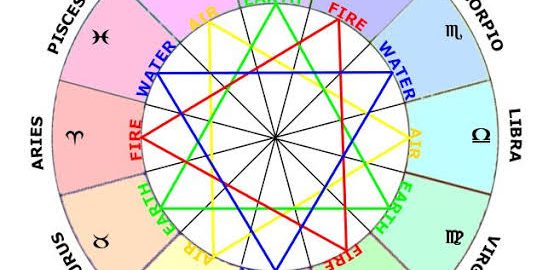
Tetragon is a classical astrological term for the square aspect, formed when two planets or chart points are approximately 90 degrees apart. The word comes from Greek terminology associated with a four-sided figure. In traditional aspect doctrine, planets in signs three signs apart were considered configured by tetragon, although exact degree relationships and allowable orb could refine the judgment.

Astrological Meaning

The tetragon generally signifies tension, friction, or circumstances requiring effort. Because the planets involved pursue their functions from signs that may share the same modality but differ in element, their aims can conflict even when both are strongly motivated. Interpretation depends on the planets, signs, houses, dignity, sect, and whether the aspect is applying or separating. Benefic planets may make the challenge more manageable, while difficult planetary conditions can intensify pressure. A tetragon does not automatically indicate misfortune; it can describe persistence, decisive action, and growth through confronting obstacles.

Why It Matters

Recognizing tetragon as the traditional name for a square helps readers understand older astrological texts and techniques. In a natal chart, it identifies areas where competing needs call for skill and adjustment. In transit work or synastry, the term still refers to the aspect itself, while the planets and chart context determine how that tension may be experienced.

Related Encyclopedia Entries

Tetractys – ten symbolic dots

Definition

The tetractys is a triangular figure of ten dots arranged in four rows: one, two, three, and four. Associated with Pythagorean philosophy, it expresses the sum 1 + 2 + 3 + 4 = 10 and symbolizes an ordered whole arising through successive levels. It belongs primarily to sacred geometry, number symbolism, and classical cosmology rather than to standard chart technique.

Astrological Meaning

In astrological thought, the tetractys can serve as a philosophical model for understanding how unity develops into complexity. Its four levels may be compared with fourfold astrological systems such as the elements, angles, seasons, or cardinal, fixed, and mutable patterns operating within a complete cycle. Some traditional or esoteric practitioners use it as a contemplative framework for chart synthesis, but it does not carry a universally accepted interpretation like a planet, house, sign, or aspect.

Why It Matters

The tetractys matters because astrology inherited many ideas from ancient mathematics, philosophy, and theories of cosmic harmony. Recognizing this symbol helps place astrological terminology within its broader intellectual setting. When applied carefully, it can encourage an astrologer to look for proportion, hierarchy, and relationships among chart factors without treating the figure as an independent predictive device or assigning it meanings unsupported by the chart itself.

Related Encyclopedia Entries

Tetrabiblios

Definition

Tetrabiblios, more commonly called the Tetrabiblos, is a four-part astrological treatise attributed to the second-century scholar Claudius Ptolemy. Its name means “four books.” The work presents astrology as a systematic study of celestial influences, covering planetary qualities, mundane conditions, natal charts, temperament, relationships, occupations, life periods, and timing techniques.

Astrological Meaning

In traditional astrology, the Tetrabiblios is important for its structured approach to interpretation. It associates planets, zodiac signs, aspects, and environmental factors with qualities such as heat, coldness, moisture, and dryness. Ptolemy emphasizes evaluating several testimonies together rather than reading one placement in isolation. His framework also distinguishes broad collective influences from the particular indications of an individual nativity. Modern astrologers may consult it to understand classical concepts, although many adapt its historical assumptions rather than applying every rule literally.

Why It Matters

The Tetrabiblios helped shape later Hellenistic, Arabic, medieval, and Renaissance astrological traditions. Studying it can clarify the origins of essential dignities, planetary condition, aspect doctrine, natal delineation, and predictive reasoning. It also encourages careful judgment: chart symbolism is weighed through context and multiple factors, not treated as a fixed promise of events or character.

Related Encyclopedia Entries

Testimony

Definition

In traditional astrology, a testimony is a chart factor that provides evidence supporting or opposing a particular interpretation. The term is especially common in horary astrology, where the astrologer gathers testimonies before reaching a judgment. Applying aspects, essential dignity, reception, house placement, planetary condition, and the Moon’s motion may all serve as testimonies.

Astrological Meaning

A testimony gains meaning through its relevance and strength. For example, an applying aspect between the significators of two people may support contact or cooperation, while prohibition, refranation, or severe debility may complicate that indication. Reception can show willingness or support even when direct action is difficult. Not every testimony carries equal weight: angular planets, strong dignities, close aspects, and factors directly connected to the question are generally more persuasive than weak or incidental details. Conflicting testimonies call for synthesis rather than a simple count.

Why It Matters

The concept of testimony encourages astrologers to base a judgment on several connected chart factors instead of relying on one placement or aspect. It also supports cautious interpretation by making room for mixed evidence, context, and degrees of likelihood. In natal work, the same principle can help confirm a recurring theme across planets, houses, aspects, and timing techniques without treating any single symbol as decisive.

Related Encyclopedia Entries

University Press, 2001

Definition

“University Press, 2001” is not a recognized astrological term, technique, placement, or configuration. It appears to be part of a bibliographic citation: “University Press” would identify an academic publisher, while “2001” would indicate the publication year. Without an author, book title, or the press’s full name, it does not identify a specific work.

Astrological Meaning

This phrase has no independent meaning in natal, predictive, horary, electional, or traditional astrology. If it appears in an astrological text or reference list, its relevance comes from the publication it describes rather than from the words themselves. The missing work might discuss classical doctrines, terminology, chart interpretation, or the history of astrology, but those subjects cannot be determined reliably from this fragment alone.

Why It Matters

Recognizing incomplete citations helps readers avoid treating editorial or bibliographic material as astrological symbolism. To verify the intended source, look for nearby footnotes, an author’s surname, a book title, a city of publication, or the complete name of the university press. Once the full reference is recovered, its historical period, methods, and scholarly context can be evaluated. This is especially important in traditional astrology, where translations and editions may use different technical vocabulary or present older doctrines in distinct ways.

Related Encyclopedia Entries

Edited and translated by F.E.Robbins

Definition

“Edited and translated by F. E. Robbins” is a bibliographic credit associated with Frank Egleston Robbins’s English edition of Claudius Ptolemy’s Tetrabiblos. Issued in the Loeb Classical Library with Greek and English on facing pages, the edition made a major work of Hellenistic astrology accessible to many modern readers. The phrase identifies the scholar responsible for preparing and translating the text; it is not itself an astrological technique or doctrine.

Astrological Meaning

In astrological study, this credit indicates that a quotation or interpretation may depend on Robbins’s rendering of Ptolemy’s Greek. Translation choices can affect how readers understand technical terms concerning planets, signs, aspects, temperament, and prediction. Robbins’s edition has been influential in the study of traditional astrology, but its English wording should not automatically be treated as Ptolemy’s exact phrasing or as the only possible interpretation of the original text.

Why It Matters

Recognizing the translator and edition helps readers evaluate citations, compare terminology, and separate ancient material from modern editorial decisions. Students examining Ptolemaic methods may benefit from consulting alternative translations, annotations, and historical scholarship, especially where a technical term has several plausible meanings. Careful source identification supports a more nuanced understanding of classical astrology and reduces the risk of building chart interpretations on wording that reflects one translator’s choice.

Related Encyclopedia Entries

