
.83¢/min Intro Offer

We Charge 60% LESS than our competitors!

All Psychics tested before hire.

category: Astrology Encyclopedia

Water

Definition

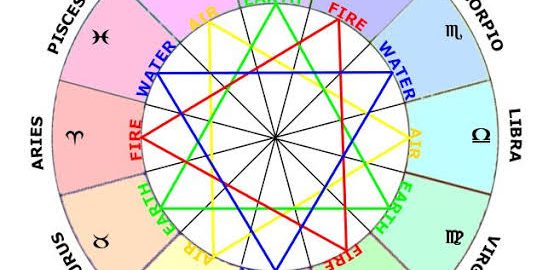
Water is one of astrology’s four classical elements, alongside Fire, Earth, and Air. It is associated with Cancer, Scorpio, and Pisces. As an elemental category, Water describes qualities such as receptivity, sensitivity, emotional awareness, intuition, and the tendency to experience life through feelings and subtle impressions.

Astrological Meaning

In a natal chart, strong Water emphasis may suggest emotional depth, empathy, imagination, and sensitivity to atmosphere or unspoken dynamics. Cancer often expresses Water through protection and belonging, Scorpio through intensity and transformation, and Pisces through compassion and permeability. A lack of Water does not mean an absence of emotion; it may indicate that feelings are processed through action, reason, or practical experience instead. Interpretation should also consider planetary condition, houses, aspects, and the chart’s overall elemental balance. Water signs traditionally form trines with one another, creating an affinity that can support emotional flow, although individual placements may still operate very differently.

Why It Matters

Recognizing Water helps clarify how a chart approaches intimacy, vulnerability, instinct, memory, and emotional connection. Its placement can show where a person may be especially responsive or inwardly attuned. Balanced expression can support compassion and creative insight, while excess or strain may correspond with emotional overwhelm, guardedness, or unclear boundaries. Water is most useful when interpreted as one part of the full natal chart rather than as a fixed personality verdict.

Related Encyclopedia Entries

SYMPATHETIC

Definition

In traditional astrological writing, sympathetic describes an affinity or natural agreement between planets, signs, houses, or other chart factors. The connection may arise through shared elemental qualities, compatible temperaments, rulership, reception, or a harmonious aspect. It is a descriptive term rather than a formal dignity with one universally fixed definition.

Astrological Meaning

A sympathetic relationship suggests that two factors can cooperate or express their qualities with less friction. For example, planets in signs of the same element may be considered sympathetic because they share a basic mode of expression. Mutual reception can also create sympathy by giving each planet a place in the other’s sign. Some classical authors extended the idea to correspondences among planets, plants, metals, colors, and other natural phenomena. The exact meaning therefore depends on the tradition and context in which the term appears.

Why It Matters

Recognizing sympathy helps an astrologer assess how different parts of a chart may support one another, especially when no single aspect tells the whole story. However, sympathy should not be treated as automatic strength or a guaranteed favorable outcome. Essential dignity, house placement, aspects, planetary condition, and the chart’s overall pattern remain important. Used carefully, the concept adds nuance to traditional interpretation by highlighting affinities that may improve coordination between chart factors.

Related Encyclopedia Entries

SWEET

Definition

Sweet is a descriptive rather than formally standardized astrological term. In older or traditional writing, it may refer to something pleasant, agreeable, gentle, harmonious, or literally sweet in taste. Its exact meaning depends on context, including whether the author is discussing temperament, planetary qualities, sensory correspondences, or favorable conditions.

Astrological Meaning

Astrologically, sweetness is most often associated with Venus, the benefic planet traditionally connected with pleasure, attraction, affection, beauty, harmony, and enjoyable tastes. The term may describe a gracious manner, a conciliatory influence, or circumstances that feel easy and welcome. In correspondence systems, sweet flavors, perfumes, flowers, and pleasing substances may also be placed under Venus. However, sweet should not automatically be read as fortunate; excessive sweetness can symbolically suggest flattery, indulgence, avoidance of conflict, or pleasure pursued without balance.

Why It Matters

Recognizing sweet as contextual language prevents it from being mistaken for a specific aspect, dignity, house condition, or predictive technique. When it appears in an interpretation, identify what is being described and then examine the relevant planet, sign, house, aspects, and dignity. This produces a clearer reading than treating the adjective as an independent chart factor.

Related Encyclopedia Entries

STERILE: v

Definition

Sterile is an older astrological classification applied to signs or planetary conditions believed to be less supportive of fertility, growth, or increase. It is closely related to the traditional term “barren.” Lists vary among authorities, but Gemini, Leo, and Virgo are commonly described this way. In older reference works, “v.” may function as a direction to consult another entry, such as barren signs.

Astrological Meaning

Traditional astrologers considered sterile signs when judging questions about children, agriculture, abundance, and whether a matter would multiply. A planet in one of these signs might be read as showing limited productivity, delay, selectivity, or an emphasis on quality rather than quantity. The condition was never interpreted in isolation: the relevant house, its ruler, planetary aspects, essential dignity, and fruitful signs elsewhere in the chart could substantially alter the judgment.

Why It Matters

The term helps readers understand historical chart methods and older astrological texts, but it should be used carefully. A so-called sterile sign does not establish infertility or guarantee that a project will fail to grow. In contemporary practice, the symbolism may be more constructively understood as restraint, conservation, specialization, or a need for deliberate cultivation. Questions involving physical fertility require qualified medical guidance rather than astrological diagnosis.

Related Encyclopedia Entries

SPEAKING

Definition

Speaking, in astrology, refers to the chart factors traditionally associated with speech, voice, language, and verbal expression. It is not usually a single formal technique. Instead, astrologers assess several connected indicators, especially Mercury, the second and third houses, their ruling planets, and relevant zodiac signs.

Astrological Meaning

Mercury describes how a person gathers, organizes, and communicates information. The third house is commonly linked with everyday communication, while the second house may be considered when examining the physical voice and manner of delivery. Their signs, rulers, aspects, and condition add nuance. For example, a prominent Mercury may emphasize verbal agility or curiosity, whereas Saturn connected with communication factors may suggest measured, careful, or restrained speech. Mars can add directness, and Venus may favor tact, rhythm, or pleasing expression. No one placement determines speaking ability; the full chart and the person’s circumstances remain important.

Why It Matters

Studying speaking indicators can clarify communication preferences, including pace, tone, confidence, and the balance between listening and responding. This can be useful in natal interpretation, relationship analysis, and traditional chart work. These symbols describe possible tendencies rather than fixed talents or limitations, and they should not be used to diagnose speech conditions.

Related Encyclopedia Entries

SOUTHERN

Definition

Southern is a directional term whose meaning depends on its astrological context. It may describe a planet or point south of the celestial equator by declination, a body having southern ecliptic latitude, or the southern hemisphere of a horoscope. In most modern chart diagrams, that horoscope hemisphere appears above the horizon and contains houses seven through twelve.

Astrological Meaning

In traditional and technical astrology, “southern” primarily supplies positional information rather than a complete interpretation. Southern declination identifies a body located south of the celestial equator, while southern latitude places it below the ecliptic. Neither condition is inherently favorable or unfavorable. In natal-chart interpretation, planets in the chart’s southern hemisphere are often associated with visible activity, social participation, public experience, or engagement with circumstances beyond the private self. This symbolism comes from their position above the local horizon, not from the native’s geographic hemisphere. Interpretation should also consider the planets involved, their houses, signs, aspects, dignity, and proximity to an angle.

Why It Matters

Recognizing the intended meaning of southern prevents several common errors, especially confusing celestial coordinates with horoscope houses or Earth’s Southern Hemisphere. The term can help an astrologer read ephemerides, assess declination contacts such as parallels and contraparallels, and describe a chart’s hemispheric emphasis. It is best treated as one layer of orientation rather than as an independent verdict about personality or events.

Related Encyclopedia Entries

