
.83¢/min Intro Offer

We Charge 60% LESS than our competitors!

All Psychics tested before hire.

category: Astrology Encyclopedia

Violent Signs

Definition

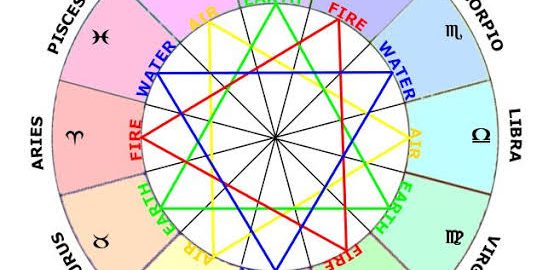
Violent Signs is an older term from traditional astrology for zodiac signs associated with force, conflict, injury, or abrupt events. A commonly cited list includes Aries, Libra, Scorpio, Capricorn, and Aquarius, although classifications vary among historical authorities. The label describes a symbolic category, not the character or inevitable behavior of people born under these signs.

Astrological Meaning

Traditional astrologers considered Violent Signs when judging subjects such as disputes, accidents, danger, or the manner in which an event might unfold. Their relevance depended on specific chart factors, including the Ascendant, its ruler, the Moon, planetary condition, house placement, and aspects from malefic planets. A sign alone was not normally sufficient testimony. In modern interpretation, the category may be understood more constructively as emphasizing intensity, pressure, decisive action, resistance, or disruptive change, depending on the complete chart and the question being asked.

Why It Matters

Understanding this term helps readers interpret older astrological texts without taking their language literally or fatalistically. Historical authors often used severe labels as technical shorthand within a larger system of chart judgment. Recognizing that context prevents the category from becoming a stereotype or a prediction of harmful conduct. When used today, Violent Signs are best treated as one minor traditional consideration whose meaning must be moderated by planetary dignity, aspects, houses, timing techniques, and the astrologer’s ethical judgment.

Related Encyclopedia Entries

Vibrations

Definition

In astrological language, vibrations are the perceived qualities or patterns associated with planets, signs, houses, and aspects. The term suggests that each factor expresses a distinctive tone that can resonate with other chart factors. It is largely metaphorical rather than a precisely defined principle of classical astrology.

Astrological Meaning

An astrologer may describe a planet’s vibration as its characteristic mode of expression: Mars is active and assertive, Venus seeks harmony and connection, and Saturn emphasizes structure and restraint. Signs modify that tone, houses indicate the life areas in which it may appear, and aspects describe how different planetary patterns interact. In a natal chart, compatible vibrations may suggest ease or reinforcement, while contrasting ones can indicate tension, adjustment, or productive complexity. Interpretation should still rely on established chart factors rather than treating vibration as a separate measurable force.

Why It Matters

The idea of vibrations offers accessible shorthand for describing how multiple symbols combine into an overall chart atmosphere. It can help explain why the same planet feels different across signs, houses, and aspects. Because the term is broad, however, it is most useful when tied to specific placements and traditional interpretive techniques instead of being used as a vague claim about energy.

Related Encyclopedia Entries

Precessional arc

Definition

The precessional arc is the angular distance produced by the precession of the equinoxes over a specified period. Precession is the slow change in Earth’s rotational orientation that causes the equinoctial points to move backward against the stellar background, at an average rate of roughly one degree every 72 years. The arc is measured from a chosen reference date or epoch.

Astrological Meaning

Astrologers use the precessional arc when calculations must account for the changing relationship between the tropical zodiac and the fixed stars. It may be applied when comparing positions from different historical epochs, converting between certain tropical and sidereal frameworks, or correcting some directional and return techniques. The exact method depends on the school of astrology, its reference epoch, and whether precession is already included in the software or tables being used.

Why It Matters

This arc helps prevent confusion between zodiacal longitude measured from the moving vernal equinox and positions measured relative to the stellar background. It is especially relevant in long-range historical work, fixed-star analysis, and techniques that span many decades. For an ordinary natal chart calculated for one date, it is usually a technical background factor rather than a separate interpretive symbol. Its importance lies mainly in maintaining consistent coordinates and timing methods.

Related Encyclopedia Entries

Via Combusta

Definition

Via Combusta, Latin for “burned way,” is a traditional astrological term for the zodiacal span from 15° Libra to 15° Scorpio. It appears most often in horary astrology, particularly when the Moon occupies this region. Historical definitions and exceptions vary among traditional authors, so its use depends partly on the method being followed.

Astrological Meaning

In classical interpretation, the Via Combusta can indicate instability, strain, uncertainty, or circumstances that are difficult to judge clearly. A horary Moon here may describe an emotionally charged situation, rapidly changing conditions, or a question complicated by fear and limited control. It does not automatically make a chart unreadable or predict disaster. Some astrologers give special consideration to particular degrees, including those near Spica, while others assess the condition alongside lunar aspects, dignity, reception, house placement, and the chart’s principal significators. In natal work, the term is generally less decisive and should not be treated as a standalone verdict.

Why It Matters

The Via Combusta matters because it shows how traditional astrology layers symbolic conditions into chart judgment. Rather than interpreting it in isolation, astrologers can use it as a caution to examine volatility, context, and testimony elsewhere in the chart. Its presence may call for a more measured reading, especially in horary questions involving uncertain motives or unsettled circumstances.

Related Encyclopedia Entries

Vespertine

Definition

Vespertine means “of the evening.” In classical astrological terminology, it describes a planet occupying an evening phase in relation to the Sun, typically appearing after sunset and setting later than the Sun. Mercury and Venus show this condition most visibly because they alternate between morning-star and evening-star phases. The term may overlap with “occidental,” although usage varies among traditional sources.

Astrological Meaning

A vespertine planet is interpreted through its solar phase rather than as an isolated sign or house placement. Traditional astrologers may associate the evening phase with culmination, reflection, receptivity, or bringing experience into a more socially visible form. The planet involved remains essential: vespertine Venus may express connection or aesthetics differently from vespertine Mercury’s communication and reasoning. Interpretive rules can also depend on sect, speed, visibility, and distance from the Sun. Vespertine status is therefore a modifying condition, not a complete judgment of planetary strength or outcome.

Why It Matters

Recognizing whether a planet is vespertine helps clarify its place within the broader cycle of solar visibility. It can refine natal, electional, or mundane interpretation by showing how the planet emerges and functions in relation to the Sun. Used alongside sign, house, aspects, dignity, sect, and combustion, the term adds historical and astronomical context without determining events by itself.

Related Encyclopedia Entries

Vertical

Definition

Vertical is a descriptive term for the up-and-down orientation of an astrological chart. It commonly refers to the meridian axis connecting the Midheaven, or MC, near the top of the chart with the Imum Coeli, or IC, near the bottom. Because chart styles and house systems vary, this axis may not appear perfectly upright on the page.

Astrological Meaning

The vertical axis represents the relationship between the chart’s upper and lower hemispheres. The MC side is associated with public life, reputation, vocation, and visible participation in the wider world. The IC side concerns roots, home, ancestry, privacy, and the inner foundation of life. Planets near either end of this axis may emphasize those areas, but their meaning also depends on sign, house, aspects, sect, and the planet’s condition. Vertical position alone is therefore descriptive rather than a complete interpretation.

Why It Matters

Recognizing the vertical axis helps a reader orient the chart and distinguish the MC–IC relationship from the horizontal Ascendant–Descendant axis. It also prevents the common mistake of assuming that the highest point on a chart wheel is always identical to the Midheaven. Understanding the chart format, house system, and angles provides the necessary context.

Related Encyclopedia Entries

