
Moon Opposite Sun Meaning in Astrology
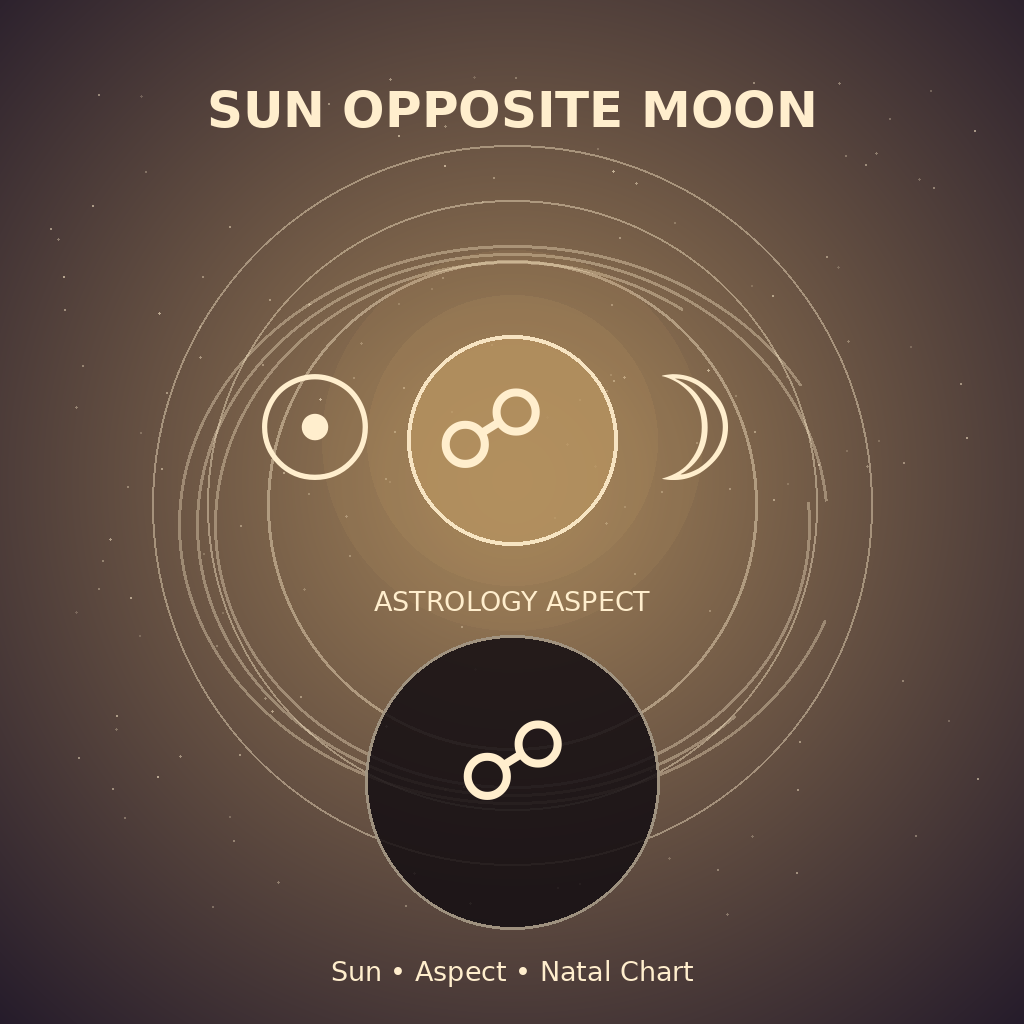
Sun Opposite Moon
Core Meaning
The Sun opposite Moon creates a dynamic tension between conscious identity and emotional needs. The individual often feels pulled between what they believe they should do and what they emotionally desire. This aspect frequently appears in the charts of people who experience life through relationships because other people often mirror the internal conflicts they are attempting to resolve.
How This Aspect Expresses
There is usually a strong awareness of duality. The person may swing between competing priorities such as career versus family, independence versus intimacy, logic versus emotion, or personal desires versus obligations to others. This can create periods of uncertainty, but it also provides tremendous self-awareness over time.
Relationships & Growth
Relationships tend to become important teachers. Partners often embody qualities that the individual has not fully integrated within themselves. Through attraction, conflict, and cooperation, they gradually learn how to balance opposing forces within their personality. Many important life lessons emerge through significant partnerships.
Higher Expression
At its highest expression, Sun opposite Moon produces emotional maturity, self-understanding, and the ability to see multiple sides of any situation. The tension becomes a source of wisdom, allowing the person to balance competing needs and create harmony between heart and will.
✨ Natural Strengths
⚠ Growth Opportunities
Sun Opposite Moon at a Glance
| Aspect | Opposite |
| Planets | Sun and Moon |
| Aspect Symbol | ☍ |
| Core Function | Sun identity interacting with emotions, instincts, needs, memory, and inner life |
| Aspect Theme | awareness, polarity, projection, and relationship-based growth |
Related Astrology Articles
- Astrology Aspects
- Sun Aspects
- Moon Aspects
- Natal Chart Interpretation
- Astrology Planets
Continue Exploring Astrology
Deepen your understanding of astrology by exploring the birth chart, natal chart, horoscope, zodiac signs, astrology houses, planetary aspects, Ascendant, Midheaven, MC, rising sign, house rulers, house cusps, synastry, compatibility, transits, retrograde planets, and chart interpretation.
Planets in Astrology
Study the Sun, Moon, Mercury, Venus, Mars, Jupiter, Saturn, Uranus, Neptune, and Pluto to understand how each planet shapes personality, emotions, relationships, career, purpose, growth, and transformation.
Zodiac Signs and Houses
Explore Aries, Taurus, Gemini, Cancer, Leo, Virgo, Libra, Scorpio, Sagittarius, Capricorn, Aquarius, and Pisces. Then compare the 1st House, 2nd House, 3rd House, 4th House, 5th House, 6th House, 7th House, 8th House, 9th House, 10th House, 11th House, and 12th House.
Major Astrology Aspects
Learn how a conjunction, opposition, square, trine, sextile, and quincunx change the way planets interact. Comparing conjunct, opposite, square, trine, sextile, and quincunx aspects helps reveal the full pattern of a chart.

