
All posts by admin

Moon, Venus and Neptune

Definition

Moon, Venus and Neptune describes the combined influence of three astrological factors. The Moon represents emotional needs, habits, and instinctive responses; Venus relates to affection, attraction, values, and pleasure; Neptune symbolizes imagination, compassion, idealization, and blurred boundaries. This phrase does not name one fixed configuration: the planets may be linked by aspects, rulership, house placement, transit, or synastry.

Astrological Meaning

When strongly connected in a natal chart, these planets may suggest emotional sensitivity, romantic imagination, artistic receptivity, or a desire for soulful connection. Harmonious aspects can support empathy and creative expression, while challenging aspects may coincide with projection, uncertain boundaries, or disappointment when ideals meet reality. Signs, houses, aspect type, and planetary condition shape the interpretation. In transit, Neptune contacting the Moon or Venus can temporarily heighten sensitivity or idealism. In synastry, one person’s Neptune aspecting another’s Moon or Venus may feel enchanting, but clarity and reciprocity remain important.

Why It Matters

Interpreting Moon, Venus and Neptune together helps distinguish genuine emotional and relational needs from fantasy, longing, or aesthetic inspiration. The combination can describe meaningful creative and compassionate capacities without guaranteeing a particular relationship outcome. Examining each planet separately before synthesizing them produces a more balanced reading and shows where tenderness, pleasure, imagination, and discernment may need to work together.


Related Encyclopedia Entries

Masculine and Feminine

Definition

Masculine and Feminine are traditional terms for the two polarities assigned to zodiac signs. Masculine signs are Aries, Gemini, Leo, Libra, Sagittarius, and Aquarius; feminine signs are Taurus, Cancer, Virgo, Scorpio, Capricorn, and Pisces. These classifications describe contrasting modes of expression, not biological sex, gender identity, or personal worth.

Astrological Meaning

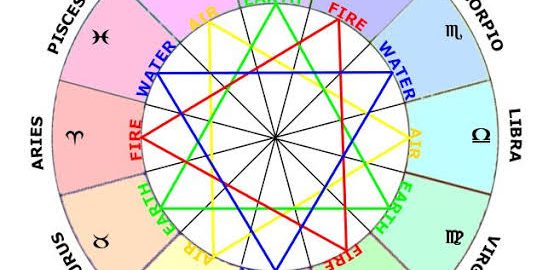
Masculine signs are commonly interpreted as outward-moving, active, expressive, or responsive through direct engagement. They comprise the fire and air elements. Feminine signs are often viewed as inward-moving, receptive, reflective, or responsive through containment and assimilation. They comprise the earth and water elements. In a natal chart, astrologers may compare how many planets occupy each polarity, while also considering the Sun, Moon, Ascendant, chart ruler, houses, and aspects. A predominance of one polarity suggests an emphasis rather than a fixed personality type. A fairly even distribution may indicate access to both approaches, although the condition and placement of individual planets remain important.

Why It Matters

Polarity offers a quick way to understand how chart energies may be directed and processed. It can reveal whether a person tends to initiate externally, develop experience internally, or alternate between these styles. The concept is most useful when treated symbolically and alongside elements and modalities. Modern astrologers may use terms such as active and receptive or positive and negative to avoid confusing astrological polarity with gender stereotypes.

Related Encyclopedia Entries

Electric and Magnetic

Definition

Electric and magnetic are metaphorical terms used in some astrological and occult traditions to describe contrasting modes of expression. Electric generally refers to active, outward-moving, initiating, or projective energy, while magnetic refers to receptive, inward-drawing, responsive, or containing energy. These labels describe symbolic polarity rather than measurable forces in physics.

Astrological Meaning

Astrologers may associate electric qualities with masculine or positive signs—Fire and Air—and magnetic qualities with feminine or negative signs—Earth and Water. Planets, angles, or chart patterns may also be described this way when emphasizing action versus receptivity. An electric emphasis can suggest direct expression, initiative, and engagement with the environment. A magnetic emphasis can indicate sensitivity, attraction, consolidation, and responsiveness. Neither quality is inherently stronger or better, and most charts contain both. Interpretation should consider the planets involved, their signs and houses, and their aspects rather than treating polarity as a stand-alone judgment.

Why It Matters

This distinction offers a compact way to assess how energy tends to circulate in a natal chart. It can clarify whether a person often initiates, receives, projects, or gathers experience in a particular life area. It is especially useful when comparing elemental balance and sign polarity, but terminology varies among astrological schools. Reading electric and magnetic qualities as complementary helps avoid rigid assumptions about personality, gender, or behavior.

Related Encyclopedia Entries

Dry and Moist

Definition

Dry and moist are two of the four primary qualities used in classical astrology, alongside hot and cold. Dryness describes a tendency to separate, define, stabilize, or resist blending. Moisture describes a tendency to connect, absorb, combine, or adapt. These qualities are symbolic principles rather than literal measurements of physical conditions.

Astrological Meaning

The qualities help classify the four elements: Fire is hot and dry, Earth is cold and dry, Air is hot and moist, and Water is cold and moist. Planets and signs may also be assessed through these qualities. A strong dry emphasis can suggest clearer boundaries, firmness, independence, or rigidity, depending on the chart context. A strong moist emphasis can indicate receptivity, sociability, emotional permeability, or difficulty maintaining distinctions. Traditional astrologers consider condition, placement, sect, rulership, and planetary relationships before deciding how a quality is likely to operate.

Why It Matters

Dry and moist provide a compact way to compare how chart factors interact. Compatible qualities may support cooperation, while contrasting ones may describe tension or balancing potential. The distinction can deepen natal interpretation by showing whether a person tends to preserve separation or encourage connection, without reducing the chart to a fixed personality judgment.

Related Encyclopedia Entries

Penumbral Eclipse

Definition

A penumbral eclipse is a lunar eclipse in which the Moon passes through Earth’s faint outer shadow, called the penumbra, without entering the darker umbra. The Full Moon may appear slightly dimmed rather than visibly darkened. Astronomically, it occurs when the Sun, Earth, and Moon align near the lunar nodes, though not closely enough to produce a partial or total lunar eclipse.

Astrological Meaning

Astrologically, a penumbral eclipse is interpreted as an intensified Full Moon associated with culmination, awareness, release, or changing circumstances. Many astrologers regard it as subtler than a partial or total lunar eclipse because the Moon’s light is only lightly obscured. Interpretation depends on the eclipse degree, zodiac sign, house placement, and aspects to natal planets or angles. Traditional approaches may also consider where the eclipse is visible and how closely it occurs to the nodes. Its effects are not judged from eclipse type alone.

Why It Matters

Penumbral eclipses can highlight developments that unfold quietly, become clear gradually, or require reflection before their significance is recognized. In a natal chart consultation, a close contact with the Sun, Moon, Ascendant, Midheaven, or another planet may make the eclipse more personally relevant. Wider contacts often carry less emphasis. Rather than treating the event as a fixed prediction, astrologers can use it as a timing marker for reviewing an emerging theme, completing a cycle, or noticing shifts already underway.

Related Encyclopedia Entries

Pavanna

Definition

Pavanna is a rare and nonstandard term encountered in some astrological indexes or historical compilations. It does not have a single, widely accepted definition in mainstream traditional or modern astrology. Its intended meaning may depend on the source, language, spelling, and period in which it appears, so it should not be treated as a universally recognized chart factor.

Astrological Meaning

Because Pavanna lacks an established interpretation across major astrological traditions, its meaning should be determined from the surrounding text. An astrologer would first check whether the word names a person, place, deity, translated concept, specialized technique, or variant spelling. It should not automatically be read as a planet, house, aspect, zodiacal division, or predictive indicator. If a source assigns Pavanna a specific function, that definition applies within the source’s own system and should be compared with better-documented terminology before it is used in chart interpretation.

Why It Matters

Recognizing uncertain terminology helps prevent an obscure label from being given more authority than the evidence supports. Historical astrology contains variant spellings, transliterations, regional vocabulary, and occasional printing errors. Verifying Pavanna through the original context, glossary, or scholarly reference allows a reader to distinguish a genuine technical concept from a name or textual variant. This careful approach makes interpretations clearer and preserves the differences among traditional astrological systems.

Related Encyclopedia Entries