
All posts by admin

Sidereal Clock

Definition

A sidereal clock measures sidereal time, a timekeeping system based on Earth’s rotation relative to the stars rather than the Sun. A sidereal day is about four minutes shorter than a solar day. The clock’s reading helps identify which degree of the celestial sphere is crossing the local meridian at a particular place and moment.

Astrological Meaning

Astrologers use local sidereal time when calculating the Midheaven, Ascendant, and house cusps for a natal or event chart. It connects a recorded civil time and geographic location with the sky’s orientation at that moment. A small error in the time, longitude, or time-zone conversion can shift the angles and may alter house placements. Despite the similar name, a sidereal clock is not itself a zodiac system and does not determine whether an astrologer uses the tropical or sidereal zodiac.

Why It Matters

The sidereal clock matters because chart angles depend on Earth’s daily rotation and the observer’s location. Before computerized chart calculation, astrologers commonly consulted sidereal-time tables and performed several corrections by hand. Modern software handles these steps automatically, but understanding the principle makes it easier to verify chart data, recognize calculation errors, and appreciate why an accurate birth time is especially important when interpreting the Ascendant, Midheaven, and houses.

Related Encyclopedia Entries

Sextiles

Definition

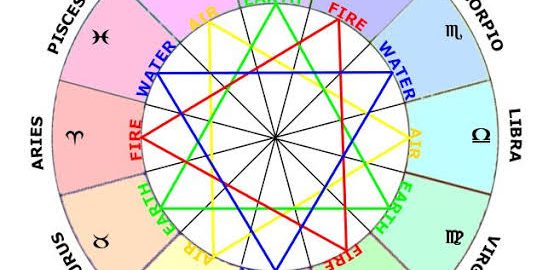
A sextile is an astrological aspect formed when two planets or chart points are approximately 60 degrees apart. It connects signs that are usually two places apart in the zodiac, commonly linking fire with air or earth with water. Astrologers allow an orb, or small deviation from the exact angle, when identifying this aspect.

Astrological Meaning

Sextiles are generally interpreted as cooperative, constructive connections between the planets involved. The aspect may suggest that their functions can support one another through curiosity, communication, skill, or timely effort. Unlike a trine, which is often experienced as more effortless, a sextile is commonly said to describe potential that becomes noticeable when consciously used. Interpretation depends on the planets, signs, houses, exactness, and the condition of each planet. For example, a Mercury–Jupiter sextile may support broad thinking and effective learning, while a Venus–Saturn sextile may favor steady commitment or practical creativity.

Why It Matters

Recognizing sextiles helps reveal resources within a natal chart that might otherwise seem subtle. They can indicate areas where cooperation, practice, or initiative produces useful results without implying guaranteed ease or success. In transit work, a sextile may correspond with an opening that benefits from participation. In synastry, it can show compatible planetary functions, though the complete relationship chart remains important.

Related Encyclopedia Entries

Sextile

Definition

A sextile is an astrological aspect formed when two planets or chart points are approximately 60 degrees apart. It traditionally connects signs of compatible elements—fire with air or earth with water—and is generally classified as a harmonious aspect. Its accepted orb varies according to the planets involved and the interpretive system being used.

Astrological Meaning

In a natal chart, a sextile suggests that the two planetary functions can cooperate productively. Unlike a trine, which may describe an ability that operates with little prompting, a sextile often represents potential that becomes more noticeable through interest, practice, or deliberate action. The planets show what is interacting, while their signs and houses describe how and where the opportunity may develop. In transits, a sextile can indicate a supportive period for making connections, experimenting with options, or moving an existing plan forward, but it does not guarantee a particular result. In synastry, it may reflect ease, curiosity, and constructive exchange between two people, depending on the planets and the wider relationship chart.

Why It Matters

Recognizing sextiles helps identify accessible strengths and areas where modest effort may produce useful progress. Because the aspect is usually subtle rather than urgent, it can be overlooked when stronger conjunctions, squares, or oppositions dominate a chart. Interpreting it within the full aspect pattern reveals whether its cooperative quality offers a practical outlet for more challenging dynamics.

Related Encyclopedia Entries

Sexagenary

Definition

Sexagenary means relating to the number sixty or to a cycle containing sixty divisions. In astrology, the term most often refers to the sexagenary cycle used in the traditional Chinese calendar. This system combines ten Heavenly Stems with twelve Earthly Branches in a repeating sequence of sixty stem-branch pairs. Each year, month, day, or hour can therefore receive a distinct paired designation.

Astrological Meaning

Within Chinese astrology, each pair brings together a stem associated with yin or yang and one of the Five Elements, and a branch associated with an animal sign, season, and other symbolic correspondences. Interpretation considers the complete pair and its place within a chart rather than relying on the animal sign alone. Because ten and twelve share a common factor, their combinations repeat after sixty steps. In Western astrological writing, sexagenary may occasionally be used more generally for a sixtyfold period or classification, but it should not automatically be confused with the sextile, which is a 60-degree aspect.

Why It Matters

Understanding this term helps distinguish a structured calendrical cycle from simplified zodiac-animal descriptions. It also prevents confusion between traditions that use the number sixty differently. When reading a Chinese astrological chart, identifying the relevant stem-branch pair provides information about elemental quality, polarity, timing, and cyclical context. These factors offer symbolic themes and tendencies rather than fixed outcomes, and they are best interpreted alongside the chart’s other pillars and relationships.

Related Encyclopedia Entries

Diatonic scale

Definition

A diatonic scale is a seven-note musical scale built from a particular arrangement of whole tones and semitones. In astrological and cosmological traditions, it may serve as a symbolic model for an ordered universe, especially through analogies connecting seven notes with the seven classical planets: Saturn, Jupiter, Mars, the Sun, Venus, Mercury, and the Moon.

Astrological Meaning

The diatonic scale is not a standard natal-chart factor, placement, or predictive technique. Its astrological importance is primarily historical and philosophical. Traditional thinkers sometimes treated musical harmony, planetary motion, number, and proportion as expressions of the same cosmic order. Planetary tones and sequences varied among authors, so no single set of note-to-planet correspondences should be assumed. In modern practice, astrologers may use the scale contemplatively to explore planetary relationships, resonance, or the concept known as the music of the spheres.

Why It Matters

Understanding the diatonic scale helps place astrology within older systems that linked astronomy, mathematics, music, and metaphysics. It can clarify why terms such as harmony, vibration, interval, and resonance appear in astrological writing. The concept is most useful as interpretive context rather than as evidence for a chart judgment. When studying a historical correspondence system, identify the author or tradition being followed and keep its symbolic associations distinct from established chart components such as signs, houses, planets, and aspects.

Related Encyclopedia Entries

Seven

Definition

Seven is a number with structural and symbolic importance in traditional astrology. Most notably, classical practice recognizes seven visible planetary bodies: the Sun, Moon, Mercury, Venus, Mars, Jupiter, and Saturn. These traditional planets also correspond with the seven days of the week. This astrological usage is distinct from numerology and from the seventh house.

Astrological Meaning

Seven often represents the complete classical planetary order available to observers before the discovery of Uranus, Neptune, and Pluto. Traditional astrologers assign each of the seven planets particular signs, qualities, planetary hours, and weekdays. Their sequence also helps explain systems such as the Chaldean order and the rulership of the days. When seven appears in astrological teaching, it may therefore point to an integrated framework rather than to a standalone interpretive influence. The number can carry broader associations with cycles, order, and completeness, but such symbolism depends on the tradition being used. It should not automatically be treated as a natal chart factor unless a specific method gives it that role.

Why It Matters

Understanding seven clarifies why many traditional techniques are organized around seven planets rather than the larger set used in modern astrology. This distinction helps readers follow planetary rulerships, sect, dignities, weekday associations, and timing methods without confusing separate systems. In chart interpretation, the relevant planets and technique should remain primary; the symbolic number provides historical and conceptual context rather than a guaranteed message or prediction.

Related Encyclopedia Entries

