
All posts by admin

Chaldean Order

Definition

The Chaldean Order is the traditional sequence of the seven visible planets: Saturn, Jupiter, Mars, the Sun, Venus, Mercury, and the Moon. It arranges them by their apparent speed of movement from a geocentric perspective, beginning with slow-moving Saturn and ending with the swift Moon. Despite its name, the sequence is most clearly documented in later Hellenistic astrological traditions.

Astrological Meaning

Astrologers use this order as an organizing framework rather than as a standalone chart factor. It governs the repeating assignment of planetary hours and helps explain the traditional order of weekday rulers. It is also used in the planetary rulership of the 36 decans, where the sequence repeats continuously through the zodiac. In some traditional techniques, the progression provides a consistent hierarchy for distributing planetary influence across divisions of time or zodiacal space.

Why It Matters

Understanding the Chaldean Order makes several traditional methods easier to follow. It reveals why planetary hours do not simply repeat in weekday order and clarifies how decan rulers are assigned in many classical systems. For natal or predictive work, its significance depends on the technique being used; the sequence itself does not predict events. Instead, it supplies the structure behind timing practices, dignity schemes, and symbolic correspondences, helping astrologers apply those methods accurately and interpret their planetary rulers in context.

Related Encyclopedia Entries

Face Ruler

Definition

A face ruler is the planet assigned to a ten-degree section of a zodiac sign, also called a face or decan. Because each sign contains thirty degrees, it has three faces. In traditional astrology, face is a minor essential dignity. Face rulers are commonly assigned through the Chaldean planetary order, although some modern decan systems use different rulership schemes.

Astrological Meaning

When a planet occupies a face it rules, it is considered to have a modest degree of support or familiarity. This dignity is weaker than rulership, exaltation, triplicity, or term, so it should not dominate interpretation. The face ruler may describe how a planet presents itself, the style through which it seeks recognition, or the imagery coloring a particular degree range. Astrologers may examine it in natal, horary, electional, and predictive work, always alongside sign, house, aspects, sect, and other dignities.

Why It Matters

Face rulership adds precision without changing the chart’s central message. It can help distinguish planets placed in the same sign but in different ten-degree sections, and it may provide useful nuance when a planet has little other essential dignity. Since decan traditions vary, the astrologer should identify the chosen system and apply it consistently rather than combining incompatible rulership tables.

Related Encyclopedia Entries

Triplicity Ruler

Definition

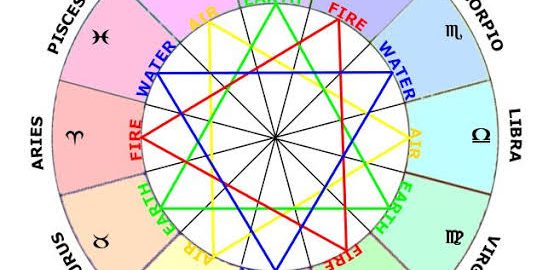
A triplicity ruler is a planet assigned rulership over one of the four elemental groups of zodiac signs: fire, earth, air, or water. Unlike a sign ruler, which governs a single sign, a triplicity ruler has authority across three signs sharing the same element. Traditional systems commonly assign different rulers according to whether a chart is diurnal or nocturnal, and some also include a participating ruler.

Astrological Meaning

Triplicity rulership is a form of essential dignity used to assess how comfortably and constructively a planet may operate in a sign. The relevant ruler depends on the element and, in traditional practice, the chart’s sect. For example, a planet in a fire sign may receive support from the fire triplicity ruler appropriate to a day or night chart. Astrologers may examine that ruler’s sign, house, aspects, and condition to understand the resources available to the planet or topic being studied. Specific ruler assignments vary among Hellenistic, medieval, and later traditions, so the chosen system should be applied consistently.

Why It Matters

Triplicity rulers add nuance beyond sign rulership and can reveal underlying support even when a planet lacks stronger dignity. They are useful in natal interpretation, horary work, and some predictive techniques, especially when judging planetary condition or the development of a house topic. Triplicity rulership should be weighed with sect, house placement, aspects, and other dignities rather than treated as a stand-alone verdict.

Related Encyclopedia Entries

Ptolemaic Terms

Definition

Ptolemaic Terms, also called Ptolemaic bounds, are a system of essential dignity associated with Claudius Ptolemy. Each zodiac sign is divided into five unequal sections governed by Mercury, Venus, Mars, Jupiter, or Saturn. The Sun and Moon do not rule terms. Every degree therefore has a term ruler in addition to its sign ruler.

Astrological Meaning

A planet placed within its own terms receives a modest form of essential dignity, traditionally suggesting greater competence or freedom to act according to its nature. The term ruler can also describe the conditions, priorities, or style through which a planet expresses itself. For example, a planet in the terms of Saturn may operate with more restraint, structure, or deliberation. This influence is usually treated as subtler than sign rulership or exaltation and should be considered alongside houses, aspects, sect, and other chart factors.

Why It Matters

Ptolemaic Terms add degree-level precision to natal and predictive interpretation. They can help distinguish two planets occupying the same sign but falling under different planetary governors. Traditional astrologers may also use changes of term ruler in timing methods such as primary directions. Because several historical term systems exist, the chosen table should be identified and applied consistently rather than blended casually with Egyptian terms.

Related Encyclopedia Entries

Egyptian Terms

Definition

Egyptian Terms, also called Egyptian bounds, are a traditional system that divides each zodiac sign into five unequal degree ranges. Each range is assigned to Mercury, Venus, Mars, Jupiter, or Saturn; the Sun and Moon do not rule terms. The assignments follow a specific table rather than the usual sequence of sign rulers.

Astrological Meaning

A planet located within its own Egyptian Term is considered to have a form of essential dignity. This can suggest that the planet has practical authority or greater freedom to express its nature, even when it lacks rulership or exaltation. If a planet occupies another planet’s term, the term ruler may describe the conditions, resources, or constraints affecting its expression. Terms are distinct from decans, which divide signs into three equal ten-degree sections. Traditional astrologers may also use the term ruler in natal interpretation, planetary condition assessment, and timing techniques.

Why It Matters

Egyptian Terms add degree-level detail to chart interpretation. They can refine judgments when two planets share a sign but occupy different bounds, or when a planet’s broader sign placement does not fully explain how it operates. Because different historical systems of terms exist, astrologers should identify the table they are using and interpret this dignity alongside sign rulership, house placement, aspects, sect, and the overall natal chart rather than treating it as decisive by itself.

Related Encyclopedia Entries

Bounds

Definition

Bounds, also called terms, are unequal sections within each zodiac sign, with every section assigned to one of the five traditional planets: Mercury, Venus, Mars, Jupiter, or Saturn. The Sun and Moon do not rule bounds. Astrologers may use different historical systems, especially the Egyptian and Ptolemaic bounds.

Astrological Meaning

A planet placed within its own bounds is considered to have a modest form of essential dignity. This suggests that it can express its nature with greater competence or autonomy, even when its sign placement is otherwise challenging. A planet occupying another planet’s bounds is partly conditioned by that bound ruler, which may describe the rules, resources, or limitations shaping its expression. Bounds can refine natal chart interpretation and are also used in timing methods such as primary directions and distributions through the bounds. Their influence is generally subtler than sign rulership or exaltation.

Why It Matters

Bounds add precision by showing that planetary conditions can change within a single sign. They help astrologers distinguish between two planets occupying the same sign but different degrees. Because bound systems vary, interpretations should identify which table is being used and consider bounds alongside houses, aspects, sect, and other dignities rather than treating them as decisive on their own.

Related Encyclopedia Entries

