
.83¢/min Intro Offer

We Charge 60% LESS than our competitors!

All Psychics tested before hire.

category: Astrology Encyclopedia

Quartile

Definition

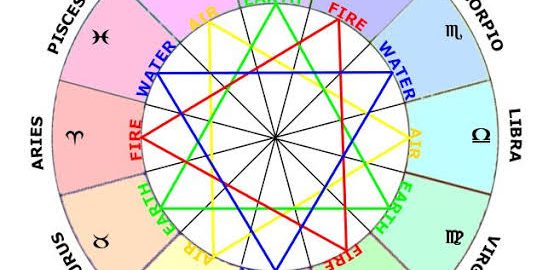
Quartile is an older astrological term for the square aspect, formed when two planets or chart points are approximately 90 degrees apart. The name refers to a quarter of the 360-degree zodiacal circle. In traditional aspect doctrine, the square joins signs that usually share the same modality—cardinal, fixed, or mutable—but belong to different elements.

Astrological Meaning

A quartile generally indicates tension, friction, or circumstances requiring active adjustment. The planets involved represent the drives that must negotiate with one another, while their signs and houses show how and where that process may unfold. A tight angular distance usually makes the aspect more noticeable, although the permitted orb depends on the astrological method being used. Traditional interpretation also considers planetary condition, house rulership, sect, and whether the aspect is applying or separating. These factors can make a quartile more constructive, demanding, manageable, or disruptive.

Why It Matters

Recognizing quartile as another name for the square helps readers understand older astrological texts and traditional chart language. In a natal chart, it may describe an enduring challenge that encourages effort, skill, and self-awareness rather than an unavoidable negative outcome. In timing techniques, a temporary quartile can mark a period when incompatible priorities become harder to ignore. Its meaning should always be judged within the whole chart instead of being treated as a prediction by itself.


Related Encyclopedia Entries

Quadruplicity

Definition

Quadruplicity is a traditional classification that groups the twelve zodiac signs according to their mode of action. Each group contains four signs, giving the concept its name. The cardinal, or movable, signs are Aries, Cancer, Libra, and Capricorn; the fixed signs are Taurus, Leo, Scorpio, and Aquarius; and the mutable, sometimes called common, signs are Gemini, Virgo, Sagittarius, and Pisces. In modern astrology, quadruplicities are usually known as modalities.

Astrological Meaning

Cardinal signs are associated with initiation, direction, and the impulse to begin. Fixed signs tend to emphasize continuity, concentration, and resistance to disruption. Mutable signs are linked with adjustment, transition, and responsiveness to changing circumstances. In a natal chart, astrologers examine how planets and angles are distributed among these three groups. A strong modality may describe a preferred way of handling experience, while a less emphasized modality can indicate an approach that requires more conscious development. No quadruplicity is inherently better than another; each offers useful capacities and possible challenges.

Why It Matters

Quadruplicity adds a behavioral dimension to zodiac interpretation. The elements describe the general nature of signs, while the modalities suggest how that nature is expressed and sustained. Considering both helps distinguish signs that share an element and clarifies patterns within a natal chart, aspect configuration, or relationship comparison.

Related Encyclopedia Entries

Sun thus become the chronocrators for the 28th year

Definition

This phrase belongs to classical time-lord astrology. A chronocrator, from a Greek term meaning “ruler of time,” is a planet designated to govern a particular period of life. Here, the Sun is identified as the active time lord for the 28th year under a specific traditional calculation. The statement is procedural rather than universal: different timing systems assign planetary rulers in different ways.

Astrological Meaning

When the Sun becomes chronocrator, solar topics are considered especially prominent during the period. These may include identity, visibility, leadership, purpose, authority figures, reputation, and the desire to act with confidence or integrity. Interpretation depends on the Sun’s natal sign, house, aspects, sect, and overall condition. Its activated house rulerships may also show which areas of life receive emphasis. A well-supported Sun can suggest clearer direction or recognition, while a challenged Sun may describe questions involving confidence, status, or the responsible use of authority.

Why It Matters

The phrase illustrates how traditional astrologers connected natal potential with specific periods of time. Before interpreting the 28th year, the practitioner must identify the exact chronocrator system being used and verify how the year is counted. It should not be confused with annual profections, in which the ruler at age 27 or 28 depends on the Ascendant and profected house. Transits and other timing techniques can then provide additional context rather than replacing the time-lord method.

Related Encyclopedia Entries

Profections

Definition

Profections are a classical astrological timing technique that advances a significant chart point through the zodiac at a fixed rate. In annual profections, the Ascendant moves one whole sign—and therefore one house—for each year of life. The first house is activated from birth to age one, the second house from age one to two, and the twelve-house cycle repeats every twelve years.

Astrological Meaning

The activated house describes topics emphasized during a given year, while the planet ruling that house’s sign becomes the annual time lord. Astrologers assess that planet’s natal sign, house, aspects, and condition, then observe its transits and other current activity. For example, a tenth-house profection may highlight career, reputation, authority, or public responsibilities, but its expression depends on the natal chart and the condition of the year’s ruling planet. Some traditions also use monthly or daily profections as more detailed timing layers.

Why It Matters

Profections help organize chart interpretation by identifying which natal themes and planets may deserve closer attention during a particular period. Rather than treating every transit as equally important, the technique supplies a structured annual focus that can be combined with transits, solar returns, and other timing methods. It does not guarantee specific events; it indicates areas of heightened relevance, development, or engagement. Accurate use requires the person’s age, a reliable birth chart, and consistent house-rulership methods.

Related Encyclopedia Entries

Process

Definition

In astrology, process describes the way a chart condition develops, operates, or becomes evident over time. It is not usually a single classical technique or chart factor. Instead, the term refers to an unfolding sequence, such as a natal promise being activated through planetary periods, transits, profections, directions, or other timing methods.

Astrological Meaning

A process-oriented interpretation connects several stages rather than treating one placement as an isolated verdict. The natal chart supplies the underlying configuration, including planets, houses, signs, aspects, and condition. Timing techniques indicate when parts of that configuration may become more prominent, while transits can describe the immediate circumstances or atmosphere. In traditional practice, interpretation may also follow a defined process: identify the relevant house, assess its ruler, examine planetary dignity and aspects, and then consult suitable time-lord or predictive techniques.

Why It Matters

Thinking in terms of process encourages clearer, less fatalistic chart reading. It helps distinguish enduring natal tendencies from temporary activations and prevents a single transit from being given excessive weight. It also supports more careful synthesis: repeated indications across multiple techniques may deserve attention, while contradictory or weak testimonies call for restraint. Astrology then becomes a structured method of interpretation rather than a collection of disconnected symbols.

Related Encyclopedia Entries

Principal Places

Definition

Principal Places is a traditional astrological term for the chart locations regarded as especially influential or suitable for judging major topics. “Place” often means a house or a region measured from the Ascendant. In many classical systems, the angular places—the 1st, 10th, 7th, and 4th houses—receive priority because planets there are considered prominent. The exact set of principal places can vary by author, period, and technique, so the term should be interpreted within its original method.

Astrological Meaning

A planet in a principal place is generally treated as more capable of expressing its symbolism visibly or decisively. Its condition still matters: zodiacal dignity, sect, aspects, house rulership, and proximity to an angle can modify how effectively it operates. A benefic in a strong place may offer support, while a challenging planet may bring pressure or effort; neither factor should be read in isolation. Some techniques also prioritize particular places when identifying significators, assessing eminence, or selecting a planet for timing procedures.

Why It Matters

Understanding principal places helps distinguish planetary prominence from planetary quality. A strongly placed planet may be highly noticeable without being uniformly easy or favorable. The concept also prevents modern house interpretations from being applied too casually to older texts. When using it, first identify which places the tradition considers principal, then evaluate the planets occupying or ruling them alongside the rest of the natal chart.

Related Encyclopedia Entries