
.83¢/min Intro Offer

We Charge 60% LESS than our competitors!

All Psychics tested before hire.

category: Astrology Encyclopedia

A.M

Definition

A.M. abbreviates the Latin ante meridiem, meaning “before midday.” In the 12-hour clock system, it identifies times from midnight through 11:59 in the morning. In astrological records, A.M. commonly appears beside a birth or event time. Midnight is written as 12:00 A.M., although using 00:00 can prevent confusion.

Astrological Meaning

A.M. is a time designation rather than an astrological symbol with an interpretation of its own. It helps establish the correct moment for calculating a natal, event, or horary chart. A morning time affects the chart’s angles and house placements because Earth rotates throughout the day. However, being born A.M. does not by itself indicate a particular temperament or destiny; the date, precise time, location, time zone, and complete chart must all be considered.

Why It Matters

Confusing A.M. with P.M. shifts the recorded time by 12 hours and can substantially change the Ascendant, Midheaven, houses, and sometimes the Moon’s position. Historical records may also require checks for local mean time, daylight saving time, war time, or changes in civil time zones. When a document gives 12 A.M., confirming whether it means midnight is especially important. Accurate notation supports reliable chart calculation, while an uncertain A.M. birth time should be treated cautiously or examined through birth-time rectification.

Related Encyclopedia Entries

Aries is on the Zenith

Definition

“Aries is on the Zenith” is traditional wording indicating that Aries occupies the uppermost or culminating part of a horoscope. In practical chart interpretation, this usually means Aries is on or near the Midheaven, the cusp of the tenth house. Astronomically, the zenith and Midheaven are distinct points, so the chart’s house system and original context should be checked.

Astrological Meaning

Aries at the Midheaven gives a Mars-ruled quality to public life, vocation, reputation, and visible ambitions. It may describe a direct, enterprising, independent, or competitive approach to achievement. The person may prefer initiating projects, making decisions quickly, or creating an individual path rather than following established expectations. Interpretation also depends on Mars, including its sign, house, aspects, and condition, as well as any planets close to the Midheaven.

Why It Matters

This phrase helps readers translate older astrological language into modern chart terminology. Recognizing Aries as the culminating sign can clarify how initiative and self-direction operate in career or public roles without implying a fixed profession or outcome. Accurate judgment requires separating the Midheaven from the literal zenith and considering the complete natal chart before drawing conclusions.

Related Encyclopedia Entries

Sidereal Clock

Definition

A sidereal clock measures sidereal time, a timekeeping system based on Earth’s rotation relative to the stars rather than the Sun. A sidereal day is about four minutes shorter than a solar day. The clock’s reading helps identify which degree of the celestial sphere is crossing the local meridian at a particular place and moment.

Astrological Meaning

Astrologers use local sidereal time when calculating the Midheaven, Ascendant, and house cusps for a natal or event chart. It connects a recorded civil time and geographic location with the sky’s orientation at that moment. A small error in the time, longitude, or time-zone conversion can shift the angles and may alter house placements. Despite the similar name, a sidereal clock is not itself a zodiac system and does not determine whether an astrologer uses the tropical or sidereal zodiac.

Why It Matters

The sidereal clock matters because chart angles depend on Earth’s daily rotation and the observer’s location. Before computerized chart calculation, astrologers commonly consulted sidereal-time tables and performed several corrections by hand. Modern software handles these steps automatically, but understanding the principle makes it easier to verify chart data, recognize calculation errors, and appreciate why an accurate birth time is especially important when interpreting the Ascendant, Midheaven, and houses.

Related Encyclopedia Entries

Sextiles

Definition

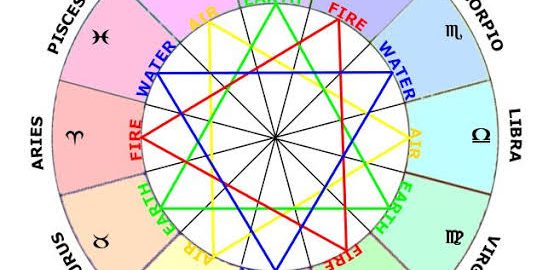
A sextile is an astrological aspect formed when two planets or chart points are approximately 60 degrees apart. It connects signs that are usually two places apart in the zodiac, commonly linking fire with air or earth with water. Astrologers allow an orb, or small deviation from the exact angle, when identifying this aspect.

Astrological Meaning

Sextiles are generally interpreted as cooperative, constructive connections between the planets involved. The aspect may suggest that their functions can support one another through curiosity, communication, skill, or timely effort. Unlike a trine, which is often experienced as more effortless, a sextile is commonly said to describe potential that becomes noticeable when consciously used. Interpretation depends on the planets, signs, houses, exactness, and the condition of each planet. For example, a Mercury–Jupiter sextile may support broad thinking and effective learning, while a Venus–Saturn sextile may favor steady commitment or practical creativity.

Why It Matters

Recognizing sextiles helps reveal resources within a natal chart that might otherwise seem subtle. They can indicate areas where cooperation, practice, or initiative produces useful results without implying guaranteed ease or success. In transit work, a sextile may correspond with an opening that benefits from participation. In synastry, it can show compatible planetary functions, though the complete relationship chart remains important.

Related Encyclopedia Entries

Sextile

Definition

A sextile is an astrological aspect formed when two planets or chart points are approximately 60 degrees apart. It traditionally connects signs of compatible elements—fire with air or earth with water—and is generally classified as a harmonious aspect. Its accepted orb varies according to the planets involved and the interpretive system being used.

Astrological Meaning

In a natal chart, a sextile suggests that the two planetary functions can cooperate productively. Unlike a trine, which may describe an ability that operates with little prompting, a sextile often represents potential that becomes more noticeable through interest, practice, or deliberate action. The planets show what is interacting, while their signs and houses describe how and where the opportunity may develop. In transits, a sextile can indicate a supportive period for making connections, experimenting with options, or moving an existing plan forward, but it does not guarantee a particular result. In synastry, it may reflect ease, curiosity, and constructive exchange between two people, depending on the planets and the wider relationship chart.

Why It Matters

Recognizing sextiles helps identify accessible strengths and areas where modest effort may produce useful progress. Because the aspect is usually subtle rather than urgent, it can be overlooked when stronger conjunctions, squares, or oppositions dominate a chart. Interpreting it within the full aspect pattern reveals whether its cooperative quality offers a practical outlet for more challenging dynamics.

Related Encyclopedia Entries

Sexagenary

Definition

Sexagenary means relating to the number sixty or to a cycle containing sixty divisions. In astrology, the term most often refers to the sexagenary cycle used in the traditional Chinese calendar. This system combines ten Heavenly Stems with twelve Earthly Branches in a repeating sequence of sixty stem-branch pairs. Each year, month, day, or hour can therefore receive a distinct paired designation.

Astrological Meaning

Within Chinese astrology, each pair brings together a stem associated with yin or yang and one of the Five Elements, and a branch associated with an animal sign, season, and other symbolic correspondences. Interpretation considers the complete pair and its place within a chart rather than relying on the animal sign alone. Because ten and twelve share a common factor, their combinations repeat after sixty steps. In Western astrological writing, sexagenary may occasionally be used more generally for a sixtyfold period or classification, but it should not automatically be confused with the sextile, which is a 60-degree aspect.

Why It Matters

Understanding this term helps distinguish a structured calendrical cycle from simplified zodiac-animal descriptions. It also prevents confusion between traditions that use the number sixty differently. When reading a Chinese astrological chart, identifying the relevant stem-branch pair provides information about elemental quality, polarity, timing, and cyclical context. These factors offer symbolic themes and tendencies rather than fixed outcomes, and they are best interpreted alongside the chart’s other pillars and relationships.

Related Encyclopedia Entries

