
.83¢/min Intro Offer

We Charge 60% LESS than our competitors!

All Psychics tested before hire.

category: Astrology Encyclopedia

Vernal Equinox

Definition

The vernal equinox is the annual moment when the Sun crosses the celestial equator moving northward, usually around March 20. Day and night are then approximately equal in length. In the Northern Hemisphere it marks the beginning of spring; in tropical astrology, it also defines 0 degrees Aries and the starting point of the zodiac.

Astrological Meaning

Astrologically, the vernal equinox begins a new solar cycle and introduces the Aries principle of initiative, emergence, and forward movement. Mundane and traditional astrologers may study a chart cast for the exact equinox to explore themes affecting the coming season, particularly collective priorities, leadership, and public activity. Its interpretation depends on the chart’s location, angles, planetary placements, and aspects. In sidereal systems, the Sun’s stellar position differs because of precession, although the astronomical equinox remains the same event.

Why It Matters

The vernal equinox provides a key reference point for understanding the tropical zodiac and the relationship between astrology, astronomy, and the seasons. Its chart can offer a symbolic framework for considering developing trends, but it does not guarantee particular outcomes. For individuals, the period may serve as a useful time to review intentions and begin projects with greater clarity.

Related Encyclopedia Entries

Sign

Definition

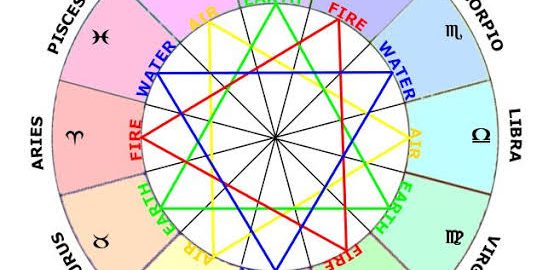
A sign is one of the twelve equal, 30-degree divisions of the zodiac. Beginning with Aries and ending with Pisces, the signs organize the apparent path of the Sun into a symbolic cycle. Each sign is classified by an element, modality, polarity, and planetary ruler. Signs differ from planets, which represent astrological functions, and houses, which describe areas of life.

Astrological Meaning

In chart interpretation, a sign describes how a planet or sensitive point tends to express itself. Mars in Gemini, for example, may pursue goals through curiosity, discussion, or adaptability, while Mars in Capricorn may act through planning and sustained effort. The Sun sign is only one part of this framework; the signs occupied by the Moon, Ascendant, planets, and house cusps add further layers. A sign’s expression is also shaped by aspects, house placement, dignity, and the condition of its ruler.

Why It Matters

Signs provide astrology with a vocabulary of style, motivation, and temperament. Understanding their elements and modalities helps an astrologer recognize patterns such as an emphasis on initiative, stability, responsiveness, practicality, or emotional sensitivity. No sign is inherently better or worse than another, and a placement should not be interpreted in isolation. Its significance emerges from the relationships among the chart’s planets, houses, aspects, and rulerships.

Related Encyclopedia Entries

Sidereal Year

Definition

A sidereal year is the time Earth takes to complete one orbit around the Sun when measured against the background of relatively fixed stars. It lasts about 365.256 days. This is roughly 20 minutes longer than the tropical year, which is measured from one seasonal equinox to the next. The difference arises largely from the slow precession of Earth’s rotational axis.

Astrological Meaning

In astrology, the sidereal year provides a stellar frame of reference for tracking the Sun’s return to the same position relative to the stars. It is especially relevant when distinguishing sidereal measurements from the season-based tropical zodiac. However, the sidereal year and sidereal zodiac are not identical concepts: the former is an orbital period, while the latter is a zodiac framework adjusted for precession, usually through an ayanamsha. Astrologers may also consider sidereal timing when studying long-term cycles or precise astronomical returns.

Why It Matters

Understanding the sidereal year helps clarify why astronomical and astrological calendars do not align perfectly over long periods. It also prevents confusion between a return measured against the stars and one measured against the equinoxes. For chart interpretation, the chosen zodiac and reference system should be stated clearly, since tropical and sidereal approaches can place planets in different signs while using the same birth data. Neither system by itself determines the quality or certainty of an outcome.

Related Encyclopedia Entries

Additions to this S.T

Definition

“Additions to this S.T” is not a standardized astrological term. It appears to function as an editorial label indicating supplementary material added to a particular text, section, table, or treatise abbreviated as “S.T.” Its precise meaning therefore depends on the document in which it appears rather than on an established astrological doctrine.

Astrological Meaning

In a traditional astrology context, additions may include later notes, interpretive rules, corrected calculations, examples, or commentary expanding an earlier passage. Such material can clarify how an author or editor understood natal judgment, planetary conditions, houses, aspects, or predictive techniques. However, an addition should not automatically be treated as part of the earliest version of a work. Its authorship, date, and relationship to the main text may affect how much interpretive weight it carries.

Why It Matters

Recognizing this phrase as a textual marker helps prevent an editorial artifact from being mistaken for a chart factor or forecasting method. When encountering it, readers should examine nearby headings, footnotes, abbreviations, and publication history to determine what “S.T.” identifies. Comparing editions or translations can also reveal whether the added material reflects the original author, a later commentator, or a modern editor. This source-aware approach is especially important in traditional astrology, where techniques often survive through manuscripts and revised editions.

Related Encyclopedia Entries

Sidereal Time

Definition

Sidereal time is an astronomical measure based on Earth’s rotation relative to the stars rather than the Sun. It indicates which degree of right ascension is crossing the local meridian at a particular moment. A sidereal day lasts about 23 hours and 56 minutes. In chart calculation, local sidereal time is derived from the date, clock time, longitude, and standard astronomical tables or formulas.

Astrological Meaning

Astrologers use sidereal time primarily as a calculation tool. It helps determine the Midheaven and, with geographic latitude, the Ascendant and intermediate house cusps. These angles establish the orientation of a natal, event, or horary chart for a specific place and moment. Sidereal time itself is not usually interpreted as a planet, sign, or aspect; its significance lies in accurately positioning the chart’s framework.

Why It Matters

Accurate sidereal time is essential because even a modest timing or location error can shift the angles and house cusps, sometimes changing their signs or degrees. It is especially important when examining time-sensitive techniques such as primary directions or chart rectification. Sidereal time should not be confused with the sidereal zodiac: the former measures Earth’s rotation, while the latter is a zodiacal reference system.

Related Encyclopedia Entries

Sidereal Day

Definition

A sidereal day is the time Earth takes to complete one rotation relative to the distant stars rather than relative to the Sun. It lasts about 23 hours, 56 minutes, and 4 seconds—slightly less than a 24-hour mean solar day. Because of this difference, stars appear to rise roughly four minutes earlier on each successive solar day.

Astrological Meaning

In astrology, the sidereal day supports the calculation of local sidereal time, which indicates what portion of the celestial sphere is crossing the local meridian at a given moment and place. Astrologers use this information when determining the Midheaven, Ascendant, and house cusps in a natal or event chart. The term describes a unit of astronomical time and should not be confused with the sidereal zodiac, which is a separate method of defining zodiacal positions.

Why It Matters

Accurate sidereal-time calculations help align a horoscope with the sky at the recorded location and moment. Even modest changes in birth time, longitude, or calculation method can alter chart angles and house positions, especially when a sign is near a cusp. Understanding the sidereal day therefore clarifies how civil clock time is translated into chart structure and why reliable time and location data matter in chart interpretation.

Related Encyclopedia Entries

