
All posts by admin

Virgo: Philip, always precise, calculating, enquiring, and practical

Definition

This phrase personifies Virgo through “Philip,” a character described as precise, calculating, enquiring, and practical. It is a memorable summary of qualities traditionally associated with Virgo, the mutable earth sign ruled by Mercury. “Calculating” here is best understood as methodical or attentive to details rather than manipulative. The wording is descriptive shorthand, not a separate astrological technique.

Astrological Meaning

Virgo symbolism combines earth’s practicality with Mercury’s analytical, observant, and communicative qualities. In a natal chart, strong Virgo emphasis may suggest an inclination to examine evidence, refine systems, develop skills, and make useful improvements. Its mutable mode adds adaptability, while its earth element favors workable results. Possible challenges include overanalysis, excessive criticism, perfectionism, or becoming preoccupied with minor flaws. Interpretation depends on the planet involved, its house, its aspects, and the condition of Mercury; a Virgo Sun, Moon, Ascendant, or Mars will express the sign differently.

Why It Matters

The phrase offers a quick route into Virgo’s traditional character, but it should not be treated as a complete personality judgment. Recognizing its emphasis on precision, inquiry, and practical reasoning can help astrologers identify where a chart seeks order, competence, and improvement. Reading the full chart keeps these traits in proportion and reveals whether they emerge confidently, privately, emotionally, or through particular areas of life.

Related Encyclopedia Entries

Leo: John, the most beloved apostle

Definition

Leo: John, the most beloved apostle refers to a symbolic correspondence found in some Christianized astrological and esoteric systems. It links the apostle John with Leo, the fixed fire sign ruled by the Sun. Such apostle-to-zodiac assignments vary among traditions and are not a universal part of classical astrology.

Astrological Meaning

Within this correspondence, John represents qualities often attributed to Leo: warmth, loyalty, constancy, creative radiance, and devotion centered in the heart. His traditional image as the beloved disciple can be read alongside Leo’s themes of affection, dignity, courage, and close relationship with a central or life-giving figure. The connection may also suggest spiritual testimony expressed with confidence and personal conviction. This is an allegorical association rather than a natal placement, transit, or predictive technique; it should not be interpreted as evidence of John’s birth sign or horoscope.

Why It Matters

The correspondence illustrates how astrology has sometimes been blended with religious imagery to organize moral and spiritual ideas. It can help readers recognize Leo symbolism outside ordinary chart interpretation while encouraging attention to historical context. When used in contemplative or symbolic work, the pairing may invite reflection on generous leadership, faithful love, creative self-expression, and the difference between healthy dignity and excessive pride.

Related Encyclopedia Entries

Signs, and the Disciples

Definition

Signs, and the Disciples refers to symbolic systems that associate the twelve zodiac signs with the twelve disciples of Jesus. These correspondences appear mainly in Christian esotericism and later spiritual astrology rather than in the core methods of Hellenistic, medieval, or Renaissance astrology. There is no single universally accepted arrangement, and different writers may assign the disciples to signs in different ways.

Astrological Meaning

In interpretive use, each disciple may be treated as a spiritual image for qualities attributed to a zodiac sign, such as courage, doubt, devotion, service, leadership, or transformation. The scheme is generally contemplative rather than predictive. It does not replace analysis of planets, houses, aspects, dignities, or other established chart factors. Because the assignments vary by tradition, an interpretation should identify the particular correspondence system being used.

Why It Matters

The concept shows how astrological symbolism has been adapted within religious and mystical frameworks. It can support meditation, comparative symbolism, or study of astrology’s cultural history, but it should not be presented as a standard doctrine of classical astrology. Recognizing that distinction helps readers separate historical chart techniques from later theological correspondences while still appreciating the symbolic value such systems may hold.

Related Encyclopedia Entries

Flexed Signs

Definition

Flexed Signs is a rare traditional astrology term associated with signs whose figures or postures were viewed as bent, curved, or otherwise not fully upright. It belongs to an older descriptive system that classified zodiac signs by their images, forms, and bodily symbolism. The term is not standardized: historical authors and later glossaries may define it differently or connect it with crooked, distorted, or imperfect signs. The intended sign list should therefore be verified in the source tradition being used.

Astrological Meaning

When employed in natal, horary, or medical astrology, Flexed Signs may add symbolism involving bending, turning, adaptation, irregular form, or an indirect course. Traditional astrologers sometimes used such classifications when describing appearance, movement, obstacles, or the condition of a matter. This is a secondary testimony rather than a complete interpretation. The relevant planet, house, dignity, aspects, and chart context remain more important than the sign label alone.

Why It Matters

Understanding the term helps readers interpret older astrological texts without treating every historical classification as a universal rule. It also shows how traditional astrologers drew meaning from a sign’s pictured form as well as its element, modality, and planetary ruler. Because terminology varies, careful comparison of definitions is essential. Modern practitioners may use the symbolism metaphorically, but it should not be treated as proof of physical disability, illness, or an unavoidable outcome.

Related Encyclopedia Entries

Vernal Equinox

Definition

The vernal equinox is the annual moment when the Sun crosses the celestial equator moving northward, usually around March 20. Day and night are then approximately equal in length. In the Northern Hemisphere it marks the beginning of spring; in tropical astrology, it also defines 0 degrees Aries and the starting point of the zodiac.

Astrological Meaning

Astrologically, the vernal equinox begins a new solar cycle and introduces the Aries principle of initiative, emergence, and forward movement. Mundane and traditional astrologers may study a chart cast for the exact equinox to explore themes affecting the coming season, particularly collective priorities, leadership, and public activity. Its interpretation depends on the chart’s location, angles, planetary placements, and aspects. In sidereal systems, the Sun’s stellar position differs because of precession, although the astronomical equinox remains the same event.

Why It Matters

The vernal equinox provides a key reference point for understanding the tropical zodiac and the relationship between astrology, astronomy, and the seasons. Its chart can offer a symbolic framework for considering developing trends, but it does not guarantee particular outcomes. For individuals, the period may serve as a useful time to review intentions and begin projects with greater clarity.

Related Encyclopedia Entries

Sign

Definition

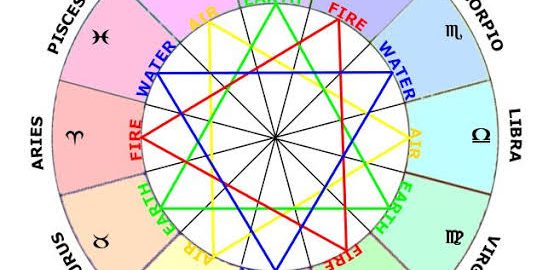
A sign is one of the twelve equal, 30-degree divisions of the zodiac. Beginning with Aries and ending with Pisces, the signs organize the apparent path of the Sun into a symbolic cycle. Each sign is classified by an element, modality, polarity, and planetary ruler. Signs differ from planets, which represent astrological functions, and houses, which describe areas of life.

Astrological Meaning

In chart interpretation, a sign describes how a planet or sensitive point tends to express itself. Mars in Gemini, for example, may pursue goals through curiosity, discussion, or adaptability, while Mars in Capricorn may act through planning and sustained effort. The Sun sign is only one part of this framework; the signs occupied by the Moon, Ascendant, planets, and house cusps add further layers. A sign’s expression is also shaped by aspects, house placement, dignity, and the condition of its ruler.

Why It Matters

Signs provide astrology with a vocabulary of style, motivation, and temperament. Understanding their elements and modalities helps an astrologer recognize patterns such as an emphasis on initiative, stability, responsiveness, practicality, or emotional sensitivity. No sign is inherently better or worse than another, and a placement should not be interpreted in isolation. Its significance emerges from the relationships among the chart’s planets, houses, aspects, and rulerships.

Related Encyclopedia Entries

